Fun Parking Facts

Asbury Park is not unique in trying to solve the parking dilemma–residents and visitors complain continually about the lack of availablility. Understanding it in a new way will help.  Rethinking parking:

“…vehicle parking is so ubiquitous that it is generally invisible, like water is to fish. Most people have no idea of the economic, social and environmental costs caused by the pursuit of convenient parking. So, to put these impacts into perspective here are some fun facts that you can use to communicate the cost, waste and inequity of current parking planning practices.”

Parking requirements are the dark matter of the urban universe: they affect transport and land use in mysterious ways. These fun facts illustrate the costs and impacts of economically excessive parking supply.

 Todd Litman | January 29, 2018, 9am PST

WHAT DO CURRENT PARKING POLICIES INDICATE ABOUT COMMUNITY PRIORTIES?

Despite problems with homelessness and housing inaffordability, no communities have laws that guarantee free housing for people, but nearly all jurisdictions have laws that mandate abundant, and usually free housing for vehicles, in the form of unpriced on-street parking and off-street parking requirements in zoning codes. These policies conflict: the more parking spaces we require for residential development, the fewer housing units that can be built in a given area, and the less affordable housing will be.

Read more…

https://www.planetizen.com/blogs/96957-fun-parking-facts

Walkable cities are saving lives

Prioritizing pedestrians over cars means everyone wins

Most wealthy nations have managed to reduce traffic deaths significantly in the past few decades, but the U.S. has not seen traffic deaths plunge at the same rate—and in recent years, they’re actually going back up. Overall, U.S.’s traffic deaths are much lower than they were in the 1970s, which experts often attribute to safety regulations like seatbelt laws.

But Jemilah Magnusson, global communications director for ITDP, has a different take on why deaths plummeted—those walkers simply became drivers. “The U.S. used to have a really high pedestrian death rate which we ‘solved’ by putting people in cars,” she says. “So now it’s even more hostile to pedestrians.”

Read more…

https://www.curbed.com/2018/1/31/16952856/walking-traffic-deaths-pedestrian-streets

STREETS ARE PLACES

PRINCIPLES FOR FOSTERING STREETS AS PLACES

Asbury Park’s streets are becoming places.  Destinations where people of all ages in every demographic gather to spend time together, walking, riding bikes, shopping, talking, sharing food and drinks…building community!

“…8 principles for fostering Streets as Places, based on our years of experience in working with communities, the observations and research of well-known placemakers like Jane Jacobs and Allan B. Jacobs, and recent conversations with folks like Victor DoverBen Hamilton-Baillie, and Gil Peñalosa.”

“If you plan cities for cars and traffic, you get cars and traffic. If you plan for people and places, you get people and places.”

– Fred Kent, Project for Public Spaces

“Streets as Places is about Placemaking on one of the most important public spaces each community has – our streets. Strengthening the connection between people and the places they share, Placemaking refers to a collaborative process by which we can shape our public realm in order to maximize shared value. With community-based participation at its center, an effective Streets as Places process capitalizes on a local community’s assets, inspiration, and potential, and results in streets that contribute to people’s health, happiness, and well being.”

https://www.pps.org/article/8-principles-streets-as-places

Snow on the sidewalk!

Sound familiar?  How are the sidewalks in your neighborhood?  This may have been a light recent snow fall, but it’s still January and we could see much more before winter is over.  Cities all over the US and beyond (Canada here) grapple with the same issue.  We can learn from what other cities do.

“Getting around the city in winter is “frustrating and difficult at best” for people with mobility problems, said Sharon Giles, who sits on the Grand River Accessibility committee. “Your neighbour may have shovelled just fine, and the neighbour three doors down may have also done a good job, but the two homes in between have not done their duty and you are not able to safely get where you need to go.”

Read more…

https://www.therecord.com/news-story/8088425-kitchener-plows-ahead-with-sidewalk-shovelling-study/

LA Metro Walks the Walk

Small cities can learn from successes in large cities.

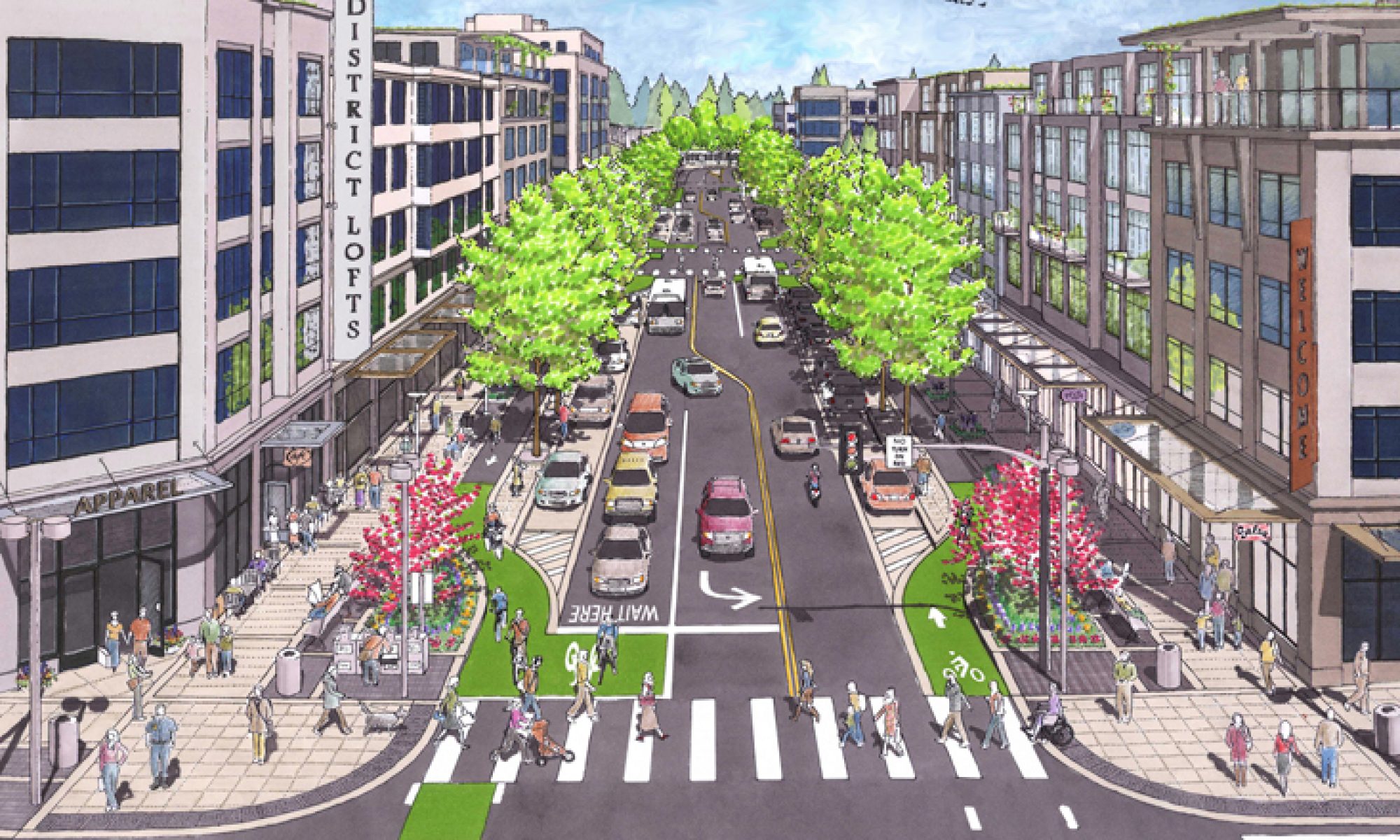
The Transit Village @inAsburyParkNJ can be designed to calm traffic and be walkable and bikeable.  A true neighborhood district focuses on pedestrians getting around – walking and bicycling – and doesn’t just cater to cars and parking.

“Why is improving walking access to transit important? As our research has found, the easier it is for people to walk to transit, the more likely they are to use it in their daily life.

With this in mind, LA Metro developed their “First Last Mile Strategic Plan.” It’s a menu of street treatments that can be used by Metro and municipalities to improve walking and biking conditions near transit.”

Few transit agencies invest in street infrastructure around bus stops and stations. Historically, they’ve subsidized car trips to transit by constructing costly park and rides, but haven’t taken on the jurisdictional issues that might come when it comes to improving streets around stations for pedestrians and cyclists.”

Read more…

http://transitcenter.org/2017/08/30/la-metro-walks-the-walk/

The Incredibly Cheap Street Fix That Saves Lives

It doesn’t have to take a lot of money,  years of planning and community outreach to make streets safer right now.

Say it with me: Leading pedestrian intervals.

“To rebuild a street with safety in mind, there are a few basic principles—narrow lanes for cars, wide sidewalks for pedestrians, and protected pathways for cyclists.

It’s not rocket science, but it is expensive. In downtown San Francisco, an effort to build a raised bike path and special bus boarding islands along one mile of Second Street—which is part of the city’s “high-injury corridor”—is pegged at $20 million. And, as with most public projects, years of planning, community outreach, and political fanfare have preceded the start of construction itself.”


“The value of a life may transcend any dollar figure. But at least one traffic intervention can save lives, at low cost and little time: That’s “leading pedestrian intervals,” or LPIs. In traffic-engineering-speak, these are streetlights that give walkers a head-start before cars venture into an intersection. Given even a few seconds of priority, most people wind up at least halfway into the crosswalk—where they’re plenty visible to drivers—before cars are allowed to go straight or make turns (including the ultra-dangerous left).”

Read more…

https://www.citylab.com/transportation/2018/01/the-incredibly-cheap-street-fix-that-saves-lives/551498/


And more…

Leading Pedestrian Interval


WHAT DOES A WALKABLE STREET LOOK LIKE?

Asbury Park is in planning and development to create “people oriented” streets (this post is for the few business owners on Main Street who worry that fast-moving cars are better for business than slower speeds, and improved bikability and walkability) because “…not only because they’re safer or because they enable people to get around affordably without a car. It’s also — and chiefly — because they are more economically productive.”

“A WORD OF CAUTION

If there’s one thing you should take away from this discussion of walkable streets, it’s the necessity of narrowing many of our roadways (items 1 and 2 on our checklists). The other features mentioned above — on-street parking, sufficient sidewalks etc. — are all fairly meaningless if you don’t have narrow streets. It can actually be harmful to invest in these sorts of features if you don’t also narrow the streets around them, because you’re sending the mixed message to people that a) they should walk there, but b) it won’t actually be safe for them to do so because cars will be driving too fast. Not to mention it’s a waste of municipal funding to build a beautiful new sidewalk that no one is actually going to use because it’s dangerous and unpleasant.”

WHY DOES IT MATTER?

So why does building people-oriented streets instead of only car-oriented streets matter? It’s not only because they’re safer or because they enable people to get around affordably without a car. It’s also — and chiefly — because they are more economically productive. They encourage local business activity, produce more tax value per acre and offer a better return on infrastructure investment. Learn more about why walkable streets are more economically productive.”

Read more…

https://www.strongtowns.org/journal/2018/1/19/what-does-a-walkable-street-look-like


WHY WALKABLE STREETS ARE MORE ECONOMICALLY PRODUCTIVE

Asbury Park is working on making streets safer throughout the city, particularly on Main Street.  Within the next two years we’ll see better infrastructure and vastly improved walkablity.

PEOPLE-ORIENTED STREETS ENCOURAGE BUSINESS ACTIVITY

Streets where walking is safe and easy are streets where businesses usually thrive. A number of studies have confirmed this over the last several years.

Read more…

https://www.strongtowns.org/journal/2018/1/16/why-walkable-streets-are-more-economically-productive


ASBURY PARK FEATURED AT THE 2018 NJ PLANNING CONFERENCE

‘GREETINGS FROM ASBURY PARK’ SEMINAR HIGHLIGHTS CITY’S STRATEGIC WEST SIDE REVITALIZATION PLAN

“This is a great opportunity to highlight to professionals and policy makers throughout the state what makes Asbury Park special and the work we are doing to ensure we have healthy communities,” the City’s Director of Planning and Redevelopment Michele Alonso said.”

“The seminar will spotlight the “One City. Asbury Park.” (http://apcompletestreets.org/one-city-one-asbury-park) initiative outlined in the Choice Neighborhoods Plan, which aims to revitalize the city’s largest, but most economically challenged, residential neighborhood into a place of opportunity and economic growth.”

“Alonso said the plan outlines a set of comprehensive directives that address the needs of residents beyond just new housing.”

“This community driven plan aims to revitalize the West Side without displacement and gentrification, and looks forward to a future filled with mixed-income housing, safe streets, economic opportunities, thriving students, and healthy families,” she said.

Read more…

http://asburyparksun.com/asbury-park-featured-at-the-2018-nj-planning-conference/