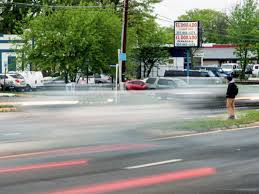
NPR: Pedestrian Deaths Are At A 33-Year High- How To Prevent Them
“A new report shows how dangerous it has become to walk along the street. The Governors Highway Safety Association estimates the number of pedestrian deaths last year was 6,000 nationwide.”
Pedestrians: wear bright or reflective clothing, remove earbuds, make eye contact with drivers, cross only at crosswalks, never talk, text or use electronic devices in an intersections. Drivers: carry on. #CarCulture
Read more…
How to Address Gentrification
One of the most important focuses of Asbury Park Complete Streets Coalition is equity. AP is in a renaissance period, and there’s a great and understandable fear that residents may be displaced. We want to help prevent that from happening. The city is keenly aware of the need to work within the community to come up with solutions, and the advocates of APCSC is happy to be a part of this work.
“ALWAYS ASK, “WHO BENEFITS?”
In graduate school, I had a professor who would refer critically to the “white proximity model” of neighborhood revitalization. Shelterforce describes this model as follows:
Somehow, policymakers and government officials have bought the myth that simply by living next door to each other, wealthy white professionals will lift poor Black people out of poverty — serving as role models and handing out job referrals.
Few people might consciously agree with that provocative statement, but common narratives about how to deal with concentrated poverty — disperse it, and facilitate moving poor people into “opportunity neighborhoods” and wealthy people into poor neighborhoods — are laden with unconscious and unexamined bias about what makes a neighborhood rich with opportunity in the first place.”
“Far too many of us listen to people looking for where they’re wrong. We immediately go into dissecting, “Fisking” mode. At our worst, we’re hoping to score points rather than engage with what we might learn from what they’re saying.
Instead, when you listen to someone you disagree with (especially someone you disagree with), listen for where they’re right. Everyone is right about something. Everyone believes what they believe because of something in their own experience, some basic truth that motivates his or her world view. Find that person’s ground truth.
You can learn something from everyone who cares about your city.”
Read more…
https://www.strongtowns.org/journal/2018/2/23/calming-the-waters
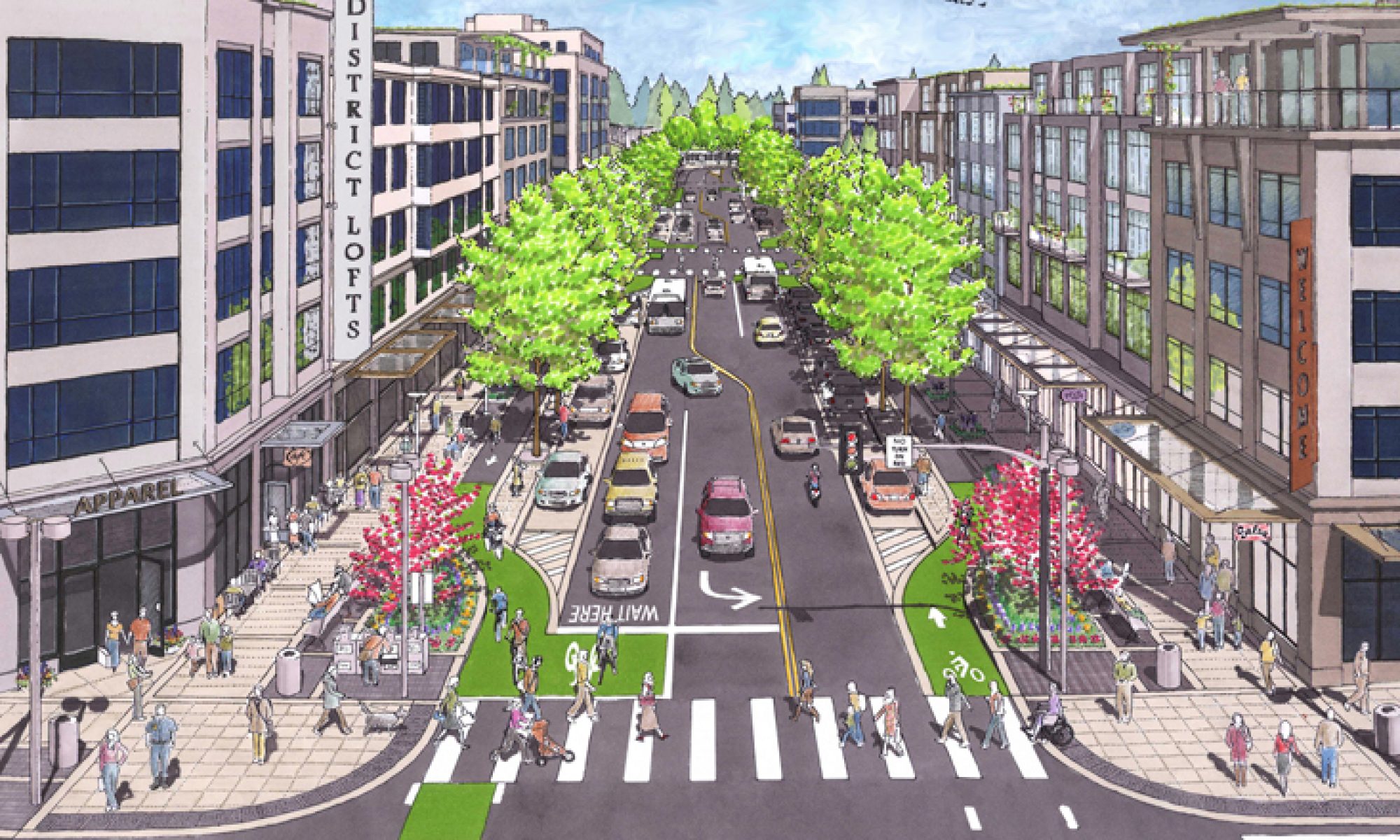
How Sidewalks Literally Sideline the Pedestrian
February 20, 2018, Philip Rojc
The rise of the automobile pushed pedestrians to the side, and modern roads often deny them a place to walk altogether. “American society has so normalized our inferior sidewalk system that we don’t believe we deserve a place to walk.”
Meanwhile, a supposed “walking revolution” hasn’t materialized, despite Complete Streets redesigns and campaigns to promote walking. “In 2016, Americans drove more miles than they have in any other year in history.”
Frustratingly, says Walker, pedestrian improvements are now often perceived as a sign of gentrification. “Yet clean, safe, unbroken sidewalks have become such a rarity in this country that designing an area where people can get around primarily by walking—the one mode of transportation that is available and accessible to everyone—is now seen as a harbinger of displacement.”
Read more…
Full story, long form in Curbed:
HOW CITIES CAN CREATE NEW AVENUES FOR PEDESTRIANS
https://www.curbed.com/2018/2/7/16980682/city-sidewalk-repair-future-walking-neighborhood
Understanding the 3 Foot Rule
Case study in this important traffic safety law
By Megan Hottman February 13, 2018
http://www.roadbikereview.com/reviews/understanding-the-cycling-3-foot-rule
Urban Sprawl to Urban Stay: Walkable Housing Is Making a Comeback
Great visuals!
Infographics to explain the benefits of walkablity. Use these to explain what’s happening in Asbury Park!
48% of survey respondents said they prefer to live in communities with small houses and yards but within walking distance to the community’s amenities. Learn how walkable urban places are having a comeback moment.
https://visual.ly/community/Infographics/lifestyle/urban-sprawl-urban-stay-walkable-housing-making-comeback
The Black Urbanist
Kristin Jeffers: Design, Urban Planning, Architecture, and Life as a Black Woman in the Modern World.
Hello, I’m Kristen Jeffers.
I write about place. I love great places. I am Black. I am Urban. I am an Urbanist.
“I grew up and into a love of architecture, streets, trees, buses, trains and lots of other things in the environment. Now I bring this to you in a format that is straightforward about who I am, a black urbanist, a young woman of African-American descent who likes all things built environment, especially when it comes to cities.”
“I’m a firm believer that transportation is one place where equity can and should be had. At the end of the day, a street is a street, we all have to use them and their presence should not be the signal of gentrification you worry about. It should be the one you champion to get you to where you need to go. Hence why I’m here advocating for what some call complete streets, others call road diets and yet others call road gentrification.”
The author/blogger bio:
Kristen E. Jeffers is the founder and editor-in-chief of The Black Urbanist, author of A Black Urbanist (second edition forthcoming), creator of the public speaking course Plan to Speak and 1/2 of the podcast Third Wave Urbanism, as well as a freelance writer, urban planner and advocate. She holds a Master of Public Affairs focused on community and economic development from the University of North Carolina Greensboro, and a Bachelor of Arts in communication with a concentration in public relations from North Carolina State University.
Read more…
http://theblackurbanist.com/why-road-gentrification-is-good-gentrification/
The Popsicle Test
We can help to design our cities for everyone from 8 to 80. Engage with your city and get involved!
How to Design Cities for Children
Amy Levner, a vice president at KaBOOM!, the U.S. nonprofit that works to provide community-designed play spaces for children living in poverty, said the narrative of child-friendly cities has intensified in the past year, and a recent report on the subject from London-based design firm Arup has furthered the conversation. “The fact that the work came out of a major, multinational firm is exciting,” she said. “It’s not just coming from academics or policymakers, so it’s reaching a different, broader audience.”
Read more…
https://www.citylab.com/design/2018/02/how-to-design-cities-for-children/552086/
A Conversation with Jeff Speck
How can your city become more livable? Make it walkable! Become a member of Strong Towns and register for a Conversation with Jeff Speck.
This exclusive webcast is available to all Strong Towns members. Become a member today and you will receive a registration link via email.