The US is the only Nation to dissociate from the Global Declaration on Preventing Road Deaths – because it supports the oil, gas, and the automotive industries. This administration denies the problem of road deaths, just as it denies climate change, and has withdrawn from the Paris Climate Accord.
The numbers of death-by automobile is staggering in the US alone – almost 40,000 last year.
“GLOBALLY, MORE THAN 1.3 million people per year are killed in road crashes, with a further 50 million people seriously injured. Such crashes are the leading cause of death for children and young adults aged 5–29 years.”
Carlton Reid Contributor Business
U.S. Only Nation To Dissociate From Global Declaration On Preventing Road Deaths
The U.S. has refused to sign up to a new declaration on road safety. The so-called Stockholm Declaration was issued at the Third Global Ministerial Conference on Road Safety held in Stockholm, Sweden, February 19–20.
Out of more than 140 attending nations the U.S was the only one that issued a dissenting statement.
Etienne Krug, director at WHO’s Department of Social Determinants of Health, said that if motorized road transport did not yet exist “no sane government would permit it.”
He said that the Stockholm Declaration could enable the world to “move quickly towards a safe, healthy, and clean transport system for everyone.”
However, the dissent from the U.S. could slow this progress, claimed Vancouver-based city planner Brent Toderian:
“The U.S. delegation using its stubborn car-only doctrine, and radical ideology of climate emergency denial as excuses to stand in the way of real traffic death solutions is sadly just par for the course for the Trump Administration.”
Further linking the U.S. dissent on road crashes to that on climate change, Toderian added:
“As with other important issues needing global leadership and partnership, the rest of the world must proceed without hesitation, with or without America.”
Amsterdammer Lotta Crok (10) was named the world’s first Junior Bicycle Mayor, representing the voices of some 125,000 children in Amsterdam (14 and younger). Katelijne and Lotta have been working closely together on various projects to boost cycling uptake and safety among children, campaigning for public transportation bike rentals (OV fiets) for children for example.
Lotta passed the torch to the new junior mayor on 4 July, during the ‘Bicycle Heroes’ event at NEMO Science Centre. This competition saw over 150 Amsterdam children, aged 8-11, submit their creative ideas for making cycling better – and safer – for all kids in the city.”
There have miraculously been no traffic deaths in our tiny city (pop. approx. 16,000) of Asbury Park in recent years, considering the huge numbers of drivers who appear in the summer season – it really is a miracle- But Asbury Park Complete Streets Coalition believes that we can prevent any future deaths and serious injuries if we reduce miles traveled, restrict cars from most streets in our main city center, and provide alternative modes of transportation. We can create a true city for people. #driversareguests #toomanycars
The city of Oslo (pop. almost 700, 000) has succeeded in lowering death-by-car to only ONE in 2019, and the city, and the Governor says even that is one too many: “Governing mayor of Oslo, Raymond Johansen, told SmartCitiesWorld: “We have a vision of zero traffic deaths in our city. When one person is killed in traffic, it is one too many. But this takes us closer to our vision. Safety is at the core of our transportation policy.”
Nearly 1.25 million people die in road crashes each year, on average 3,287 deaths a day. WHY? We know the reason is vehicles. #toomanycars. And yet traffic engineers still design roads to accommodate automotive traffic, and focus on Level Of Service (LOS), focusing on the movement of motor vehicles, which promotes dangerous, high-speed streets and sprawling land use.
Quoting Streetsblog USA from the article below, “Cities around the U.S. have been slow to follow up on such success…”
In the Planetizen article at the bottom of this post, you’ll see how reducing Vehicle Miles Traveled, or VMT (basically restricting traffic) will reduce traffic related fatalities and injuries. But as the article states, “some cities are making progress, (but) most jurisdictions are failing.”
Oslo’s governing mayor tells SmartCitiesWorld how the city is making its streets safer, and that autonomous vehicles could help with retaining and improving the results.
Beautiful cityscape of Oslo on a summer day, Norway
The sole death in Oslo was a man whose car collided with a fence in June.
According to the World Health Organisation, road traffic injuries caused an estimated 1.35 million deaths worldwide in 2016 and were the leading cause of death for children and young adults.
The most significant move Oslo officials made was devising a plan in 2015 to restrict cars from its square-mile city center and hike fees for entering and parking around the city’s core. Tolls rose in 2017 as the city removed 700 parking spaces and replaced them with 37 miles of bike lanes and pocket parks. The city center ban went into effect in early 2019 despite misgivings, but it was regarded as a model for other metropolises six months later. Cities around the U.S. have been slow to follow up on such success, though New York and San Francisco recently added a car-free thoroughfare to its transit mix.
Many jurisdictions have vehicle miles traveled (VMT) reduction targets, intended to reduce congestion and pollution. They can also provide large but often overlooked traffic safety benefits.
Although some cities are making progress, most jurisdictions are failing. U.S. traffic death rates declined during the last half of the the 20th century, reaching a low of 32,479 in 2014, but subsequently increased, averaging about 37,000 annual deaths during each of the last three years. New strategies are needed to achieve ambitious safety goals.
Although the United States has rigorous road and vehicle safety standards, and numerous traffic safety programs, it also has the highest per capita traffic death rate among developed countries. Why? Because people in the United States also drive more than residents in peer countries, as illustrated below.
Drivers are inattentive at least half of the time when turning right, and 65% of the time they don’t register a person on a bike or motorcycle (or people walking). “This phenomenon—a person’s failure to notice an unexpected object in plain sight—is known as “inattentional blindness.” It’s the reason why a driver might look right at you, but cut you off anyway. ” The old “I didn’t see him”, or “she came out of nowhere” excuse is actually the truth. The driver really didn’t see the woman walking into the intersection because he didn’t take the time to look slowly and carefully from side to side to bring the person into the center of vision.
Taking a deeper dive, here’s the science, in an article by an RAF pilot explaining that our eyes were not designed to see detail from the periphery. So unless a driver is looking intentionally, and directly at a person walking or riding a bike, “visual acuity is about 1/10th of what it is at the centre.”
Now that we know that drivers don’t see people outside of the vehicle, let’s add driver entitlement, and the embedded belief that roads were designed for cars, and we realize the very real danger to people walking and riding bikes.
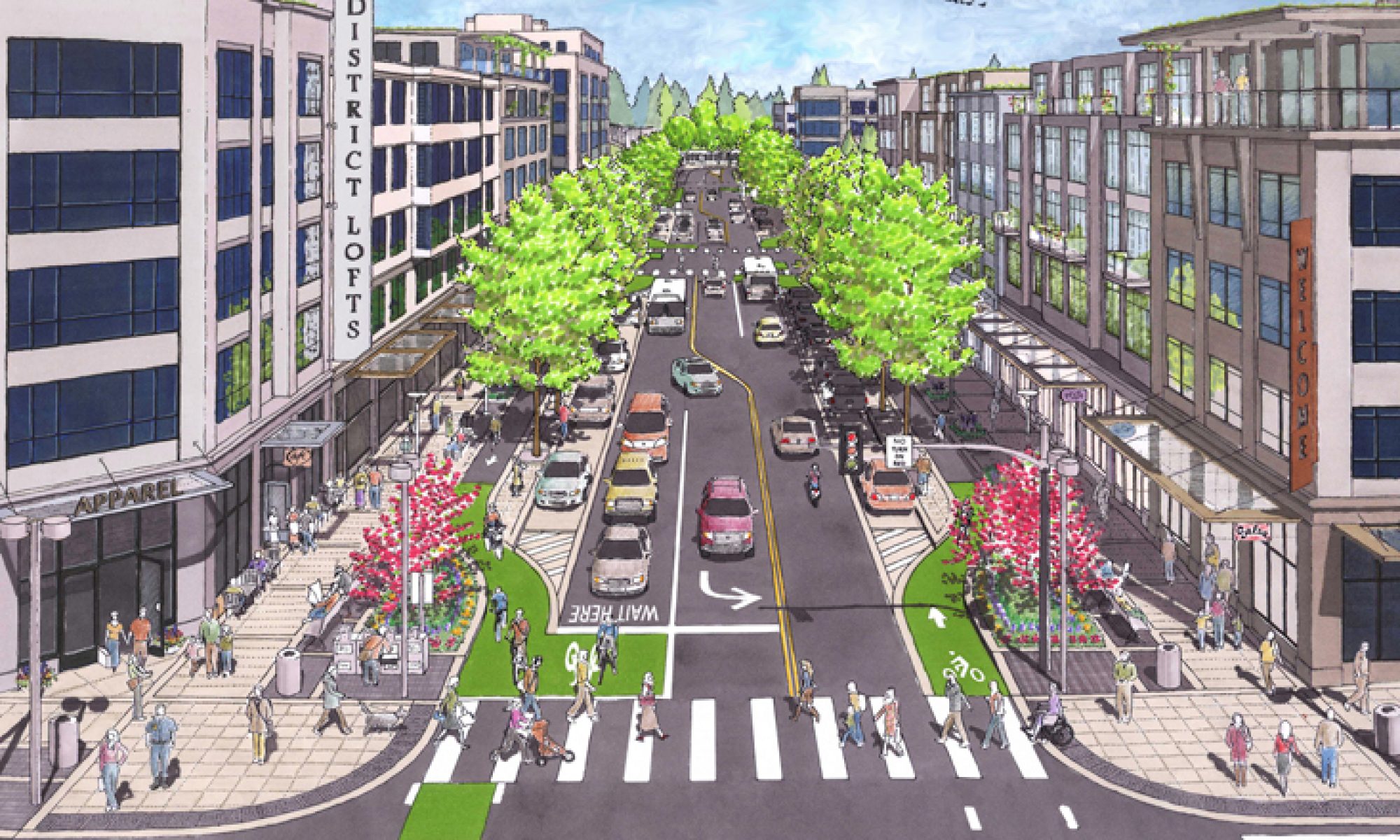
It’s wishful thinking that drivers will change habits, so we need to redesign roads so that drivers have to slow down, install better and safer infrastructure for people walking and biking, and redesign our cities for less car dependency; cities are for people, not for cars.
The Surprising Reason Why Drivers Don’t ‘See’ Cyclists
NEW RESEARCH EXPLAINS WHY CYCLISTS CAN ENTER A DRIVER’S FIELD OF VISION BUT STILL GO UNSEEN—A PHENOMENON KNOWN AS “INATTENTIONAL BLINDNESS”
BY SELENE YEAGER Jan 16, 2018
“Looked-but-failed-to-see (LBFTS) crashes”:
“When we are driving, there is a huge amount of sensory information that our brain must deal with. We can’t attend to everything, because this would consume enormous cognitive resources and take too much time,” study author Kristen Pammer, a professor of psychology and the associate dean of science at Australian National University, said in a press release. “So our brain has to decide what information is most important. The frequency of LBFTS crashes suggests to us a connection with how the brain filters out information.”
“Private car trips will drop by 10% on average by 2030 to make up less than half of all city journeys, while public transport, walking and bicycle will all increase in popularity, the Mobility Futures study found.”
This is good news, but the automotive industry won’t give up without a fight. The result of steadily slumping sales of mid-size vehicles has led to the rise in manufacture and sales of huge vehicles (higher margin per vehicle). These larger vehicles, SUVs and trucks are responsible for the rise in death-by-automobile: 40 thousand deaths a year in the US last year. This figure is a pubic health crisis globally, but it’s been accepted since the 20s and 30s as a natural consequence of owning and driving vehicles, while blaming people walking and riding bikes for being inattentive, not wearing bright colored clothing, or the invention of “jaywalking”.
We can see change starting to happen but can do more as citizens – work with city leaders to help create better systems of mass transport, build more infrastructure for walking and bicycling, and offer other micro-mobility options. We can work to lower speed limits, calm traffic, create spaces for people instead of for cars, raise the cost and lower the availability of parking. THEN we’ll see the change we need to happen, hopefully within the next 10 years. Our lives depend upon it.
Green transport set to overtake cars in world’s major cities by 2030
by Sonia Elks Thomson Reuters Foundation
Monday, 10 February 2020
Many authorities are looking to discourage private car journeys, while a boom in bike-sharing schemes and electric-powered small vehicles are giving residents new ways to get around.
“It’s a job for every mayor, for every city government to do something,” said Rolf Kullen, mobility director at research consultancy firm Kantar, which produced the study, based on surveys in 31 cities.
“Cities are beginning to understand that you do not build your city around a certain means of transport … You should build your city around the people.”
The history of “jaywalking” – a calculated plan to make way for more cars by marginalizing all other road users. People walking across unmarked intersections or even walking across a street between blocks is not a crime (as long as the person does not literally block the flow of traffic) but it’s considered illegal almost everywhere. It wasn’t always a crime…drivers were the menace until the industry highjacked our brains and our language.
Turns Out Jaywalking Is A Fake Crime Designed By The Car Industry To Make More People Drive
Cleo Egnal
Updated September 15, 2017
Using money, clever marketing campaigns (which had a lot to do with why we called it ‘jaywalking’), and stories about dead children, car companies were able to pressure cities into putting the onus on pedestrians to not get hit, rather than on drivers for not running over pedestrians.
Mike Manzella, Asbury Park’s Transportation Manager and Deputy City Manager has 10 great tips for cities to move toward less car dependency. Transit Oriented Development is “typically mixed-use and dense, providing residents amenities in close proximity. The goal is to create livable and sustainable places in which people can live, work, and play all in the same community, without requiring the use of a car.” Asbury Park Complete Streets Coalition thanks Mike for the shout out in tip number 8. We’re so fortunate to have a solid working relationship with our Transportation Manager, and great communication with our city leaders! Asbury Park is getting it done!
8. Work with advocates.
“The City works closely with local advocates on transportation issues, including the Asbury Park Complete Streets Coalition. The Coalition has been instrumental in educating the public about alternate modes of transportation and bike-ped safety. The Coalition participated as a stakeholder committee member in the preparation of a Bicycle and Pedestrian Master Plan adopted by the City in April 2019. Among the plan’s recommendations is a proposed bicycle network that Mike says is crucial to getting more people to ride bikes and do so safely. Mike keeps in frequent contact with the group and attends the Coalition’s monthly meetings and bike rides.”
TOD Mobility: Asbury Park’s Greatest Hits
The City of Asbury Park, and the City’s Director of Transportation Michael Manzella (second from left, first row), are working to provide residents and visitors with convenient and sustainable ways of getting around town. Photo Credit: Michael Manzella
Monthly Slow Roll Bike Ride, Springwood Park, Feb. 16, 2020
Strolling in Asbury Park near the Carousel and Casino, summer 2019
1. Bike-ped investments spur development of vibrant, unique, and unforgettable places.
Asbury Park is making major investments in transportation to catalyze development. Specifically, the City is investing in multi-modal transportation to catalyze compact, mixed-use, walkable, transit-friendly development.
Here’s fascinating history on how we’ve been brainwashed, explained in Peter Norton’s book, Fighting Traffic: The Dawn of the Motor Age in the American City. “In ad after ad during the Super Bowl, auto companies… have long promised us nirvana. And we’ve blindly shilled out our life savings” to buy, insure, maintain and park cars. The 1920s program at Harvard taught “the first generation of traffic engineers to prioritize traffic lights for faster driving and more difficult walking.”
We need to use language and educate to make sure messages like “biking is normal,” “walkability,” and “good transportation choices” become better understood and more widely accepted over the next decade.
The conversation continues about scooters, “…as a transportation choice – and other micro mobility vehicles are not a novelty, and we should give everything we can to helping them succeed.”
To take back our streets, remember how we lost them to cars
Ford Motor’s “Road of Tomorrow” from the 1939 World Fair
Streets are now thoroughly car-centric, and the idea of people-centered streets remains a difficult concept for most people to grasp. These groups recognized they needed to shift the perceived cause of collisions away from drivers and onto pedestrians. Under the name Motordom, the interest groups were quoted in a 1922 edition of Engineering News-Record that they would lead the effort in a “revision of our concept of what a city street is for.”
A 1937 anti-jaywalking ad from the Federal Art Project. Source
As Mike Manzella, AP transportation manager reported at the Homeowners’ meeting, scooter use has massively surpassed the use of bike share since the September 2019 launch. This is the case in cities all over the world where scooters have been introduced. With the huge increase in scooter usage there is a rise in injuries, but not because of the scooters themselves, or the people riding them. We’re overlooking the real problem, which is too much space for cars.
People have been brainwashed by the auto industry that roads belong to drivers since cars started to become ubiquitous beginning in the 20’s. Roads quickly became the domain of drivers, to the exclusion of all other users, as the industry subtly and not subtly used ad campaigns and articles to influence the populace. Walkers and bike riders were designated to move within narrow painted lines, people walking outside lines are called jaywalkers, and they’re blamed for being hit by drivers. The number of people killed by drivers is growing. “More pedestrians and cyclists were killed last year in the United States than in any year since 1990.”
Now scooter riders share the narrow painted spaces allocated to bike riders, and as the newcomers to streets, they’re the new focus of culpability and safety concerns. #toomanycars #slowthecars
“The rise of the e-scooter has been meteoric, eclipsing bike share usage nationally in 2018, just a year after gaining widespread availability, according to a recent report by NACTO, a national association of city officials. But that doesn’t mean the scooters had anywhere to go — except onto roadways where drivers believe they are the sole legitimate user.”
The Real Reasons Scooter Injuries Are Exploding
It’s not time to quash the micromobility revolution. It’s time to build a world where micromobility riders stand a chance on our streets.
By Kea Wilson
Photo: Nathan Rupert/Flickr
Scooter injuries are up more than 200 percent over the last four years — but everyone is blaming the wrong people.
The Jan. 8 report from JAMA Surgery does not offer much context for the 222-percent increase in scooter fatalities between 2014 and 2018, which has allowed news outlets to fill the gap with alarmist articles decrying the lack of scooter regulation, lack of helmet usage, and more.
The rides are monthly community events open to everyone, residents and friends of Asbury Park. Helmets are required for those under age 17. The rides last from 60-90 minutes.
“We stop along the way for photos, very easy,” said organizer Polli Schildge, a member of the Asbury Park Complete Streets Coalition. “We ride when it’s cold and even once with snow on the roads!”
Schildge said that rides are not held in precipitation, however, and those gatherings are rescheduled.
Email apcompletestreets@gmail.com to get on the mailing list for the monthly Slow Roll, or for more information. Visit the Complete Streets Coalition Facebook page for more information about biking, walking and alternative transportation in Asbury Park, as well as transportation initiatives elsewhere.
The group has been been meeting at The Carousel for the past several rides because of its central location. But Schildge says she’s “happy to begin rides anywhere that will attract the most people to get together on bikes — any age, any kind of bike for an easy cruise around Asbury Park.”