Here’s wishing you all a healthy and happy holiday season and new year.
Feel free to scroll to the bottom to watch the BEST Christmas commercial EVER. We need to stay strong for every reason, and active living is the best way to do it.
However moderate the changes may have been, it’s a better update than it would have been if people hadn’t spoken up.
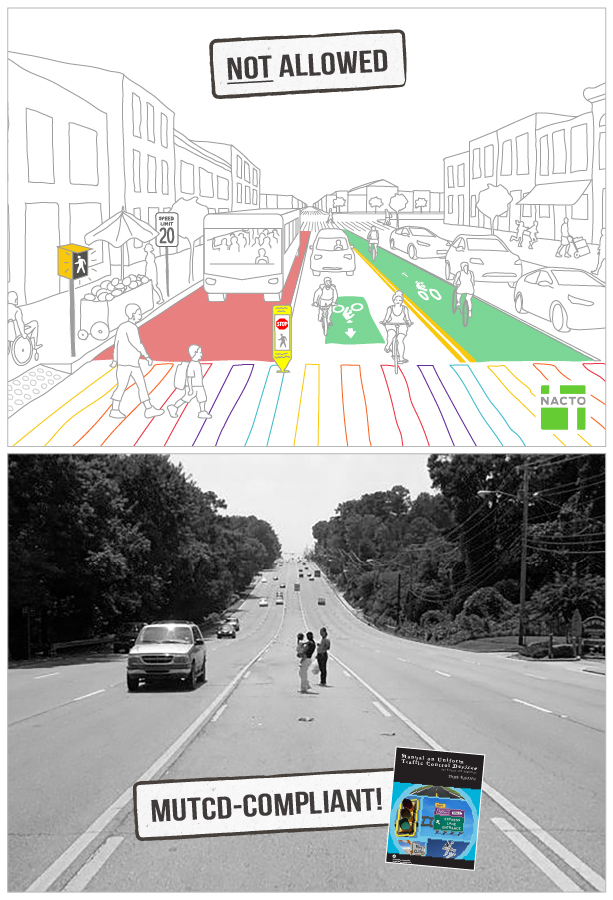
Many people have no idea that this outmoded document has been responsible for the engineering of US streets and roads for decades, optimizing motor vehicle speeds, and leading to injuries and deaths of nearly 45,000 people each year, both inside and outside of vehicles.
“On Tuesday, the Federal Highway Administration finally published the 11th edition of what’s come to be known as the “notorious MUTCD,” marking the first time since 2009 that the agency has updated its official guidance on how to safely utilize the signs, signals and markings that annotate U.S. roads. In the intervening years, U.S. road deaths have shot up 26 percent, with pedestrians and fatalities skyrocketing 82 percent over the same period.”
The most important thing is that advocates demand that our local leadership deliver good street design.
If we don’t speak up, it won’t happen.
Safe design has been not been permitted within the constraints of the last edition of the MUTCD. Hopefully the new version will prioritize the movement of people over vehicles.
Baby Boomers are rapidly increasing in our population, and the belief is that as we age we’ll need more healthcare, more facilities for elderly, and more nurses and health aides. This may all be true, but it doesn’t have to be. It’s an industry like any other and we don’t have to be enriching it at the expense of our own health as we age.
To improve quality of life for the aging isn’t just about care that keeps them alive. It’s not just about length of life, but quality of life.
We need social settings that keep us all connected, active, and vital. People need to be able to move about their cities and towns – “active mobility”. It’s no secret that we can stay healthy and strong mentally and physically with regular daily exercise, and walking and biking are the easiest way to do it.
American city leaders should step up and design safe infrastructure, and public spaces to keep us all aging well.
Americans are aging. Cities that provide accessible, safe infrastructure to enable elderly to engage, also help them stay healthy.
Older people have the most to gain from equitable mobility options. And if cities ae designed for ages “8-80” they’re designed for everyone.
City leaders, and engineers, and planners incorrectly believe that elderly are more dependent on driving, assuming that they are losing physical ability to bike or walk longer distances. WRONG. Older people way too often resort to driving because they’ve been relegated to live in facilities like assisted living, or senior housing, which are inconveniently located away from services or businesses.
We all typically lose our ability to drive long before we lose the ability to walk.
“Only 60 percent of the American population can drive. Our automobile environments disenfranchise and endanger those who are physically unable or too young to drive, or too poor to own a car. The total number of non drivers is expected to increase dramatically as Baby Boomers age.”
We need to design city streets for active, equitable transport for all people outside of cars, especially the elderly.
People who find it difficult to walk can often ride a bike with ease. Elderly need safe infrastructure to get around on bikes. If streets are designed for people “8-80” they are designed for everyone.
Let’s all make a commitment to speak up in 2024 to bring about change in our own city of Asbury Park, to prioritize people, and end driving culture.
We just spent a few days visiting Barcelona, riding bikes, walking, exploring neighborhoods, and experiencing the expanding development of superblocks.
Barcelona has been a wonderful bicycling and walking city each time we’ve been there, and it’s even more so now with the expansion of superblocks, including the elimination of cars on main arteries and side streets.
Superblocks are at the heart of a concept for sustainable mobility developed by the city administration in 2016. Initially some businesses and drivers were opposed, but residents have embraced the transformation, and business has shown improvement, and grown 30%.
Car clogged streets have been replaced by planted beds, flower pots and trees. Car traffic is only allowed on the remaining one-way streets – if at all – at 5-10mph. Families gather, children play, noise and air pollution is gone, and people are healthier.
Childrens’ garden in a superblock in Barcelona.
The World Health Organization evaluation reports “a gain in well-being, tranquility and quality of sleep; a reduction in noise and pollution, and an increase in social interaction. The built environment of the Superblocks clearly influences walkability and creates more opportunities for physical activity. The reduced vehicle traffic has led to improved air quality measures in these zones.”
A playground (one of so many!) in a superblock in Barcelona
The design works best in “15 minute” cities where people can access destinations within a short walk, and neighborhoods with density, and some form of public transit so that residents can leave cars at home, or visitors can park off-site, and use transit.
A playground and gathering place in a superblock in Barcelona.
The superblock model strives for a combined approach to multiple challenges neighborhoods and cities are faced with—mobility, noise, walkability, urban green space—and that it is a model which envisions city-scale wide and broad transformation, going beyond single street transformation.
We too often hear, “It can’t work in Asbury Park.”
But we believe that it can.
Asbury Park can be a model for a people-oriented, healthy city. We can learn from other cities, and with strategic planning we can take bold steps to reduce, and even eliminate cars and traffic.
Have you seen or encountered obstacles to getting around in Asbury Park, or in your city in Monmouth County?
The Monmouth County Division of Planning, Transportation and Community Services hosted an open house on Thursday, Nov. 16 asking for feedback to improve mobility throughout Monmouth County.
This open house was the first public event for Monmouth Paths Access For All, a transportation study that will evaluate existing barriers to mobility and recommend strategies to achieve equitable mobility,
We look forward to seeing the results and next steps to improving access for everyone to get around our county and Asbury Park!
Here are some obstacles we’ve experienced in Asbury Park:
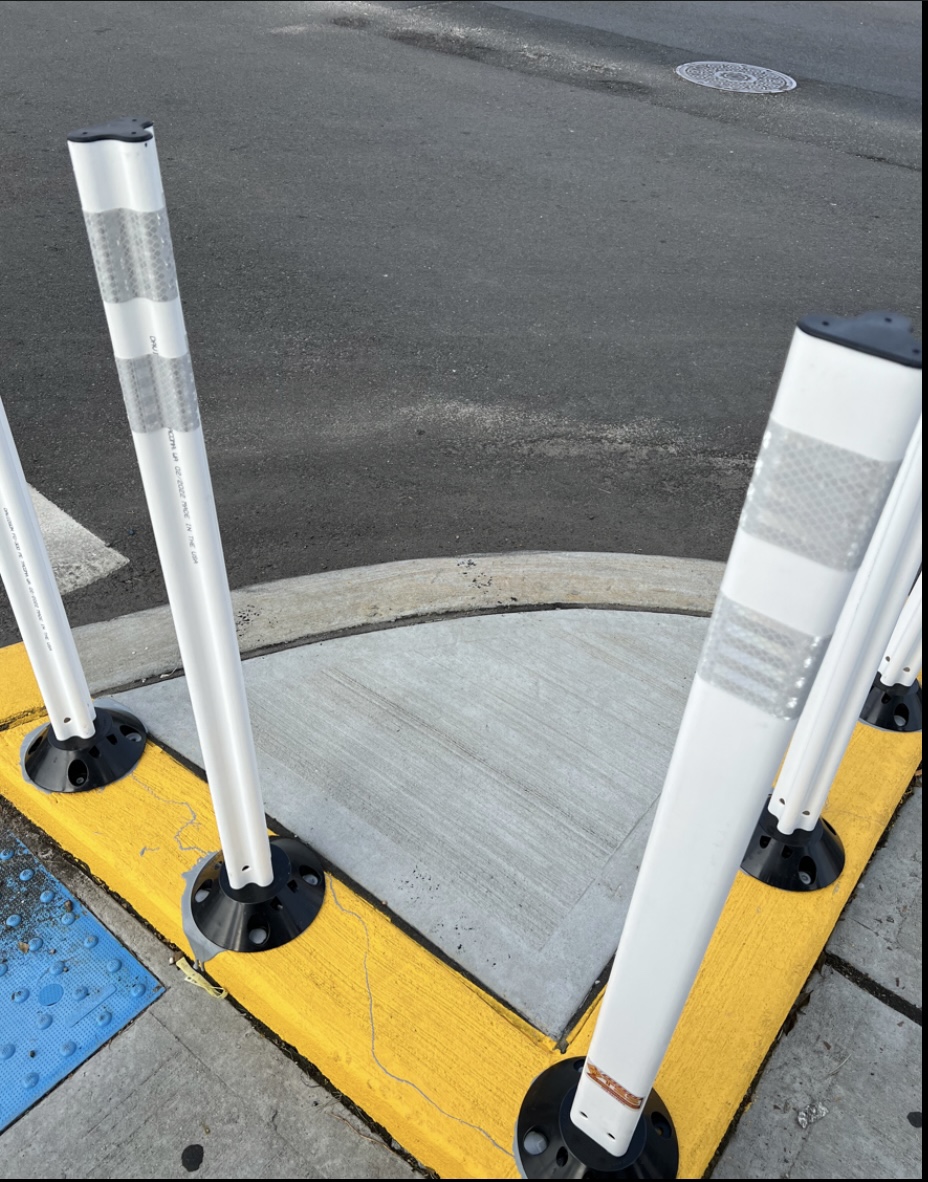
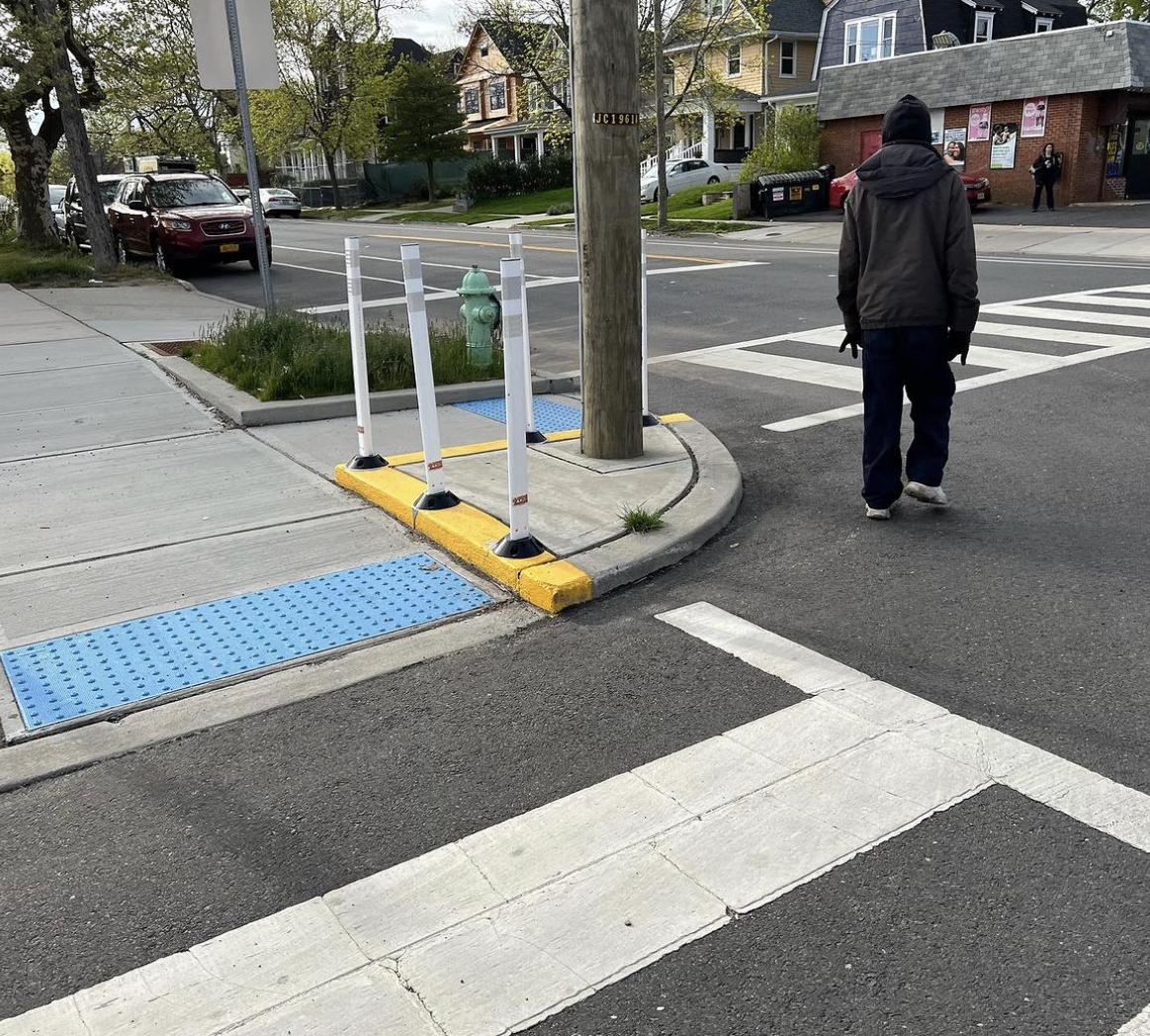
#NJDOTengineering: 4 intersections in Asbury Park’s Main St. include raised concrete corner wedges for zero purpose. Trip hazards, so they painted the edges yellow. Still trip hazards, so they came back again and glued on plastic flex posts, which have almost all fallen off. Can these meaningless chunks of concrete be removed?
No purpose for these weird blocky corners. Notice here, one flex post is gone. That was months ago. Now ALL of them have fallen off.
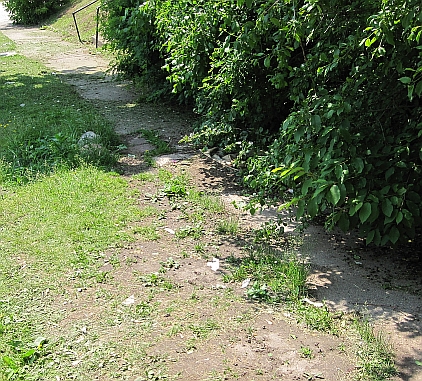
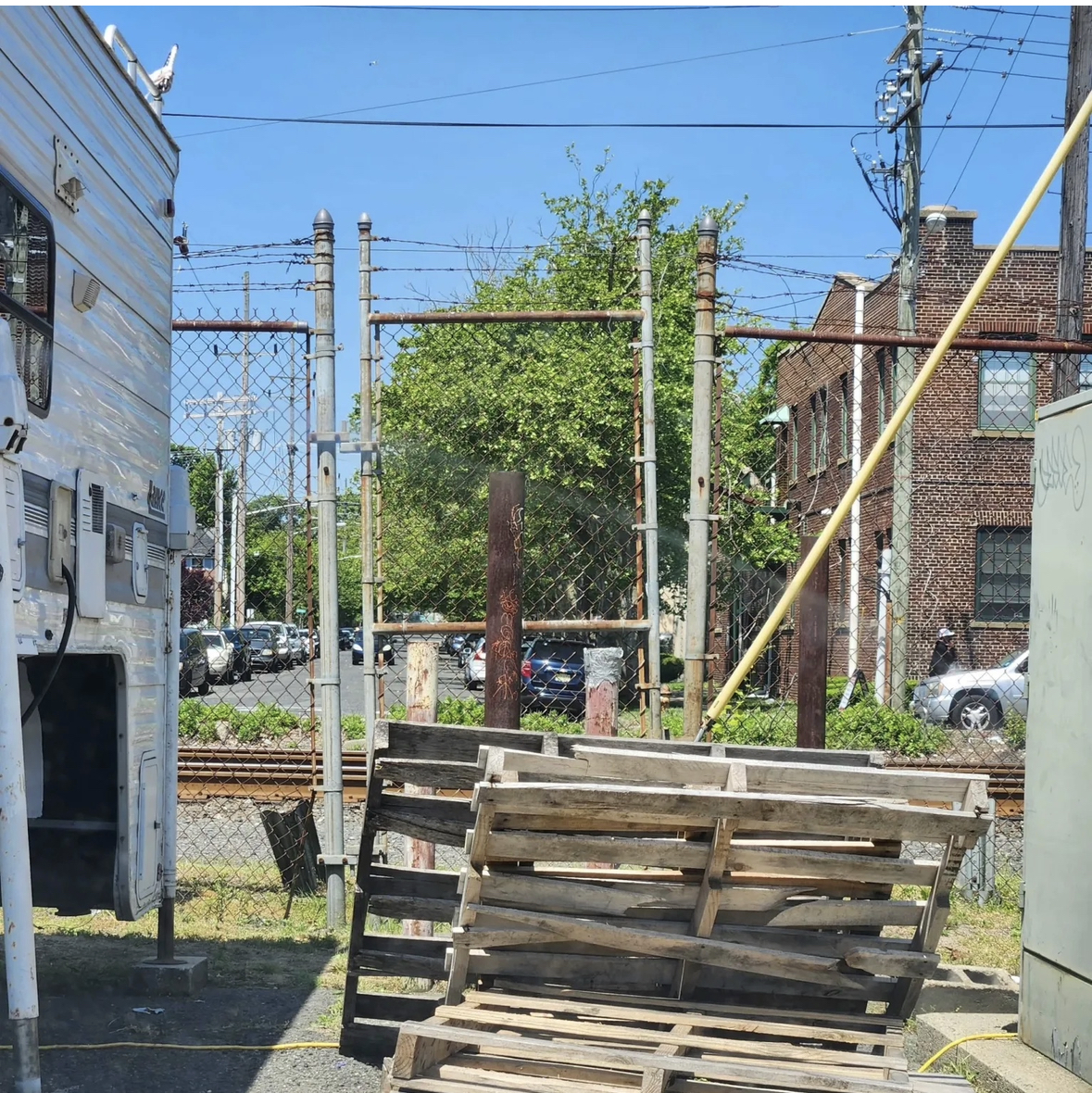
If you’re a bike rider, what does it mean when you see a sign like this “bike lane ends”? What does it mean to drivers? Whose interest is being served with this kind of signage?If you drive around the Asbury/Neptune circle heading north and west, you might never notice this overgrown sidewalk. If you have to walk along that sidewalk, it’s dangerous, disappearing under encroaching weeds, and unlit, dangerous at night.If you’re a person on a bike coming off the Ocean Grove bridge toward Lake Ave you’ll see that the concrete path does not lead to the ramp to the street, so people on bikes have created a “desire path” to get to the ramp, although a dirt path isn’t the safest place to ride a bike.. How could the city improve this situation? Moving the ramp could be a good solution.NJDOT/NJTransit One of 2 closed railroad crossings in Asbury Park. It has eliminated a access for people who live in that neighborhood to get home, or to destinations in the city, and collected debris and trash.NJDOT Confusing instructions on Main St. in Asbury Park for pedestrians to cross the street, especially for non-Engllsh speakers. Our streets should not prioritize drivers above other road users.No curb ramps on 5th Ave in Asbury Park to roll a wagon with kids, or a stroller, or for anyone with a handicap.
We need your help to understand the mobility challenges you encounter (or that you observe) when travelling to work, school, healthcare appointments, shopping, or whenever you’re walking or rolling in Monmouth County.
Whether you drive, take public transportation, walk, bike, or use another mode of transportation, you might notice or encounter mobility barriers, such as in these photos, or traffic congestion, unsafe intersections, infrequent bus service, no bus shelters, missing sidewalks or ADA curb ramps, no bike parking, etc.
The information you provide will be vital to informing the Monmouth Path Study, a transportation planning study that will identify and develop measures to reduce or eliminate mobility barriers for Monmouth County residents.
The goal of this study is to provide guidance for the County and its municipalities to reduce or overcome existing barriers and prevent new obstacles. This will be accomplished by combining data analysis and the lived experiences of County residents to evaluate infrastructure, policy, socioeconomic, and awareness factors that can be major limitations for the traveling public. Potential outcomes of this study include strategies to improve the built environment in a variety of land-use areas within the County.
This weekend I participated in an intensive training to be certified as a League Of American Bicyclists Instructor: LCI.
The League Of American Bicyclists Instructor Certification provides a solid foundation for me to initiate a bike riding program for parents and kids in Asbury Park, called Bike Bus.
Presentation Principles Of Traffic Law for certification of League Of American Bicyclists Instructor
Parents riding bikes with kids to school, picking up other kids along the way (like a bus does), has been catching on everywhere all over the globe. There are dozens of articles about this phenomenon from Barcelona; Portland; the Upper West Side of NYC; Montclair, NJ; Jersey City; Brooklyn and many, many more cities all over the US and the world.
Brooklyn Bike Bus!
It was never questioned that I could ride my bike to school as a kid, but it has become far less usual nowadays.
Many parents in Asbury Park have told me they’re afraid to let their kids ride because of traffic, so they drive them to school, which makes them traffic, which in turn creates more congestion and dangerous conditions in school zones and surrounding streets
This is a great, healthy, fun way to get kids (and their parents) out of cars.
Getting kids and parents out of cars and on bikes is a healthy way to start the school day, prepares kids’ brains to perform better in school, and builds friendships with other kids and families.
All upsides, and no downsides.
We’re not reinventing the wheel (pun intended)!
Together WE can advocate for raised crosswalks, and other creative, effective traffic calming measures around our schools.
Streets need to be designed so drivers won’t speed anywhere near or around schools, and even street closures during school hours.
Asbury Park Complete Streets Coalition will host a League Of American Bicyclists Cycling Instructor seminar on November 3rd, 4th, and 5th at The Boys And Girls Club.
Bicycling in Asbury Park has been transforming over the 8 years years that APCSC has been in existence.
When APCSC was founded there was only one (very worn) bike lane in the city.
People were riding bikes for daily transportation or recreation with zero awareness of the need for safe infrastructure. Main Street was a speeding 4 lane highway, many businesses had been abandoned, and drivers ruled city streets.
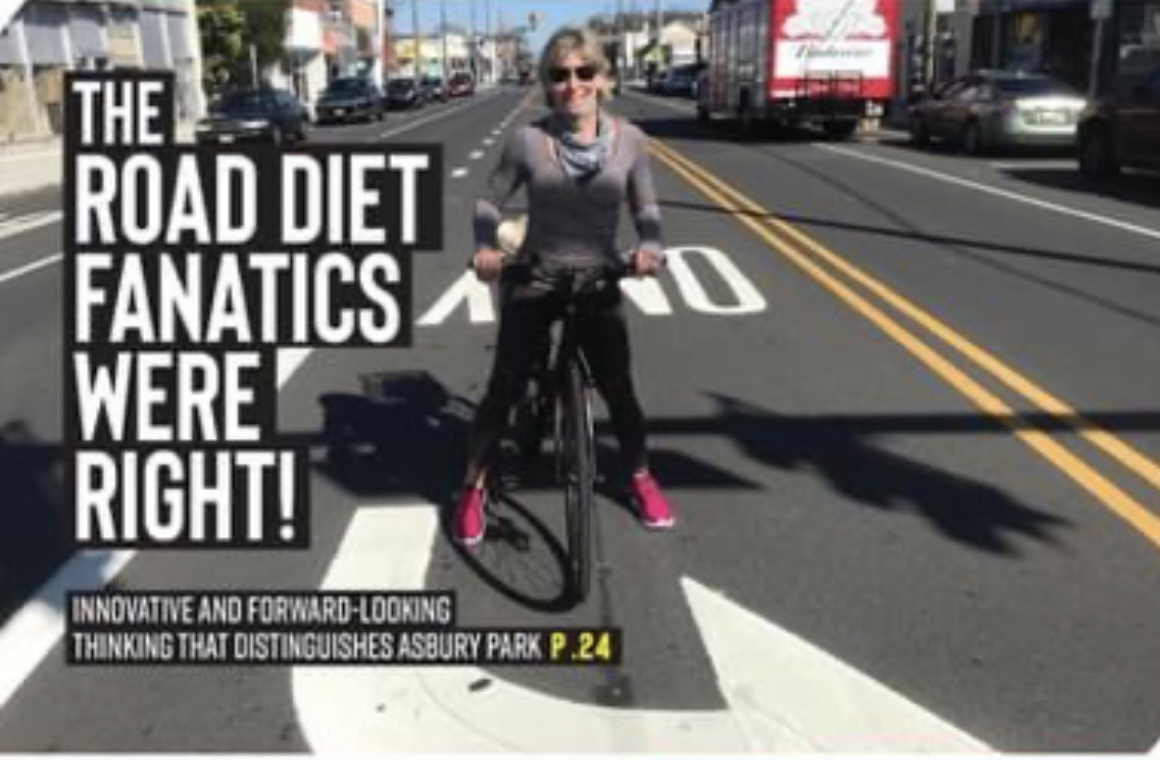
Locals began advocating with us and learning how we can #slowthecars with traffic calming measures like bike lanes, bumpouts, mini traffic circles, raised crosswalks, and speed bumps. The Main Street road diet was implemented after an energetic 18 months APCSC campaign.
Streets that are safe for anyone at any age to ride a bike will encourage people to ride bikes.
Residents and visitors now are beginning to understand the need for safe bike riding infrastructure – for health, economic, and social benefits.
We still have a long way to go, but improvements are being made all over the city. During these years people have become aware of the need for equitable mobility for the most vulnerable road users – which is everyone outside of a vehicle.
Our hope is that we might be able to encourage parents, teachers, and residents to be a part of a “Bike Bus” – a global movement in which adults on bikes pick up kids on bikes at “bus stops” all over town and guide them to school.
And in Williamsburg, Brooklyn: Make Way for the Bike Bus. For the school commute, families are taking to the streets with two wheels. Some have termed the movement “kidical mass.”
This is where League of American Bicyclist Instructor training comes in!
The League Seminar will equip instructors to educate members of the community, particularly parents and school kids to ride bikes confidently and safely.
Certified LCIs are empowered to teach courses that cover youth riding, how to ride confidently and legally with traffic, how to share paths and trails, motorist education, bike handling, group riding, and more.
Porchfest was so great again this year! I love it because it brings us all together with a love of music, and especially because almost everyone gets to the porches by bike, scooter, or walking.
The city feels much safer without so many cars.
All the bikes at Porchfest!
Do you feel dependent on a car? Why?
Do we have enough options for equitable mobility in Asbury Park?
I’ve discussed this with our city transportation manager for years, and it remains in the “discussion phase” …
People who can’t easily walk, often can ride a bike or a trike – using it as their best form of mobility. We believe that residents and visitors would benefit from reinstating a robust bike share program.
Do you feel safe walking or rolling?
Asbury Park is only 1.4 sq miles. It should be walkable and rollable for everyone.
Traffic in Asbury Park swells on weekends and in the summer, but it’s often a problem throughout the year within the business district. People driving around looking for parking istraffic.
When I ask moms and dads if they’ll allow their kids to ride bikes to school the reply is, “No– because of drivers.” Parents don’t realize that they are traffic because they’re driving their kids to school.
Sidewalks are cracked, too many curbs don’t have ADA ramps, and bike lanes are only painted stripes, so it’s a deterrent to people who might be willing to walk or roll – because of #toomanycars, drivers who are speeding, and running stop signs.
What can YOU do?
Drive less, or don’t drive at all this week, and find out what it feels like to be a walker or roller in our city. You’ll benefit from the exercise, the fresh air, and the social opportunities of being out of the car!
People without a car or unable to drive should be able to get to where they need to go safely and effectively. But every day, Americans who can’t drive – approximately 25 percent of the population – face significant barriers to mobility such as inadequate sidewalks, poor transit, lack of connectivity and dangerous roads. The needs of non-drivers are too-often disregarded in transportation infrastructure and policies.
I saw the immediate aftermath of a bike rider getting hit by a driver one block from our house this weekend. The bike rider himself unbelievably seemed ok, and he said “I’m sorry…” but the driver had been far exceeding the local 25mph limit.
Why would even a bike rider himself take the blame for being hit by a driver? It’s a successful campaign by the auto industry to hijack American brains.
Let’s stop blaming pedestrians and bicyclists for their injuries and deaths. Here’s the truth.
It’s just easier, and it suits the industry to shift the responsibility for safety off the driver, to take focus off humongous 9000lb vehicles, and away from infrastructure that is dangerous by design.
Place responsibility on the walker or on the person on a bike for their own safety. Done.
Truth: Drivers are killers. But hear me out…drivers themselves can’t be totally to blame…
Cell phones and gadgets which irresistibly distract drivers have contributed to soaring numbers of fatalities and injuries. Now cars like the 2021 Mercedes have huge dash screens, and other built-in distractions like “infotainment systems”, but car makers tell drivers to use them with caution, so oh yeah, we’re good.
Distracted driving that leads to injuries and death is a public health crisis.
For the past several years, huge SUVS and trucks are almost the only vehicles being built in America, so what’s a driver to do? They’re marketed with features that protect people inside the vehicles, but everyone outside the vehicle is at risk. A walker hit by a driver of a Honda Civic will probably be injured, but maybe not killed. A person walking hit by the driver of a Ford F150 will be dead.
Roads are designed for speed. Most American traffic engineering designs roads to expedite traffic: Wide roads look and feel like landing strips, which invite, and encourage drivers to speed. It’s just what happens.
Onward~
Polli Schildge Editor APCompleteStreets.org
Send your comments and share your email to: apcompletestreets@gmail.com
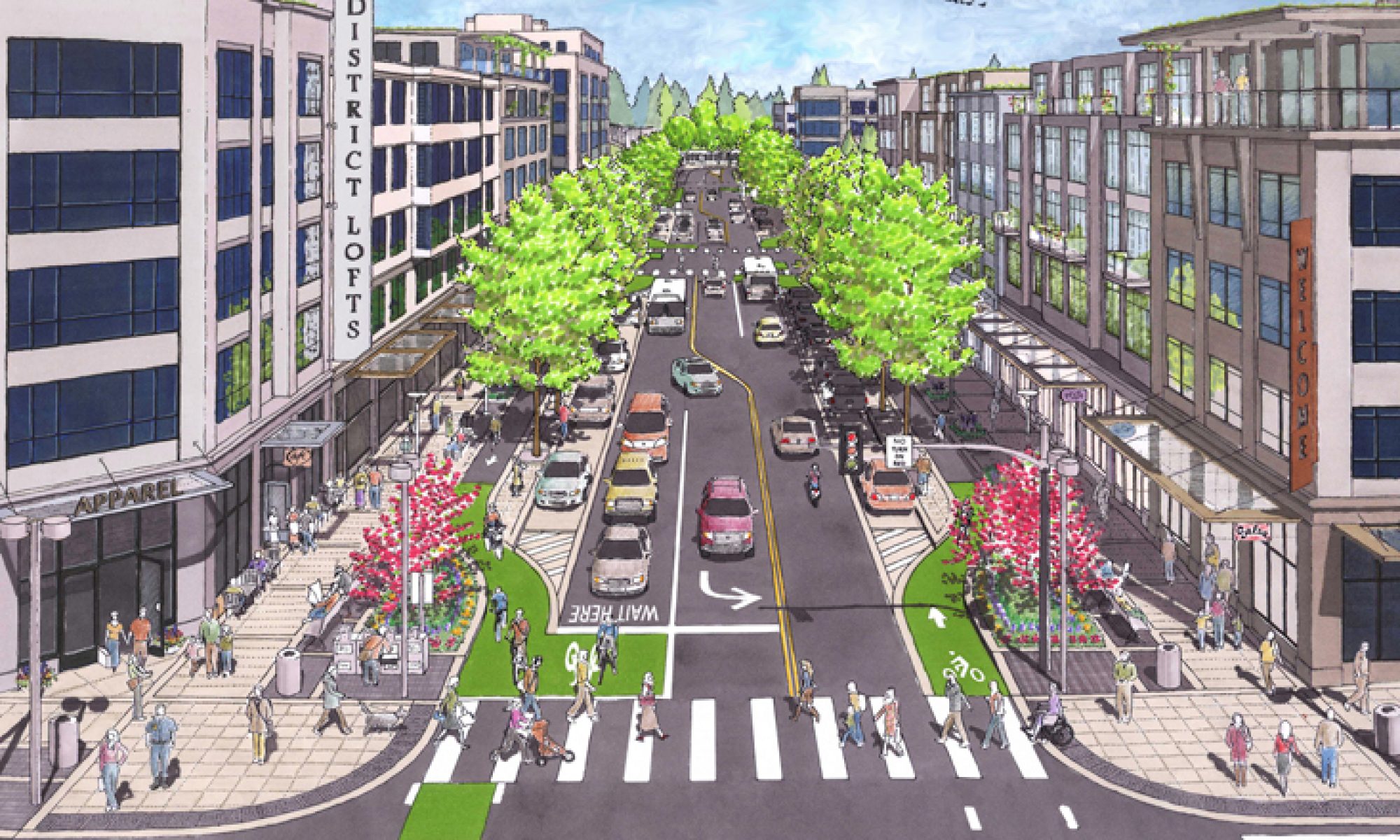
The Main Street reconfiguration will be complete with the addition of benches, bike racks, and trees.
The City of Asbury Park received a Federal Transportation Alternatives Program (TAP) grant to provide streetscape improvements along Main Street and Deal Lake Drive. “The proposed project will include the installation of over 100 new street trees to improve the aesthetics of the roadway. In addition, new decorative bicycle racks will be installed at various locations along Main Street.”
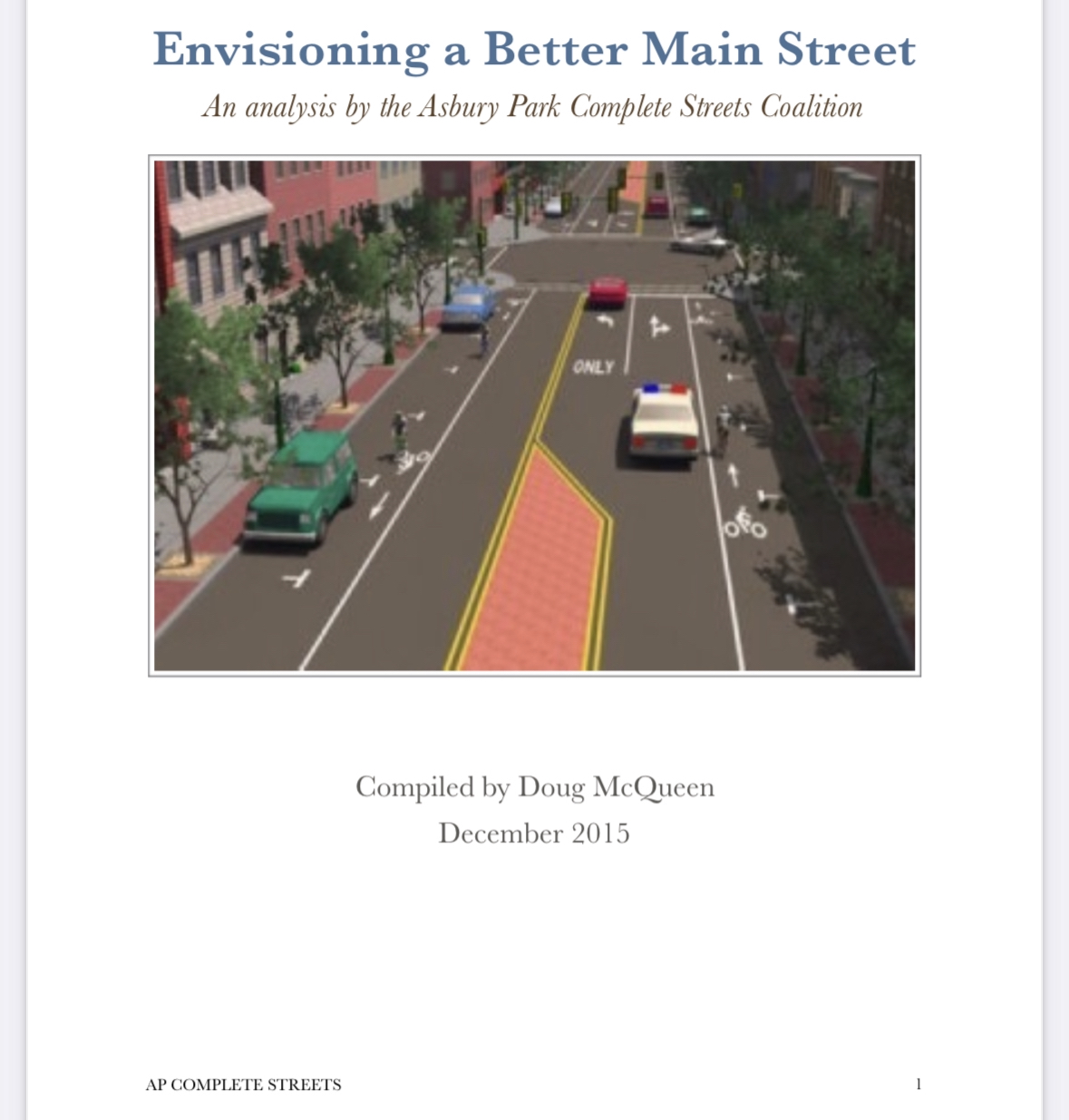
Envisioning A Better Main Street Road Diet Paper. By founding member, Doug McQueen. Printed, and shared everywhere!
In 2017, after about 18 months of research, communication with NJDOT, plus energetic and wide-reaching community engagement, APCSC and our supporters applauded the Mayor and city council members when the city agreed unanimously (video) to reverse their decision, and to move forward with the NJDOT $19 million planned Road Diet.
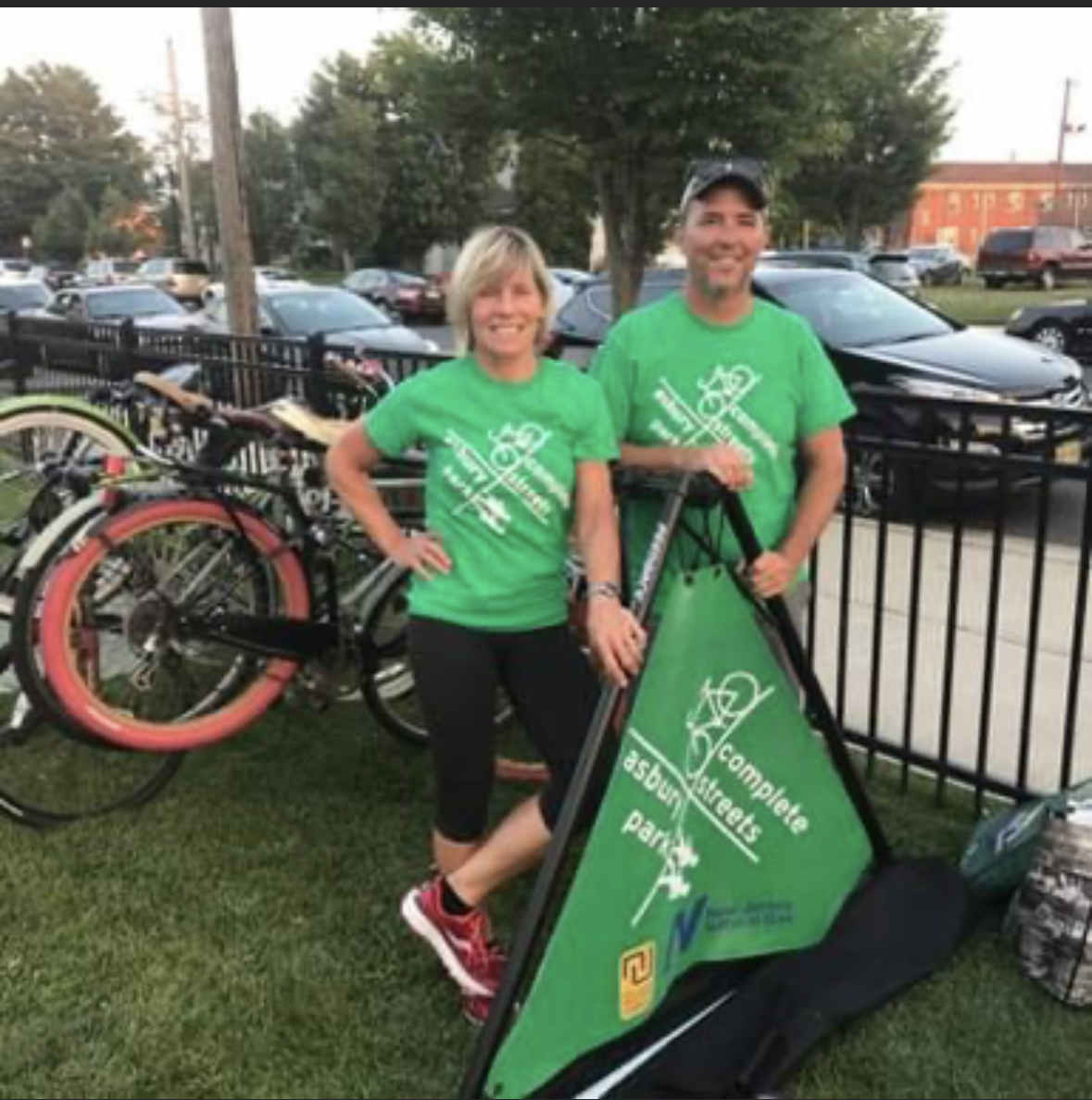
In 2021 NJDOT Commemorated the Main St. Road Dietwith Director Diane Guiterrez, Lt Gov. Sheila Oliver, NJ Senator Vin Gopal, local Assembly Persons, and Asbury Park Mayor Moor, City manager Donna Vieiro, and Council members, Kendle, and Clayton, Transportation Manager Mike Manzella, and me, Polli Schildge, proudly wearing my distinctive green APCSC T-shirt!
2021 Commemoration of the Main Street Road Diet.
APCSC has been showing up, gaining support and building a strong reputation across the state!
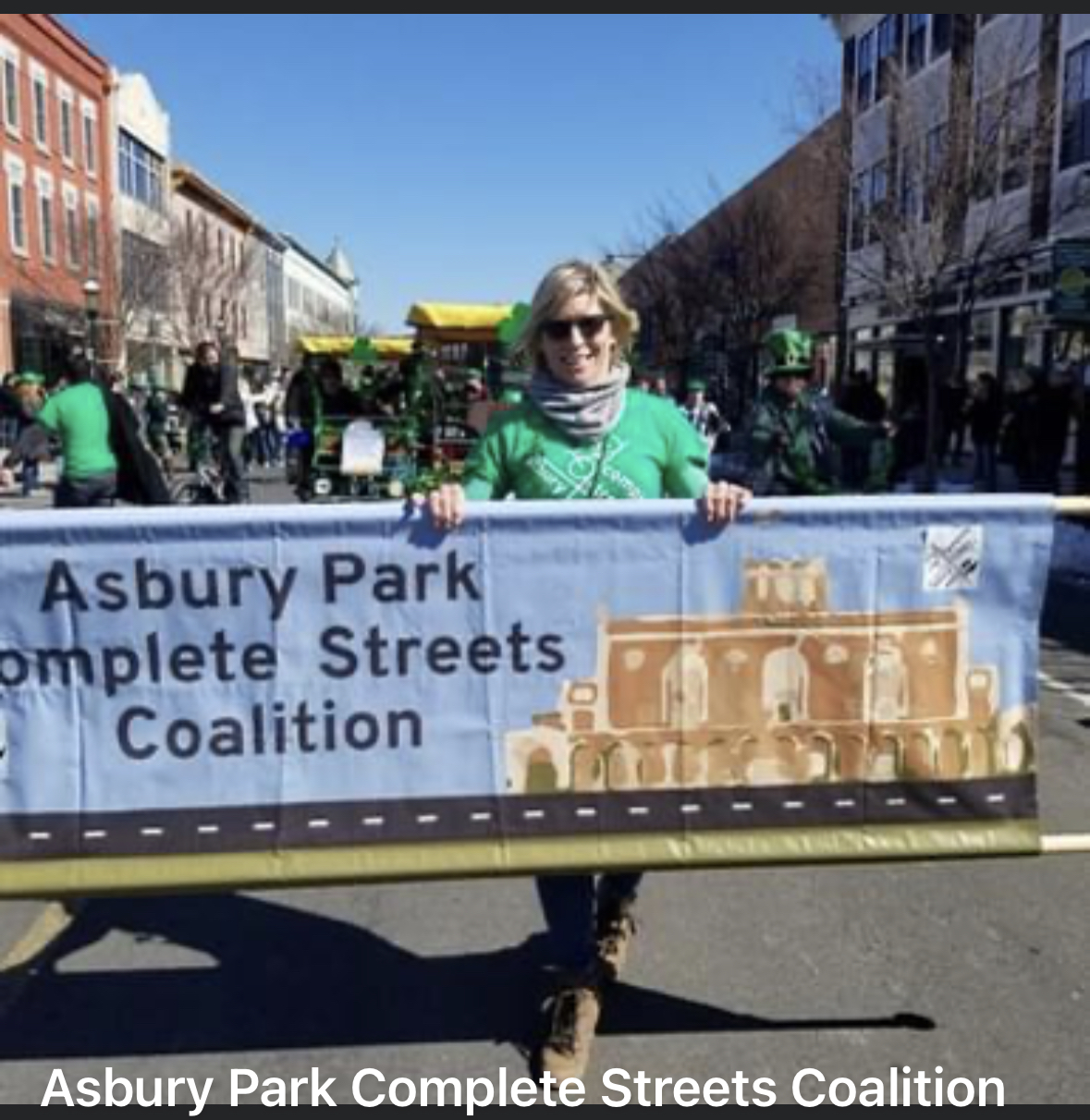
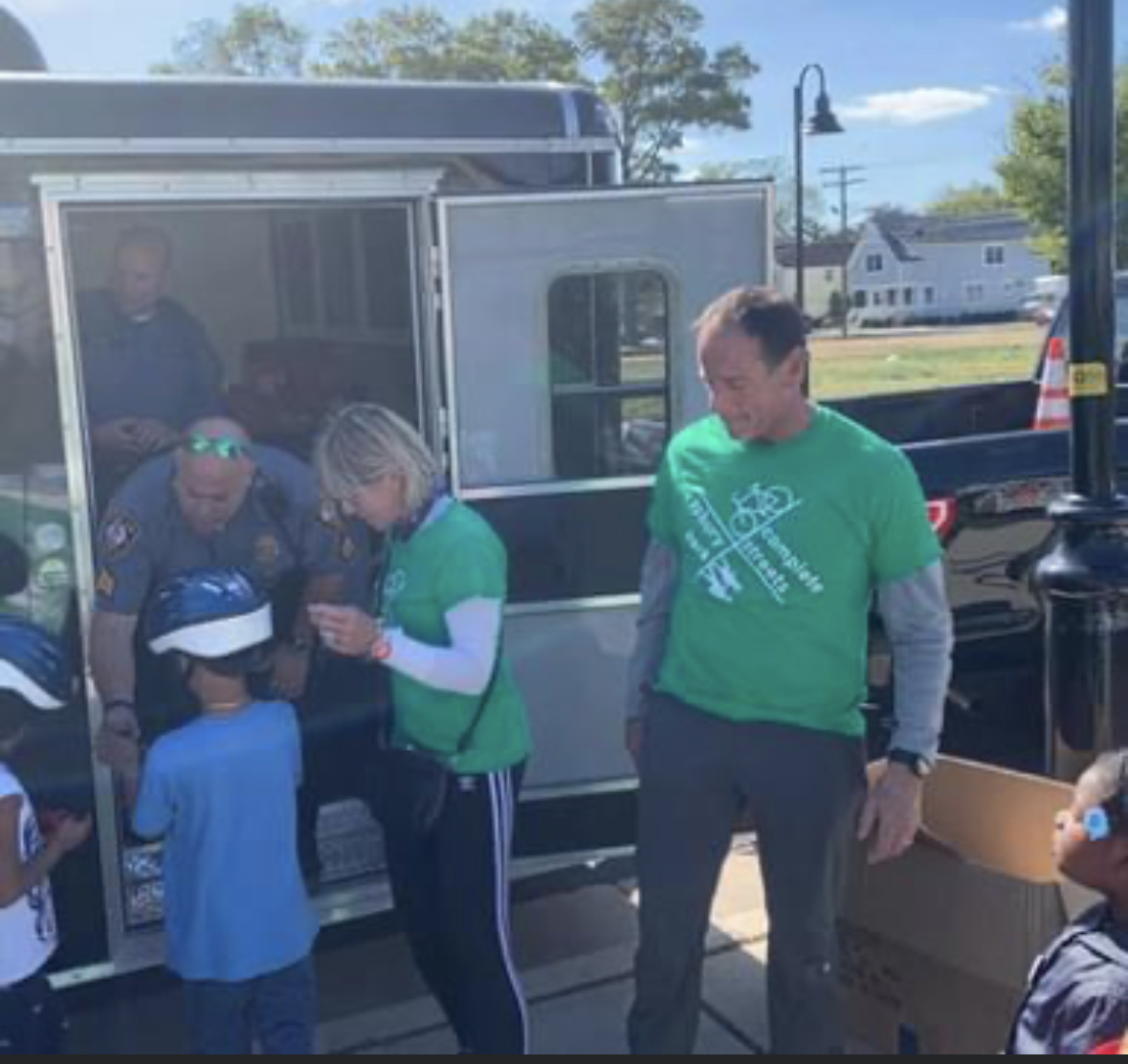
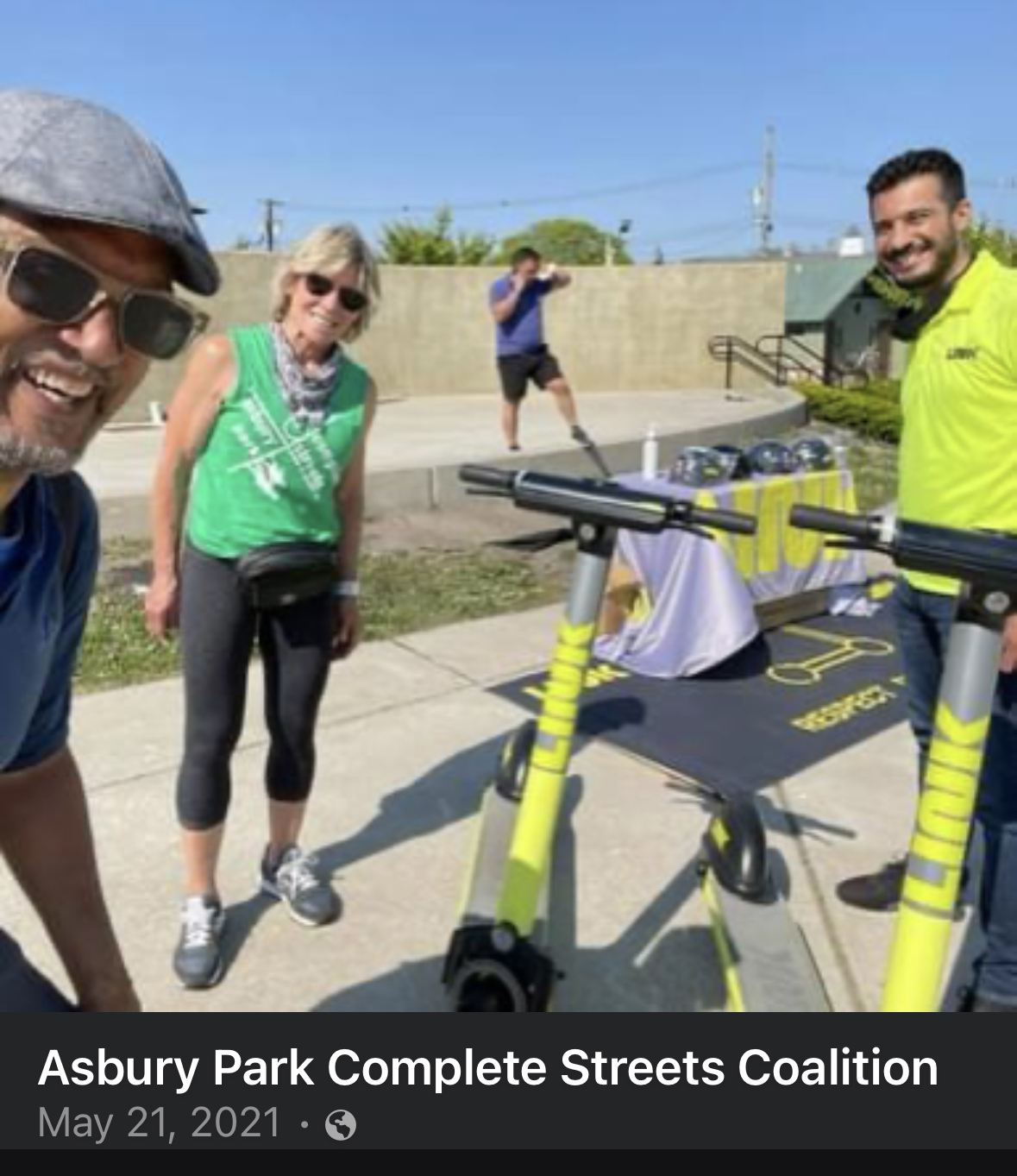
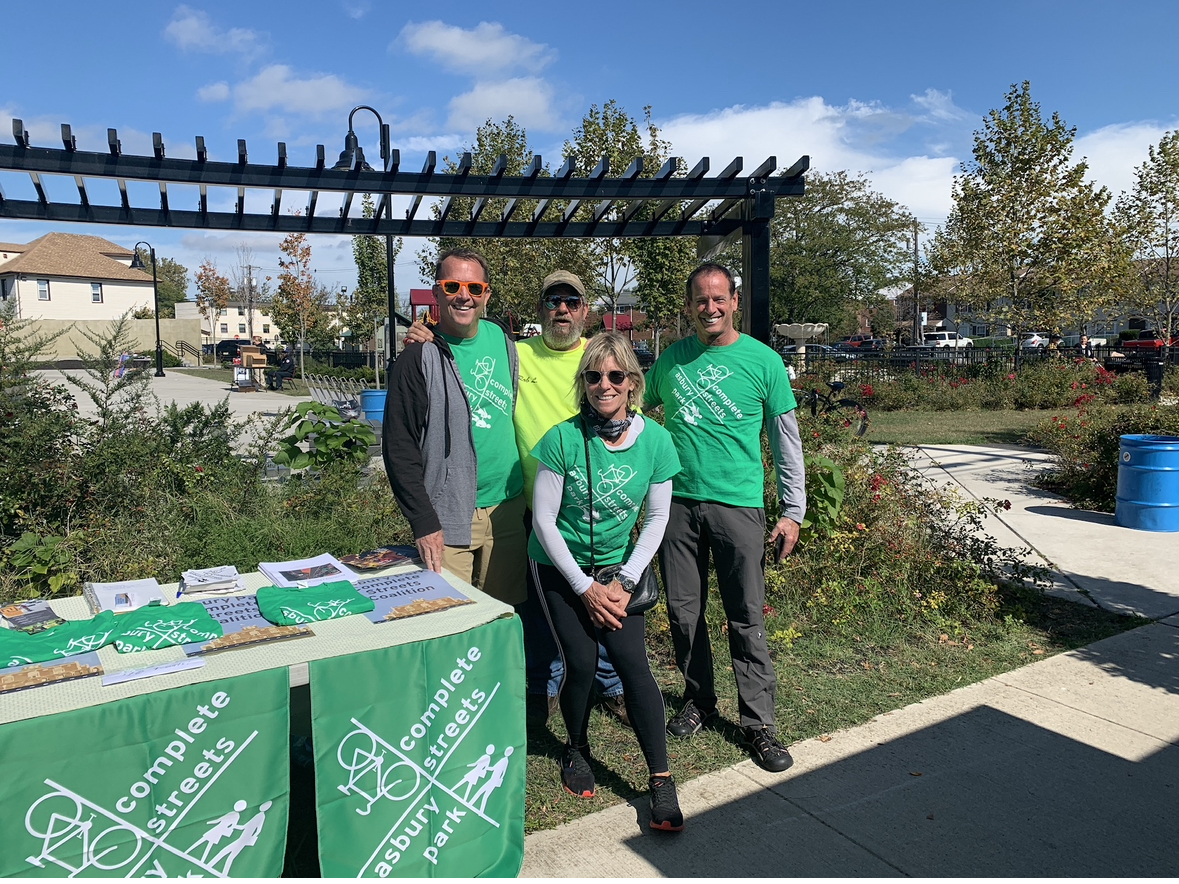
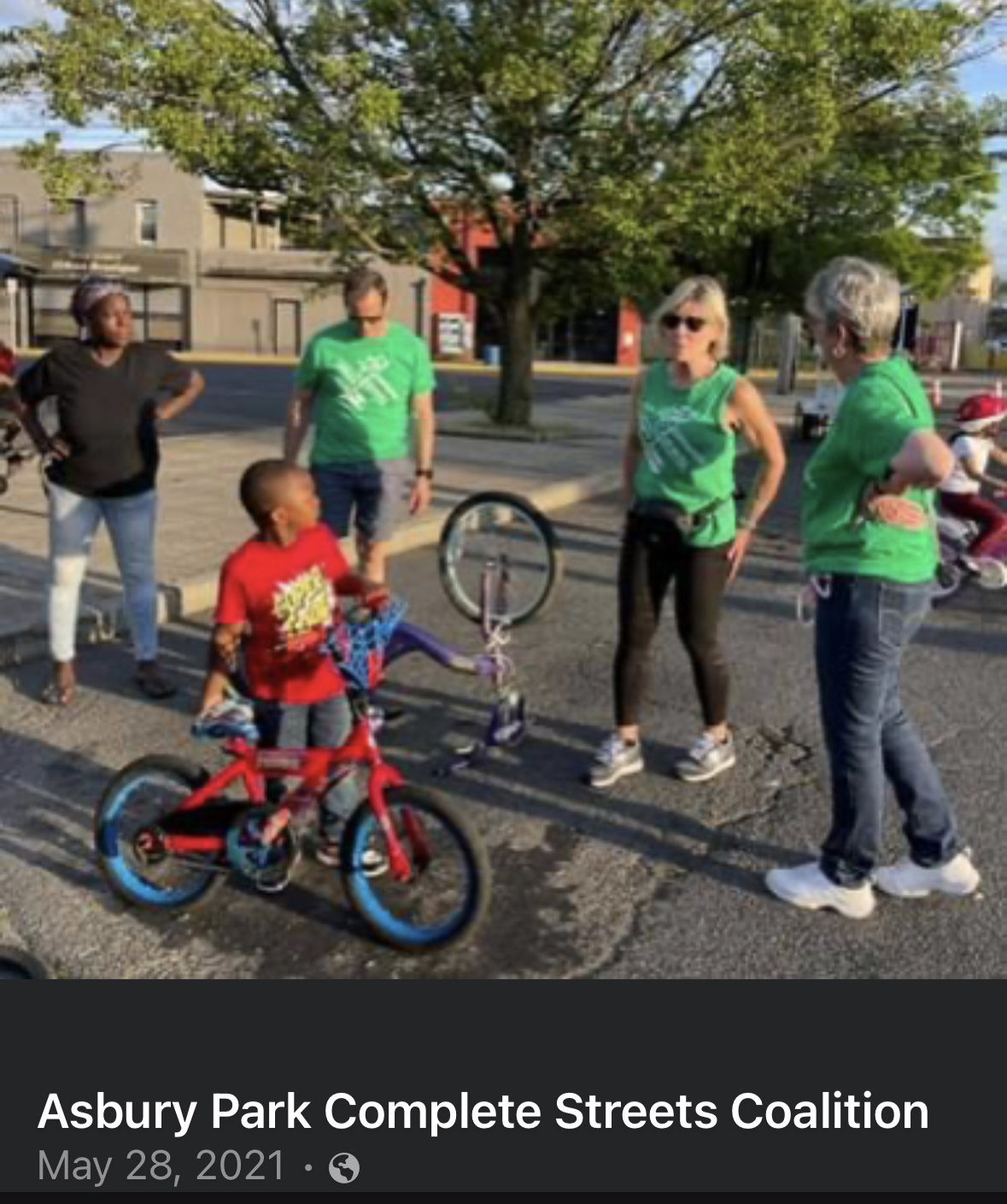
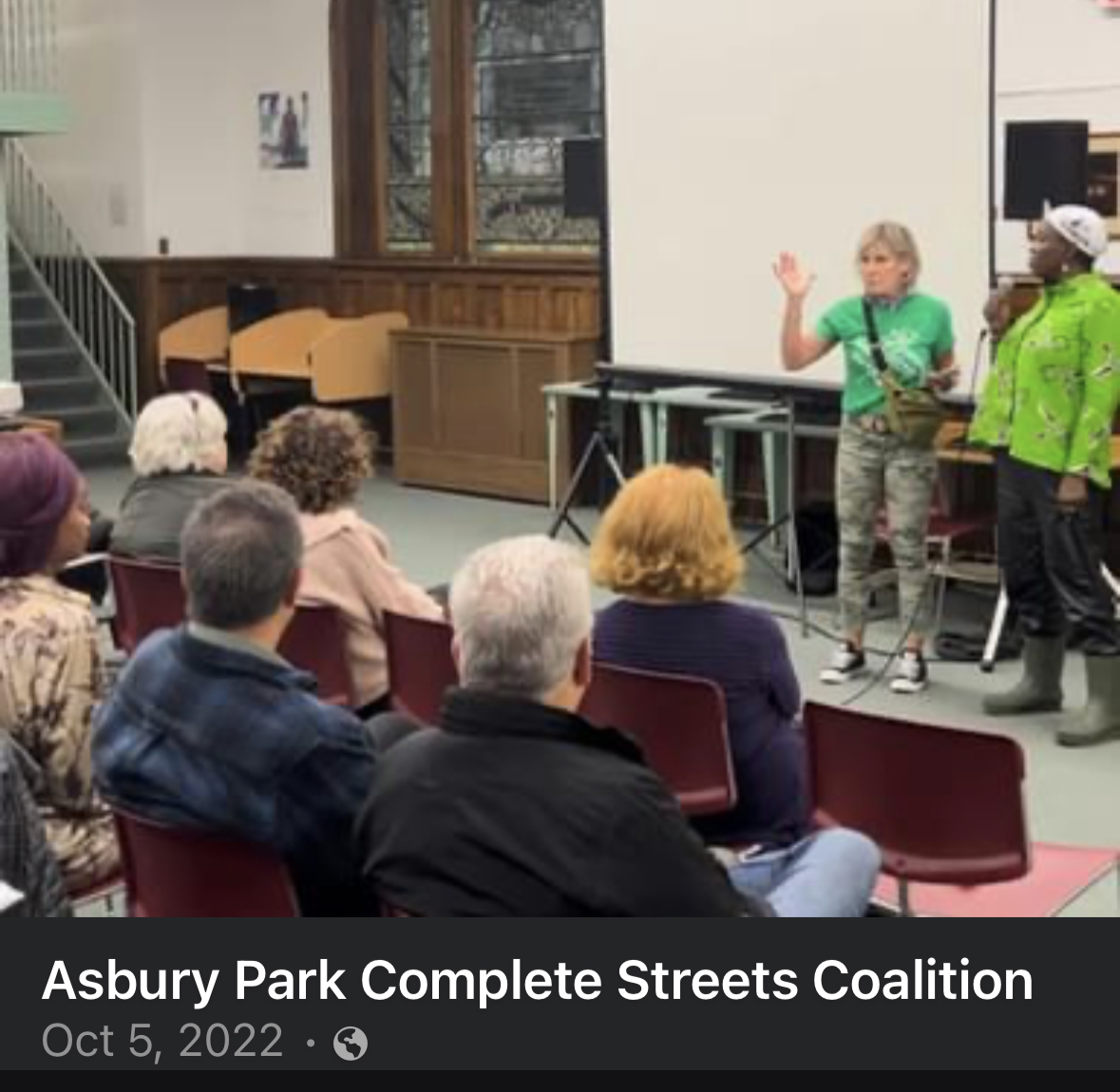
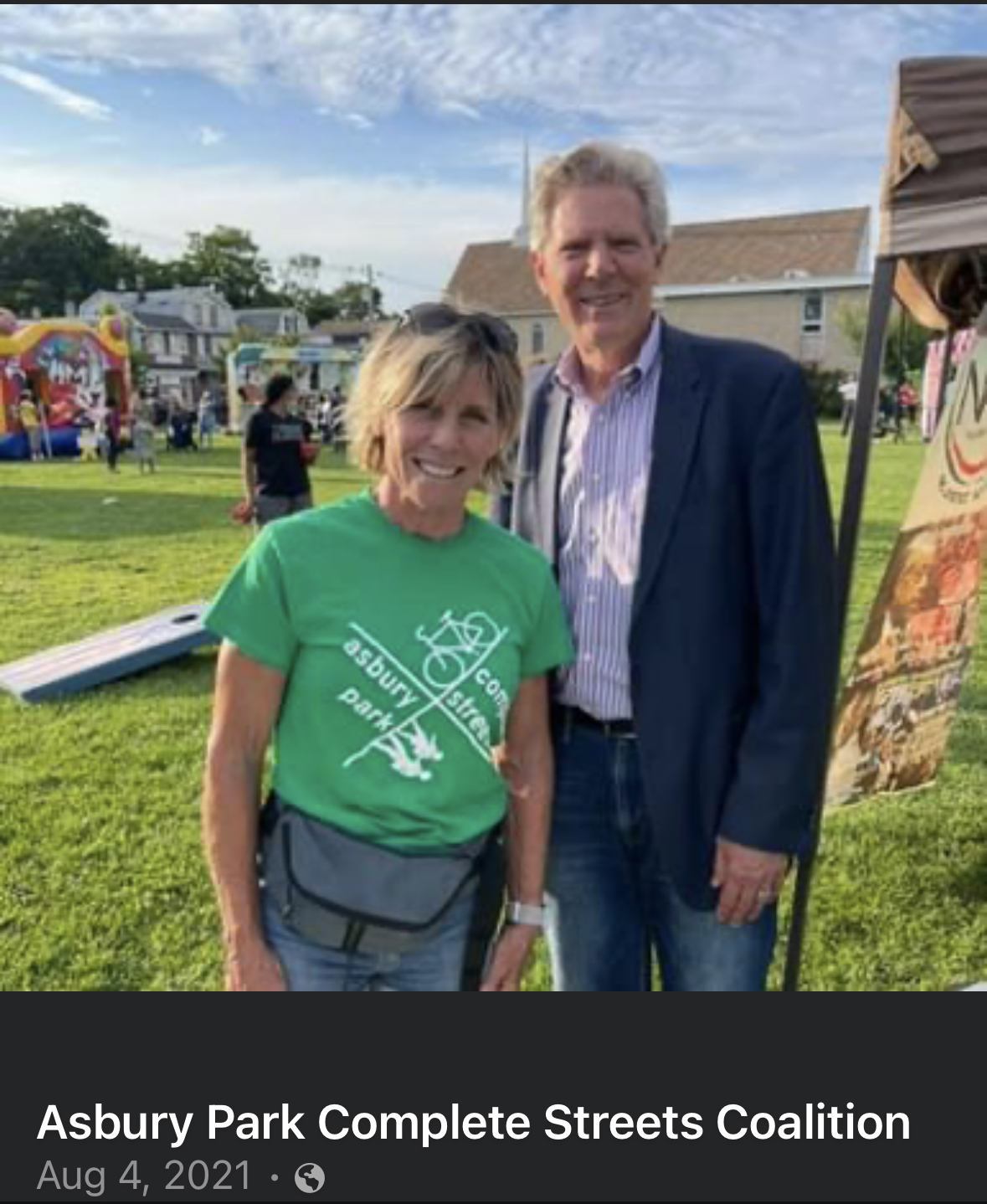
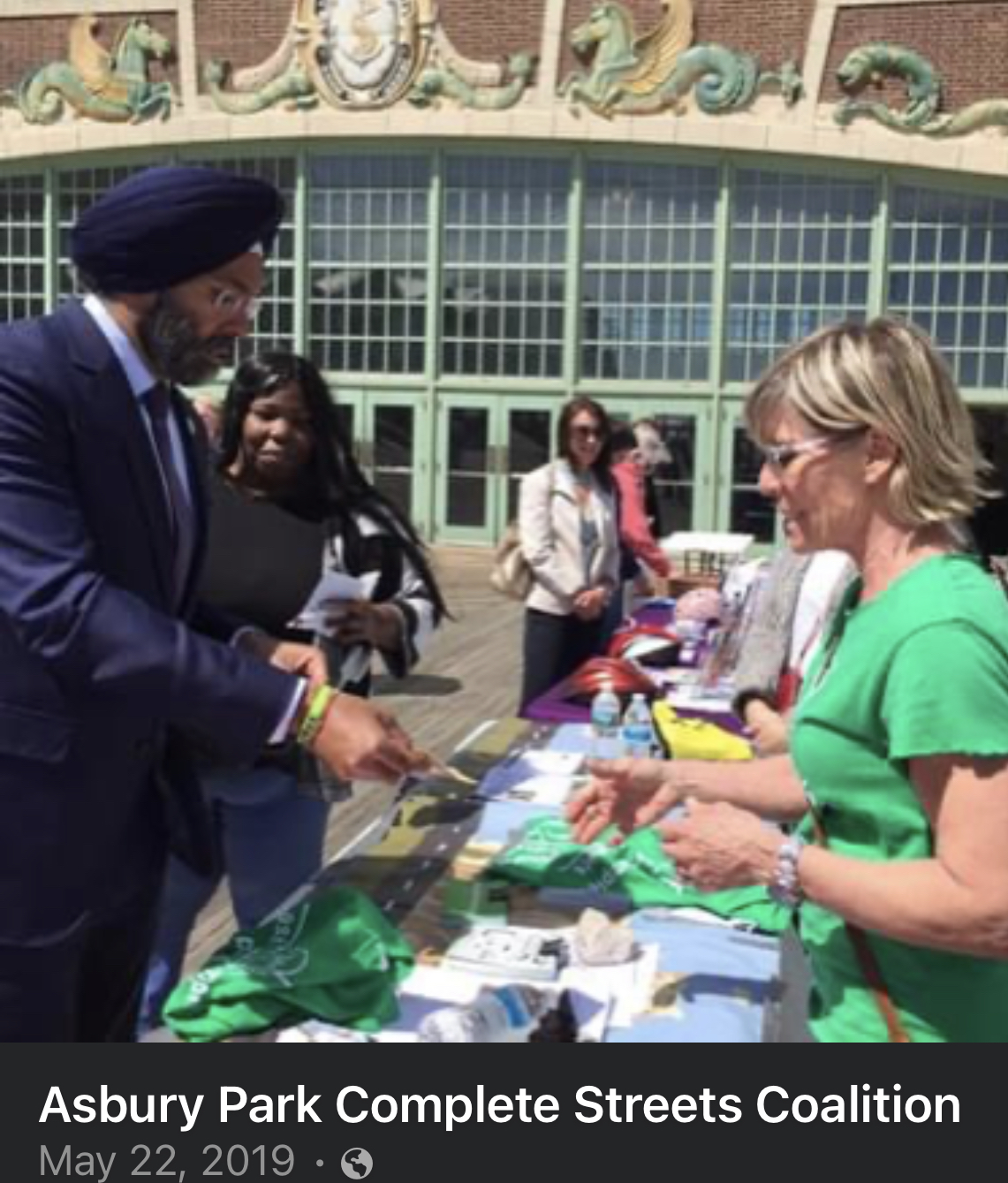
Sharing Complete Streets info at Pride DayBike Valet at Music MondaysMarching with the banner at the AP St Pat’s ParadeHelping APPD give out helmetsBike parking at Sea.Hear. Now 2018Local media, once against the road diet in 2016, supports it in 2020!Scooter education 2021Taking every opportunity to share information at city eventsBike repair for kidsScreening the great documentary “The Street Project” to a big crowd at AP Library 2022With Congressman Frank Pallone, APPD National NIght Out 2021Love the Monthly Slow Roll!With AG, Gurbir S. Grewal 2019With Frank Pallone at APPD National Night Out in 2023
As a 1.4mile sq city, AP could be a model for a truly people-centric, walkable and rollable city. We’re looking forward to many more ongoing improvements for people walking and rolling in AP, as outlined in the Asbury Park Walk and Bike Plan.
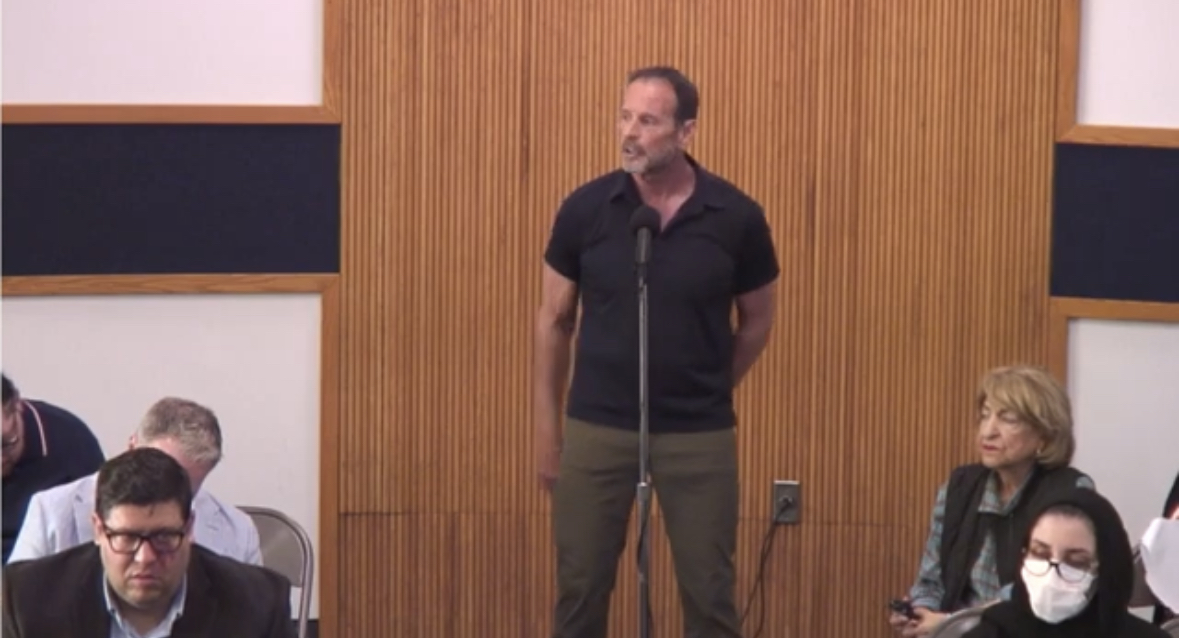
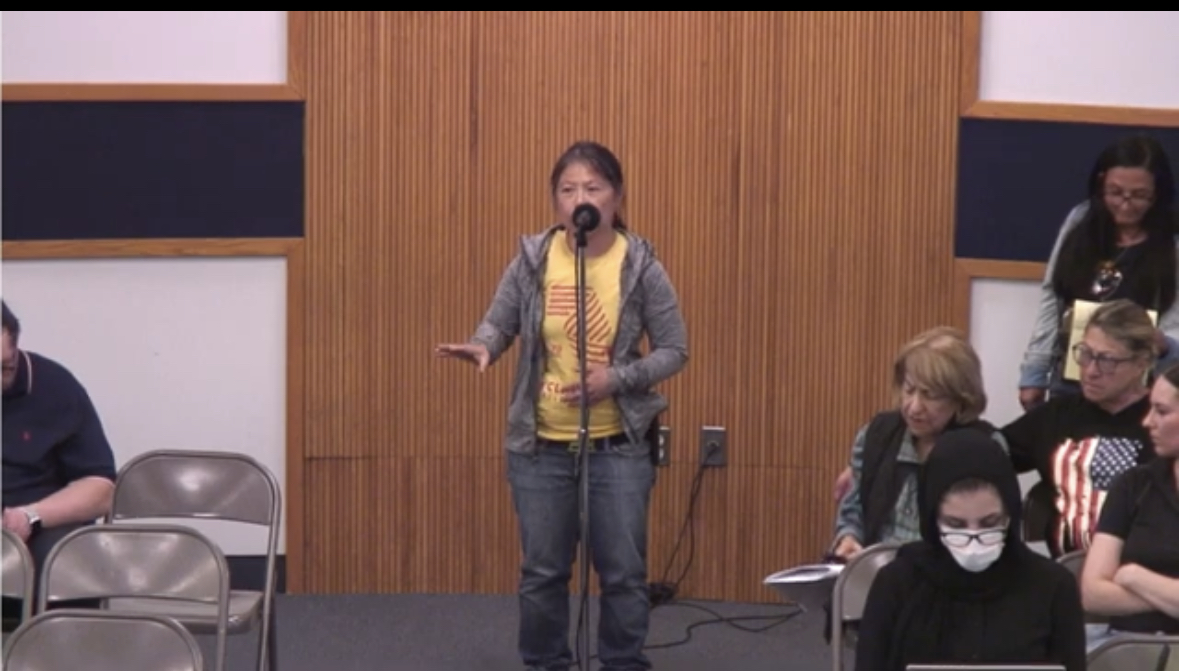
The city council meeting went well on Wednesday night 6/14- each person who spoke made very effective points. Thanks so much for stepping up to the mic!
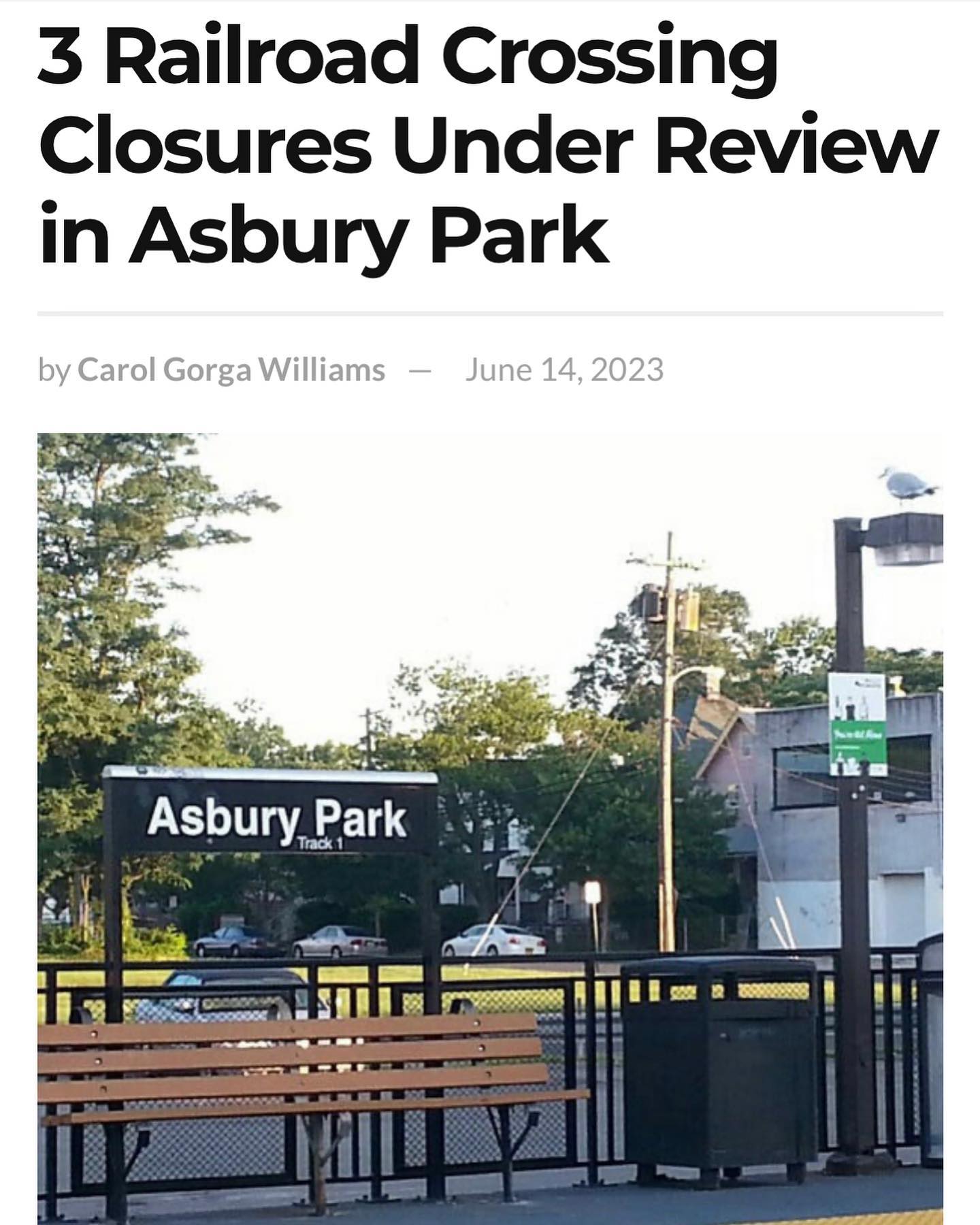
DOT communication with the city this week said that the closure at 6th is “on hold” now, pending more study. But it there is no guarantee that it will not be closed.