Porchfest was so great again this year! I love it because it brings us all together with a love of music, and especially because almost everyone gets to the porches by bike, scooter, or walking.
The city feels much safer without so many cars.
All the bikes at Porchfest!
Do you feel dependent on a car? Why?
Do we have enough options for equitable mobility in Asbury Park?
I’ve discussed this with our city transportation manager for years, and it remains in the “discussion phase” …
People who can’t easily walk, often can ride a bike or a trike – using it as their best form of mobility. We believe that residents and visitors would benefit from reinstating a robust bike share program.
Do you feel safe walking or rolling?
Asbury Park is only 1.4 sq miles. It should be walkable and rollable for everyone.
Traffic in Asbury Park swells on weekends and in the summer, but it’s often a problem throughout the year within the business district. People driving around looking for parking istraffic.
When I ask moms and dads if they’ll allow their kids to ride bikes to school the reply is, “No– because of drivers.” Parents don’t realize that they are traffic because they’re driving their kids to school.
Sidewalks are cracked, too many curbs don’t have ADA ramps, and bike lanes are only painted stripes, so it’s a deterrent to people who might be willing to walk or roll – because of #toomanycars, drivers who are speeding, and running stop signs.
What can YOU do?
Drive less, or don’t drive at all this week, and find out what it feels like to be a walker or roller in our city. You’ll benefit from the exercise, the fresh air, and the social opportunities of being out of the car!
People without a car or unable to drive should be able to get to where they need to go safely and effectively. But every day, Americans who can’t drive – approximately 25 percent of the population – face significant barriers to mobility such as inadequate sidewalks, poor transit, lack of connectivity and dangerous roads. The needs of non-drivers are too-often disregarded in transportation infrastructure and policies.
I saw the immediate aftermath of a bike rider getting hit by a driver one block from our house this weekend. The bike rider himself unbelievably seemed ok, and he said “I’m sorry…” but the driver had been far exceeding the local 25mph limit.
Why would even a bike rider himself take the blame for being hit by a driver? It’s a successful campaign by the auto industry to hijack American brains.
Let’s stop blaming pedestrians and bicyclists for their injuries and deaths. Here’s the truth.
It’s just easier, and it suits the industry to shift the responsibility for safety off the driver, to take focus off humongous 9000lb vehicles, and away from infrastructure that is dangerous by design.
Place responsibility on the walker or on the person on a bike for their own safety. Done.
Truth: Drivers are killers. But hear me out…drivers themselves can’t be totally to blame…
Cell phones and gadgets which irresistibly distract drivers have contributed to soaring numbers of fatalities and injuries. Now cars like the 2021 Mercedes have huge dash screens, and other built-in distractions like “infotainment systems”, but car makers tell drivers to use them with caution, so oh yeah, we’re good.
Distracted driving that leads to injuries and death is a public health crisis.
For the past several years, huge SUVS and trucks are almost the only vehicles being built in America, so what’s a driver to do? They’re marketed with features that protect people inside the vehicles, but everyone outside the vehicle is at risk. A walker hit by a driver of a Honda Civic will probably be injured, but maybe not killed. A person walking hit by the driver of a Ford F150 will be dead.
Roads are designed for speed. Most American traffic engineering designs roads to expedite traffic: Wide roads look and feel like landing strips, which invite, and encourage drivers to speed. It’s just what happens.
Onward~
Polli Schildge Editor APCompleteStreets.org
Send your comments and share your email to: apcompletestreets@gmail.com
The Main Street reconfiguration will be complete with the addition of benches, bike racks, and trees.
The City of Asbury Park received a Federal Transportation Alternatives Program (TAP) grant to provide streetscape improvements along Main Street and Deal Lake Drive. “The proposed project will include the installation of over 100 new street trees to improve the aesthetics of the roadway. In addition, new decorative bicycle racks will be installed at various locations along Main Street.”
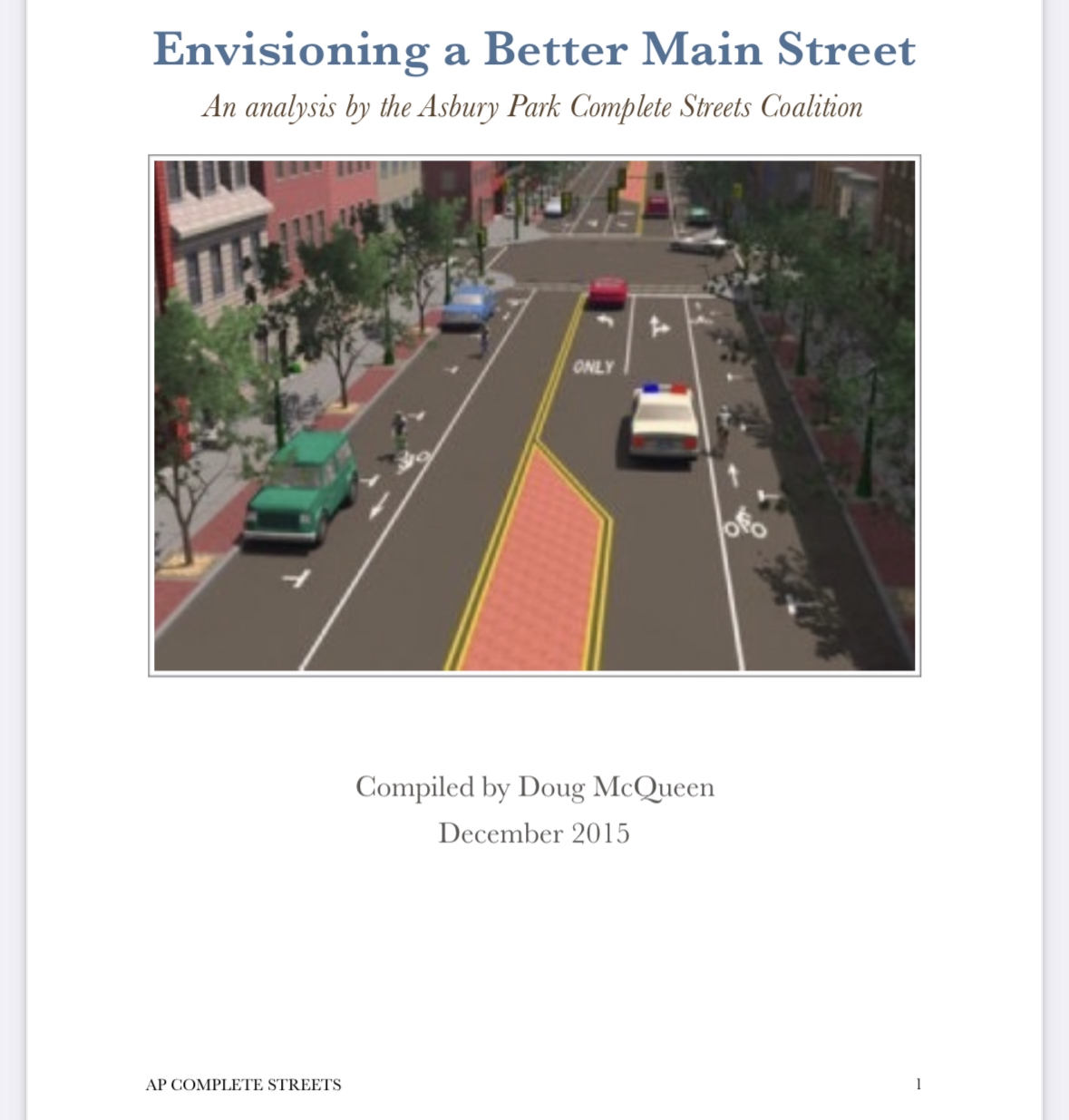
Envisioning A Better Main Street Road Diet Paper. By founding member, Doug McQueen. Printed, and shared everywhere!
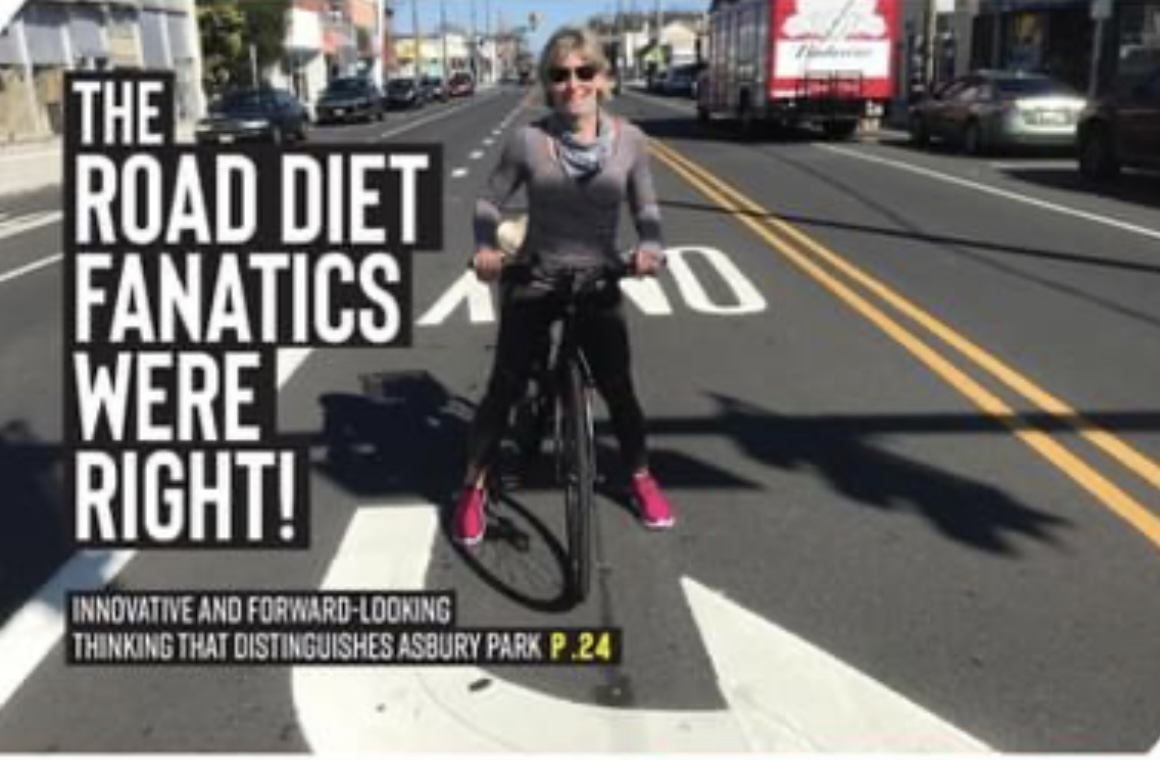
In 2017, after about 18 months of research, communication with NJDOT, plus energetic and wide-reaching community engagement, APCSC and our supporters applauded the Mayor and city council members when the city agreed unanimously (video) to reverse their decision, and to move forward with the NJDOT $19 million planned Road Diet.
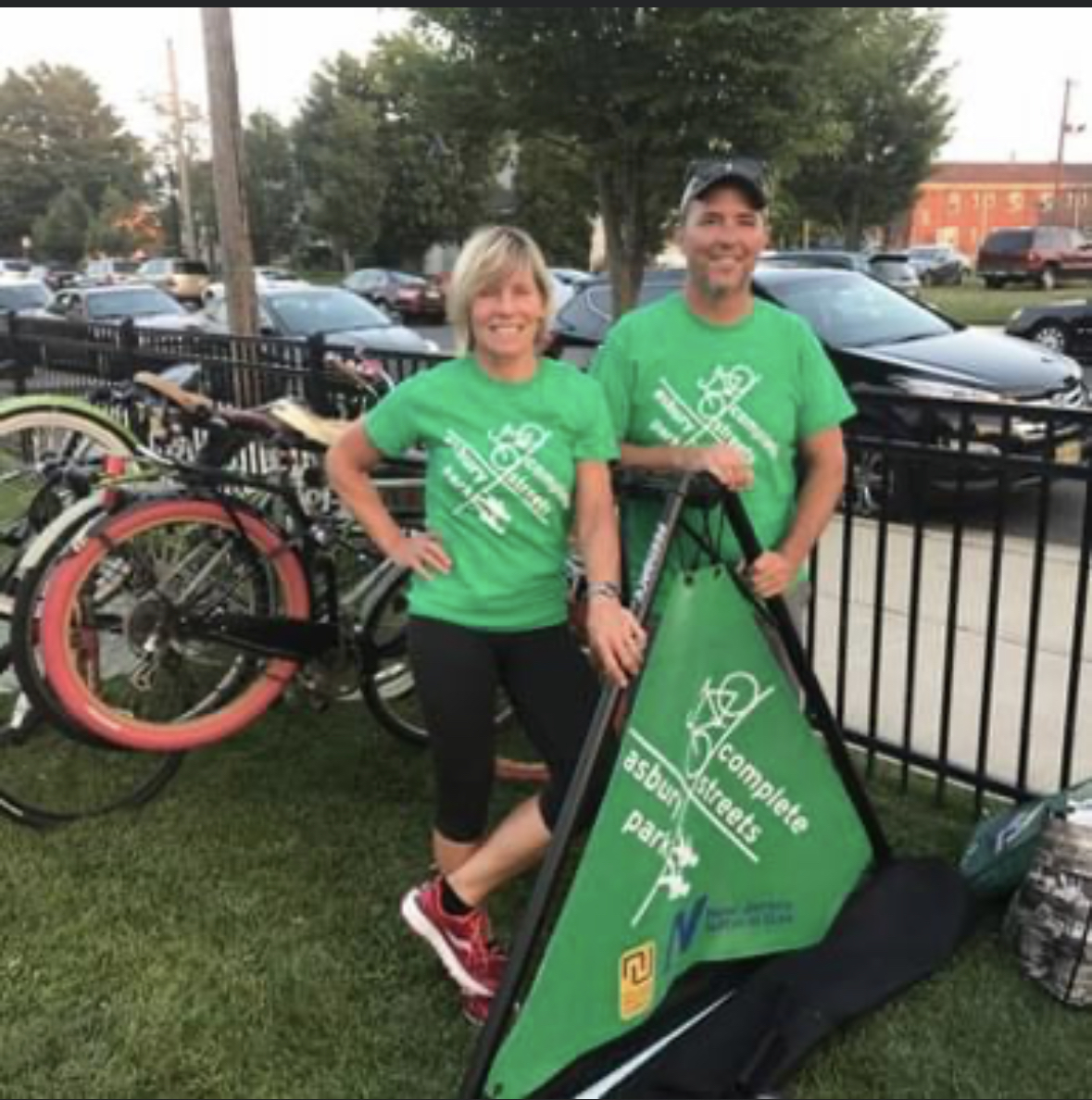
In 2021 NJDOT Commemorated the Main St. Road Dietwith Director Diane Guiterrez, Lt Gov. Sheila Oliver, NJ Senator Vin Gopal, local Assembly Persons, and Asbury Park Mayor Moor, City manager Donna Vieiro, and Council members, Kendle, and Clayton, Transportation Manager Mike Manzella, and me, Polli Schildge, proudly wearing my distinctive green APCSC T-shirt!
2021 Commemoration of the Main Street Road Diet.
APCSC has been showing up, gaining support and building a strong reputation across the state!
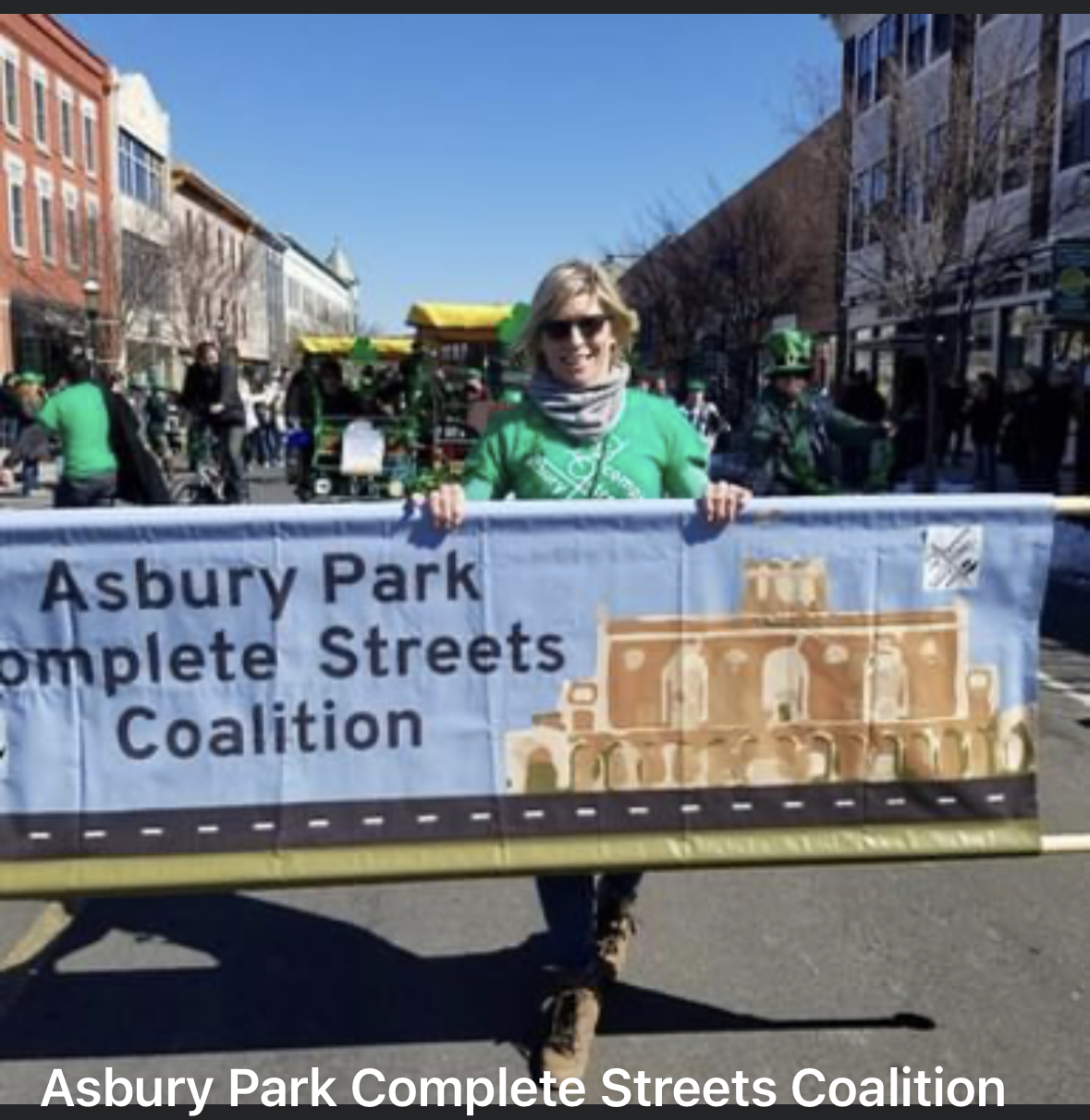
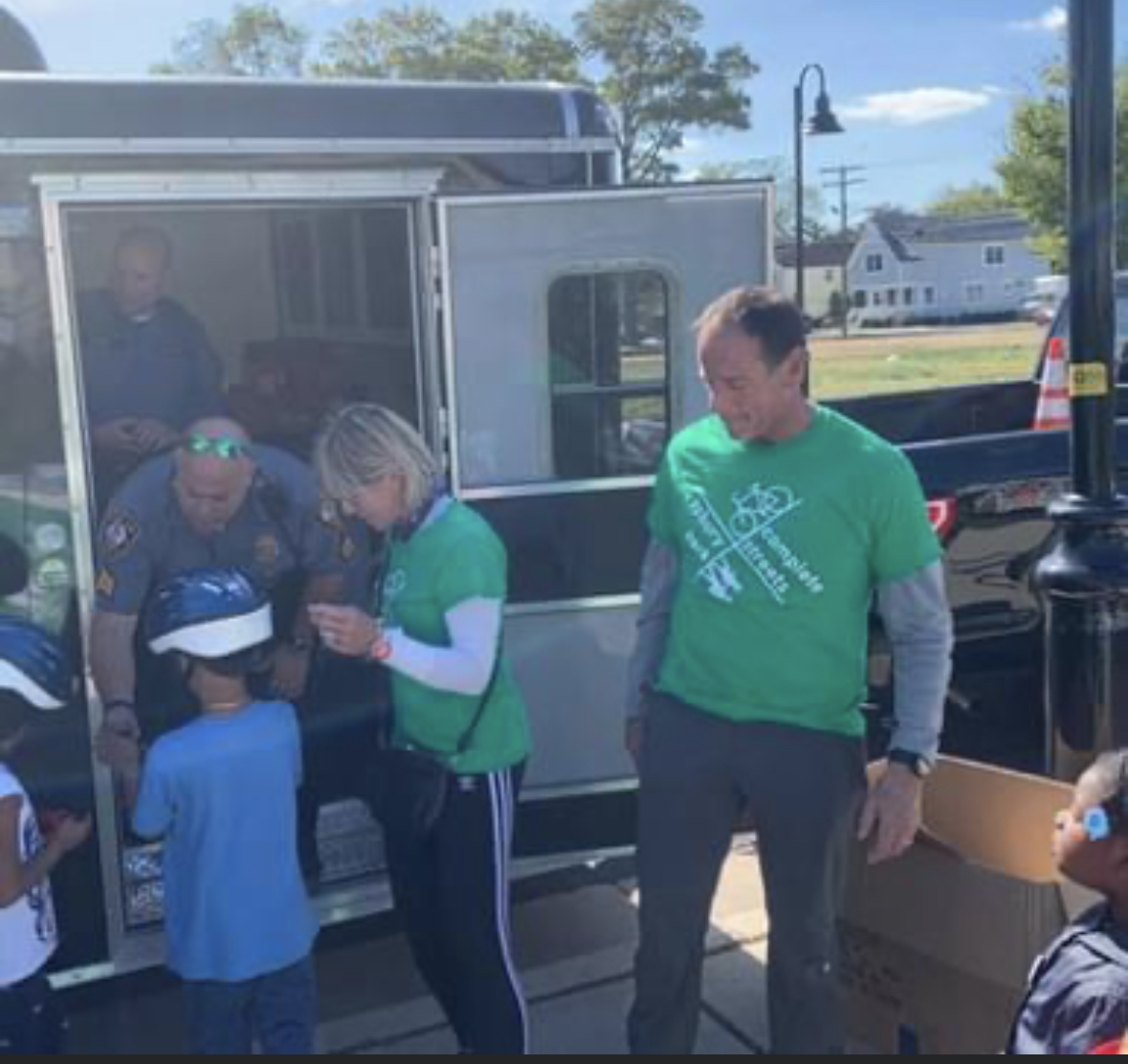
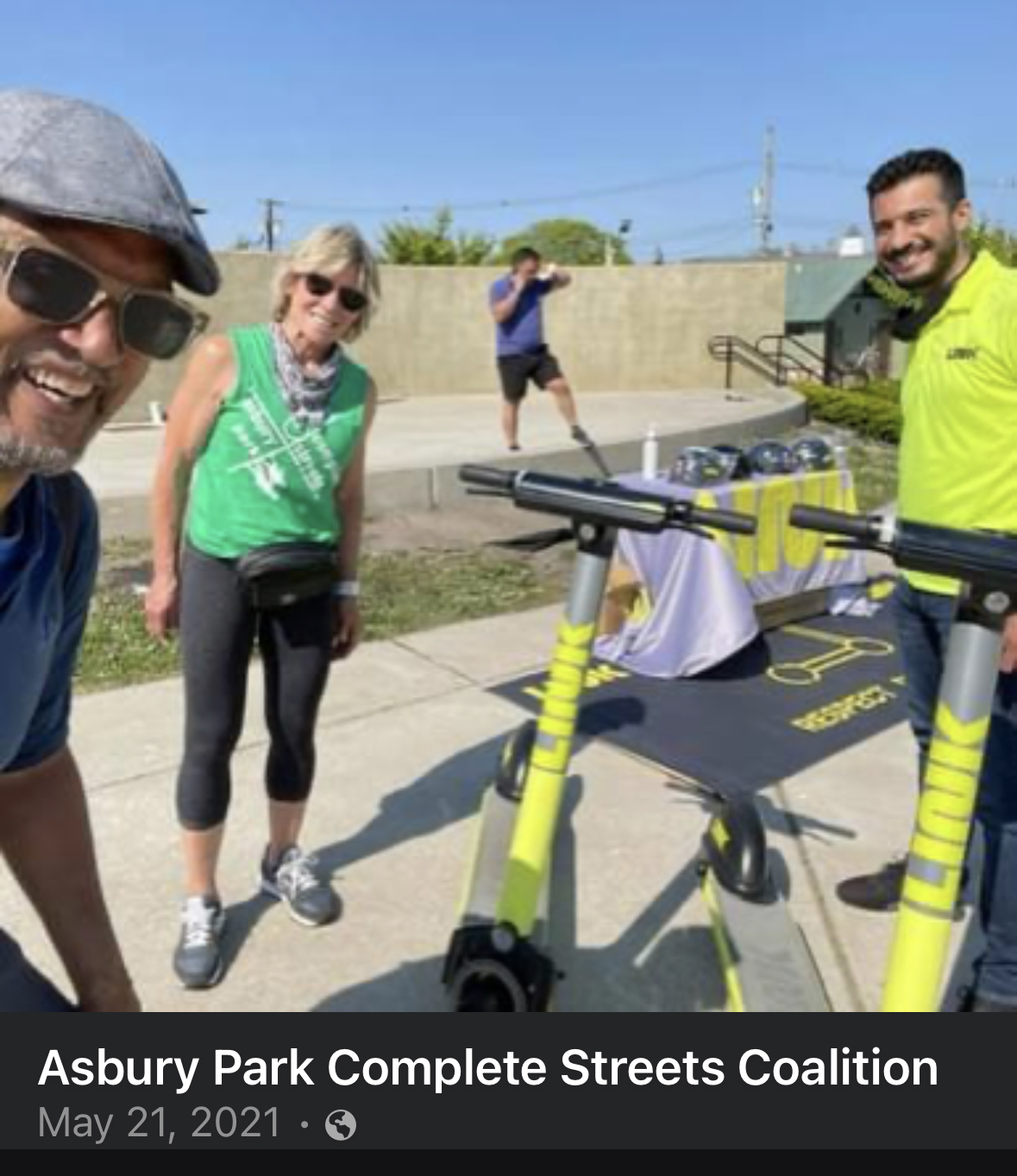
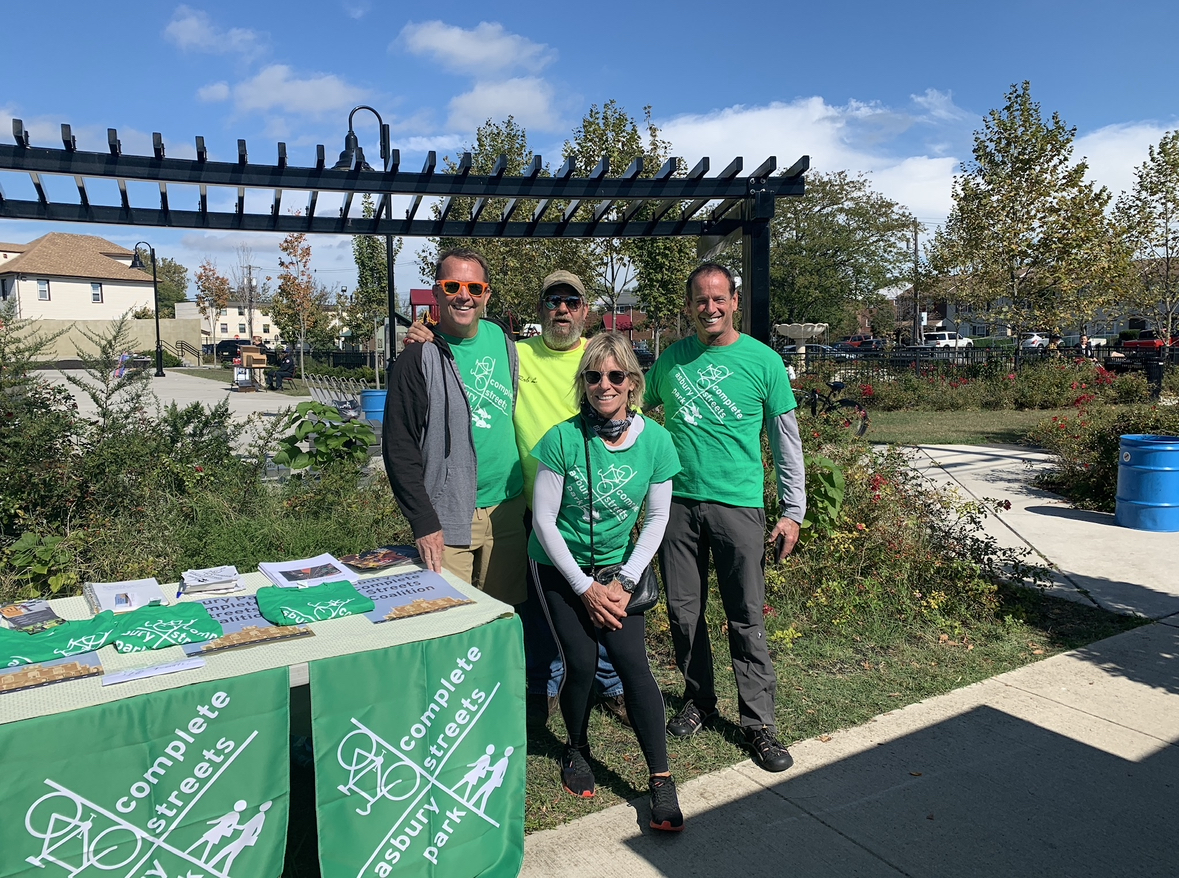
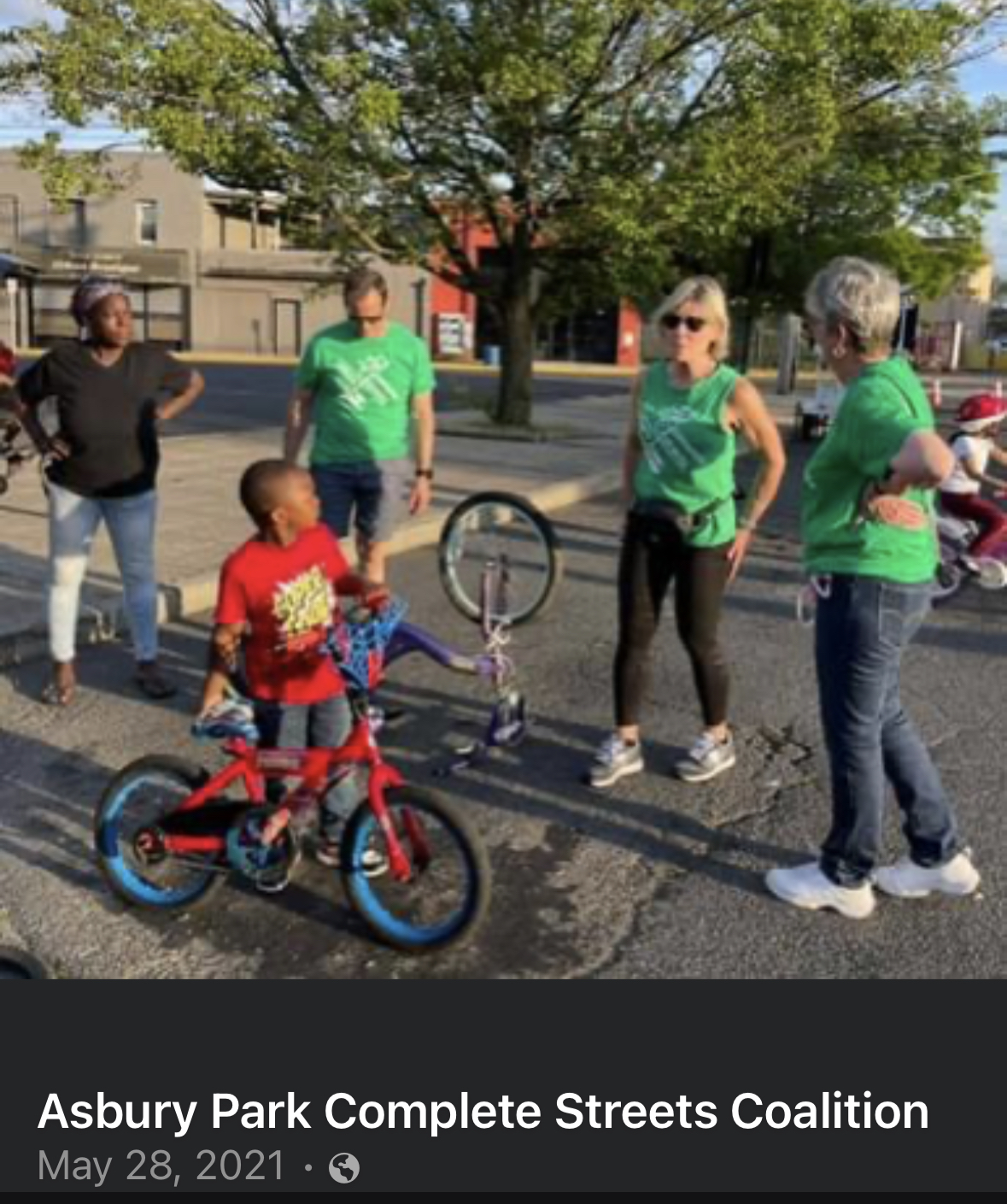
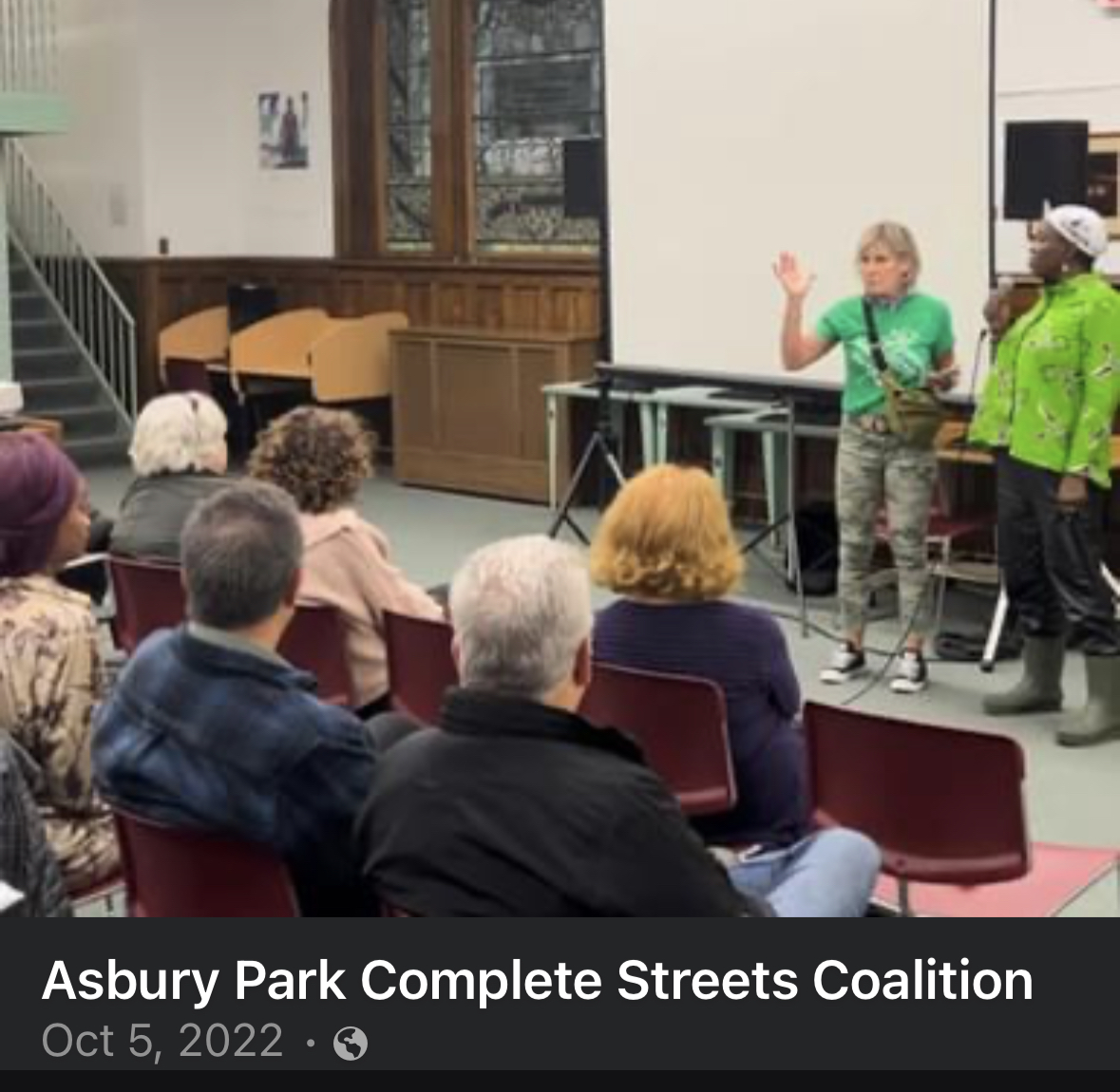
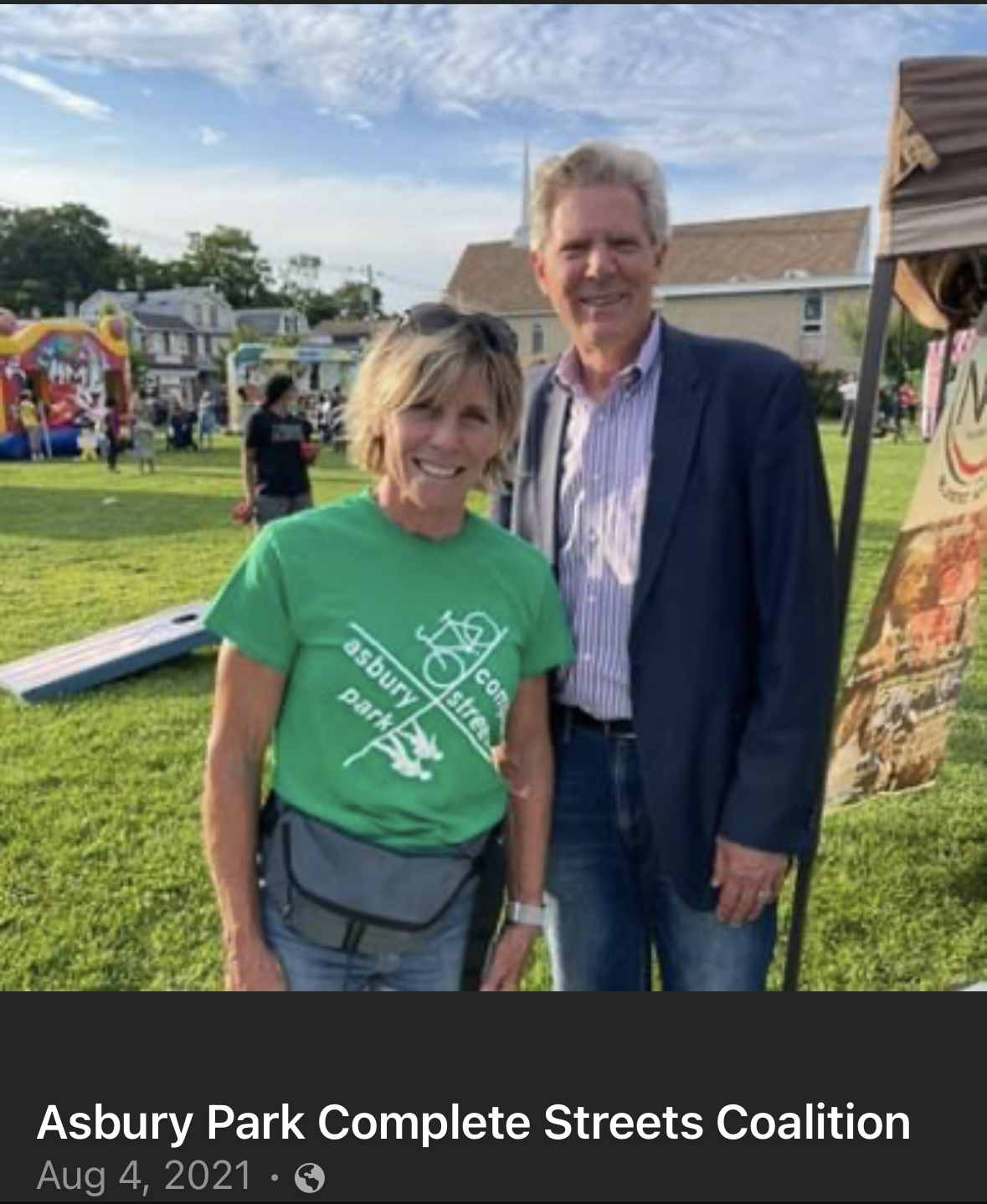
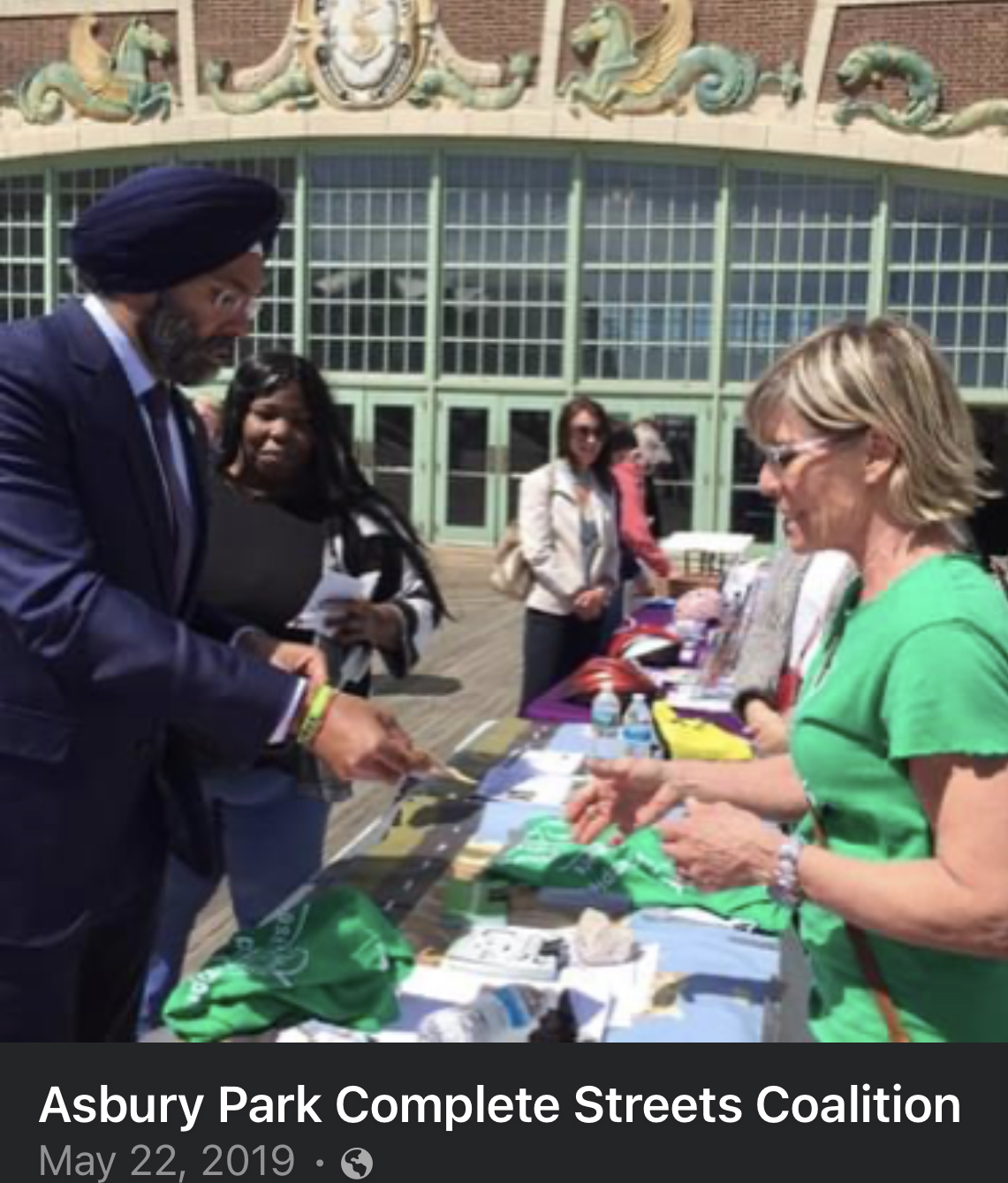
Sharing Complete Streets info at Pride DayBike Valet at Music MondaysMarching with the banner at the AP St Pat’s ParadeHelping APPD give out helmetsBike parking at Sea.Hear. Now 2018Local media, once against the road diet in 2016, supports it in 2020!Scooter education 2021Taking every opportunity to share information at city eventsBike repair for kidsScreening the great documentary “The Street Project” to a big crowd at AP Library 2022With Congressman Frank Pallone, APPD National NIght Out 2021Love the Monthly Slow Roll!With AG, Gurbir S. Grewal 2019With Frank Pallone at APPD National Night Out in 2023
As a 1.4mile sq city, AP could be a model for a truly people-centric, walkable and rollable city. We’re looking forward to many more ongoing improvements for people walking and rolling in AP, as outlined in the Asbury Park Walk and Bike Plan.
The city council meeting went well on Wednesday night 6/14- each person who spoke made very effective points. Thanks so much for stepping up to the mic!
DOT communication with the city this week said that the closure at 6th is “on hold” now, pending more study. But it there is no guarantee that it will not be closed.
Since we recently learned of the slated closure of the 6th Ave grade crossing closure (and the proposed closures at 5th Ave, and 1st Ave) we have received over 60 opposition emails, which will be compiled in a document to DOT.
The city officially and adamantly opposes the closure.
Asbury Park Complete Streets is sounding the alarm, educating people about what is being proposed and asking community members to join with the organization to oppose the closures.
NJDOT – NJTransit Sewall Ave. closure
Overview:
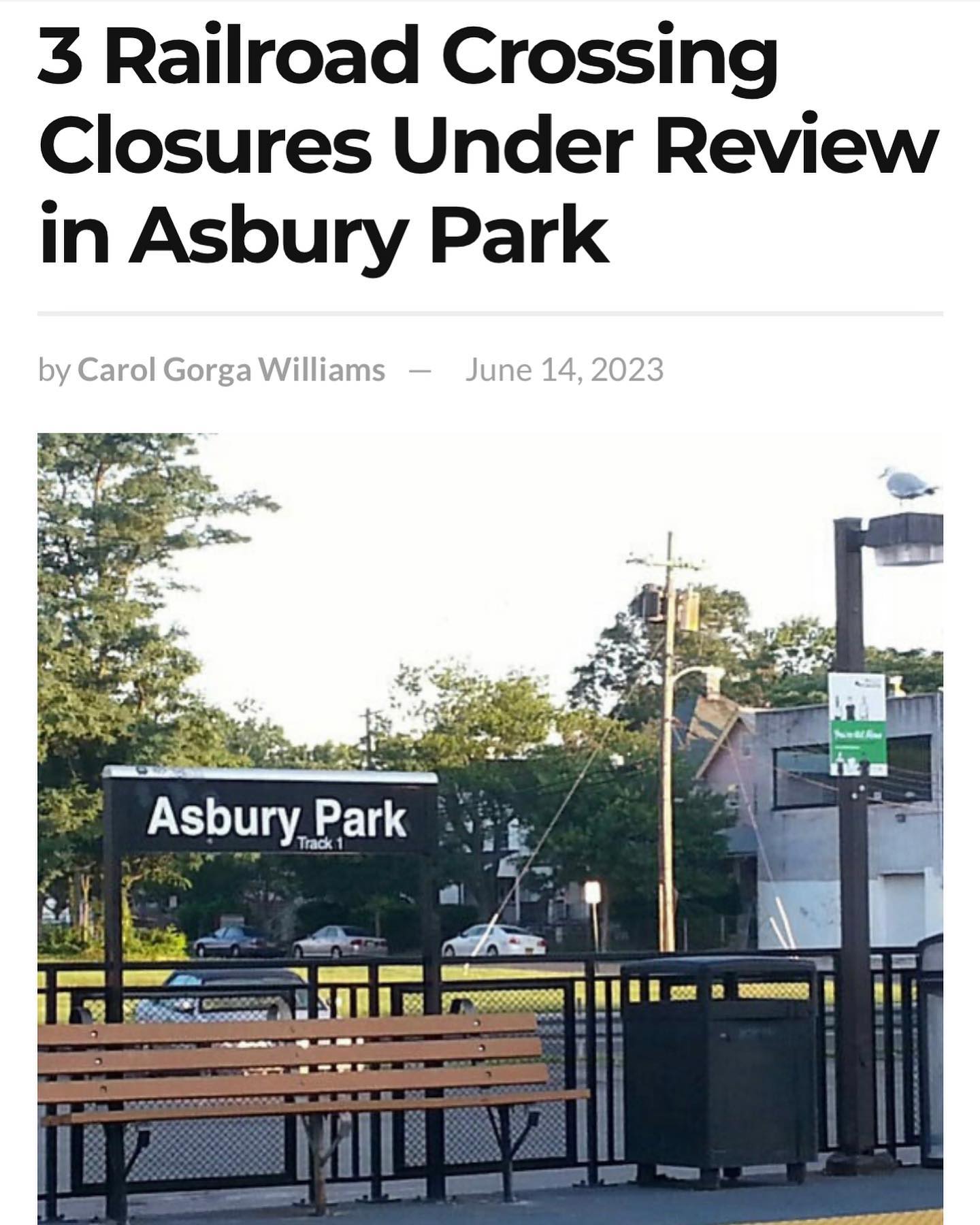
Asbury Park’s Sixth Avenue, Fifth Avenue and First Avenue Railroad Crossings are all proposed to be closed by the NJDOT. Asbury Park’s Complete Streets Coalition says, “not so fast,” and claims the closures will not meet any one of those goals.
The study cites safety as the reason for closing grade crossings. We believe that safety would be better served if the crossings were brightly lit, with upgraded gates, and flat surfaces for bike riders, walkers, and strollers.
Polli Schildge
Asbury Park was developed as a racially segregated community, and the railroad tracks were the border. Today, this division is still present, and closing west-to-east crossings in Asbury Park will not be well-received here.
Kathleen Mumma
Asbury Park Complete Streets Coalition is committed to equitable access across the city, east to west, and north to south. for everyone.
Let’s work together to prevent any further grade crossing closures.
Daniel Knowles’s “Carmageddon” is a serious argument against cars. Henry Grabar’s “Paved Paradise” is an anti-parking with an entertaining tilt. Both books make an argument for alternative like rapid transit, trains and trolleys, bicycles, but they mostly criticise the current systems.
“We pay an enormous price for our automotive addiction—in congestion, time wasted, neighborhoods destroyed, emissions pumped out, pleasant streets subordinated to brutal expressways—but telling the addict that the drug isn’t actually pleasurable is a losing game. There is some slight hope in saying that it isn’t healthy, and that the replacement for the drug is about as good. But understanding this emotional infrastructure in favor of cars is vital to imagining their possible replacement.
The grip of the car as a metaphor for liberty is as firm as that of guns, if perhaps with similarly destructive results.”
Any thoughts about parking? It’s the most contentious issue in many US cities. Gopnik references Donald Shoup’s 2005“The High Cost of Free Parking,”
Americans have been brainwashed to believe that they’re entitled to parking. Bitter battles about storing cars, and mis-belief that more cars = more business leads city leaders to backtrack on beneficial community projects like Open Street on Cookman Ave.
Cookman while it was open to people, and car-free.Cookman after the brief single season of being open to people is again a car sewer.
Parking has its very own official committee in Asbury Park, with enough stuff about car storage to discuss in lengthy monthly meetings. We propose a Transportation Equity Committee, but that’s another story.
Parking minimums were established by The Institute of Transportation Engineers, (which still exist in Asbury Park) whereby builders have to provide x-number of spaces for residences, and businesses, leading to cities’ swaths of asphalt dedicated to car storage, contributing in part to a housing shortage, suburban sprawl, and the development of neighborhoods where you can’t get anywhere to do or buy anything without a car.
Asbury Park is a “15 minute city”, as the now contentious concept is described in the article. It’s a walkable, rollable city, but private cars still rule. We propose on-demand transit to reduce car dependency, mitigate the parking problem, and to make our streets safer. Yes, that’s another story.
Now that parking minimums are being abolished in many cities, car owners are angry that they have to pay for it themselves. Oh the inequity of it.
What if we had reliable, affordable, convenient transit options? What if we didn’t need cars?
Support 8A Playground Improvements: Sunset Lake Park, an all ages, active, engaging space for people in Sunset Lake Park.
What is the Participatory Budget Program?
Residents of Asbury Park age 14 and over were invited to submit projects for the city.
All of the submissions are excellent.
Many people have not heard about the program, and in future years we hope many more people will submit project ideas for neighborhoods all over the city.
This year $250,000 will be allocated to the proposal with highest votes, then to the next, and so on.
Proposal 8A is for an engaging play space for all ages, which would utilize $50-75,000 of the $250,000 total budget. We hope this will be the beginning of adding fun, active amenities to all of our parks.
You can see the APTV video of all of the the presentations. 8A Playground Improvement: Sunset Lake Park is at 38:49. https://www.asburyparktv.com/aptv.
Sunset Lake Park was designed by the founder in the 1870s as a “passive park”, and has remained the same since then. There are no amenities for people in the park nor in most of the city parks…). Now concrete “roads” slice through it, with unwelcoming, stone “benches” on a “helipad” in the middle. People are encouraged to pass through this literally “passive park”.
Sunset Park is located in the center of the city, and should be a true destination for everyone, to play and socialize, as a “community backyard.”
Please support the proposal “8A Playground Improvements: Sunset Park”,
Remember voting ends tomorrow, Friday 3/31!
This flyer with the QR code makes it so easy to vote!
Vote right here online, or get a paper ballot at City Hall, or at Second Life Bikes at 21 Main St.
This proposal offers EVERYONE in Asbury Park a place to play, relax, and socialize. Our parks have been underutilized for too long, especially beautiful Sunset Lake Park. This proposal envisions a creative area at the western end of Sunset Park along Main Street, centrally located, and where many residents walk with children.
Parks are the city’s backyard, and should be the favorite destination for recreation, and socialization.
The cost of this proposal would be $50,000 – $75,000, depending on the equipment and the scope of the project.
“Play and Connection in Sunset Park: A Vibrant Active Community Space”
This proposal represents the submissions from numerous residents for an active community play space for all ages in Sunset Park, identifying the need for a range of equipment and seating options that cater to various ages, interests and abilities.
While there has been an historic desire to keep large swaths of Sunset Park entirely passive, there is enough space at the west end of the park along Main Street to accommodate active play space. This would be easily accessible to families from all corners of the city, especially to visitors and the many families who live, and walk to school and businesses in that area.
A majority of residents live in residences without yards, or have houses with limited outside space. Sunset Park (and all parks in the city) should be our shared backyard – a place where we can all relax, play, exercise, and connect.
An all-age active space including equipment for: climbing, stretching, swinging, bouncing, pushing, pulling, and comfortable seating:
Fitness equipment 13+: A section with outdoor fitness equipment for adults and teenagers. This could include pull-up bars, push-pull, balance, and other equipment that promotes cardio and muscular endurance, strength and agility. There would be signage indicating how to use the equipment safely
Play equipment: A playground area with swings, slides, climbing structures, and other equipment that caters to children and adults of all ages. The playground would have a soft surface to prevent injuries.
There would be benches and tables for conversation, games and picnics, and for parents or caregivers to relax while their children play.
In summary, an active community play space for all ages would be designed to encourage physical activity, socialization, and fun for everyone in the community – people of all ages and abilities.
Examples of playgrounds all over the world:
Chicago, Ill.
Please vote for 8A. Playground Improvements: Sunset Lake Park here.
The premise of Old Enough!, a Japanese reality show streaming on Netflix is simple. In 10-minute episodes a tiny kid sets off to complete the child’s first errand alone. (Well, “alone,” with the cameramen.)
Get your earbuds ready and go for a walk today and listen to
this podcast episode, First Errand on 99% Invisible, based upon the show.
It’s about everything we want for kids, for everyone on our streets – safety from drivers, and streets designed for human mobility.
From the show “Old Enough”
Needless to say, the show couldn’t be set in the United States.
Parents who have allowed young kids independence to play alone have been arrested, or at the very least are labeled terrible parents. This paranoia about kids’ safety in general, and especially on our streets says a lot about our culture.
Only 10% of American kids walk to school, compared with over 80% of kids in Japan. Kids start walking to school in Japan at a very early age, because they CAN. Roads and street networks are designed for kids to walk. Drivers in Japan are taught to yield to pedestrians. Speed limits are low. Neighborhoods have small blocks with lots of intersections. And there is little or no street parking in neighborhoods.
Everyone should be able to safely, REALLY safely walk on American streets.
Pete Buttegieg, USDOT Secretary, plus state, and local legislators support safe road design, and there is local and gov funding available, but we need political will to implement traffic calming measures.
Road design must change to PREVENT crashes involving people who bicycle, walk, run, scooter, skateboard, push strollers, as well as people who drive cars.
Inequitable NJ law already exists requiring a bell and bike lights, and 3 out of 4 people ticketed for bell or light infractions are people of color.
Many people who ride bikes for daily transportation may not have the ability to acquire a helmet – therefore enforcement of a helmet law will lead to even more people being targeted by police.
… it is hard to overstate how our unnatural obsession with head protection is stifling the growth of our bicycle culture. It achieves little, except deterring the most casual cyclists, who also happen to be the slowest and safest ones on the road.
Bad driver behavior is a problem, but…
It has never worked to continually remind drivers to stop texting, obey traffic signals, and slow down. It’s impossible to change human behavior with signs, PSAs, even with laws. Automobile ads promote driver entitlement, and manufacturers are building distractions right into the dashboard. Larger and larger SUVs and trucks are killing more people, and cars that can exceed 100mph, and roads that invite speeding are all ongoing problems.
Jesse Singer’s book There Are No Accidents makes it clear that the system is responsible, not the individual. A helmet law will not keep bike riders safe from crashes, which kill 45,000 people a year in the US, and the number is rising. Crashes are not accidents, “preordained and unavoidable”.
A critical mass of cyclists improves the safety for everyone.
Yale student How Sen writes, “If you do choose to wear a helmet when biking, don’t stop there: Learn how to properly and safely interact with vehicles. Share the road. Know your rights. Learn to take the lane and feel comfortable about it. Not only do motorists treat you differently when you’re wearing a helmet, studies show that helmets may be giving you a false sense of safety.”
“Statistics show that cyclists’ fear of head trauma is irrational if we compare it to some other risks. Head injuries aren’t just dangerous when you’re biking—head injuries are dangerous when you’re doing pretty much anything else.”
Only safe road design will mitigate traffic violence.
Everyone outside of a car is a vulnerable road user, and we cannot and should not depend on helmets, bells, and lights – or even drivers – to keep us safe. Only safe road design will mitigate traffic violence for everyone, including drivers themselves.