Plan includes mixed use complex with roof top rain gardens, parking garage, commercial spaces, & residences
This is an exciting part of the Transit Village designation and including Green Acres space.

Asbury Park Complete Streets Coalition
Transportation Equity in Our City

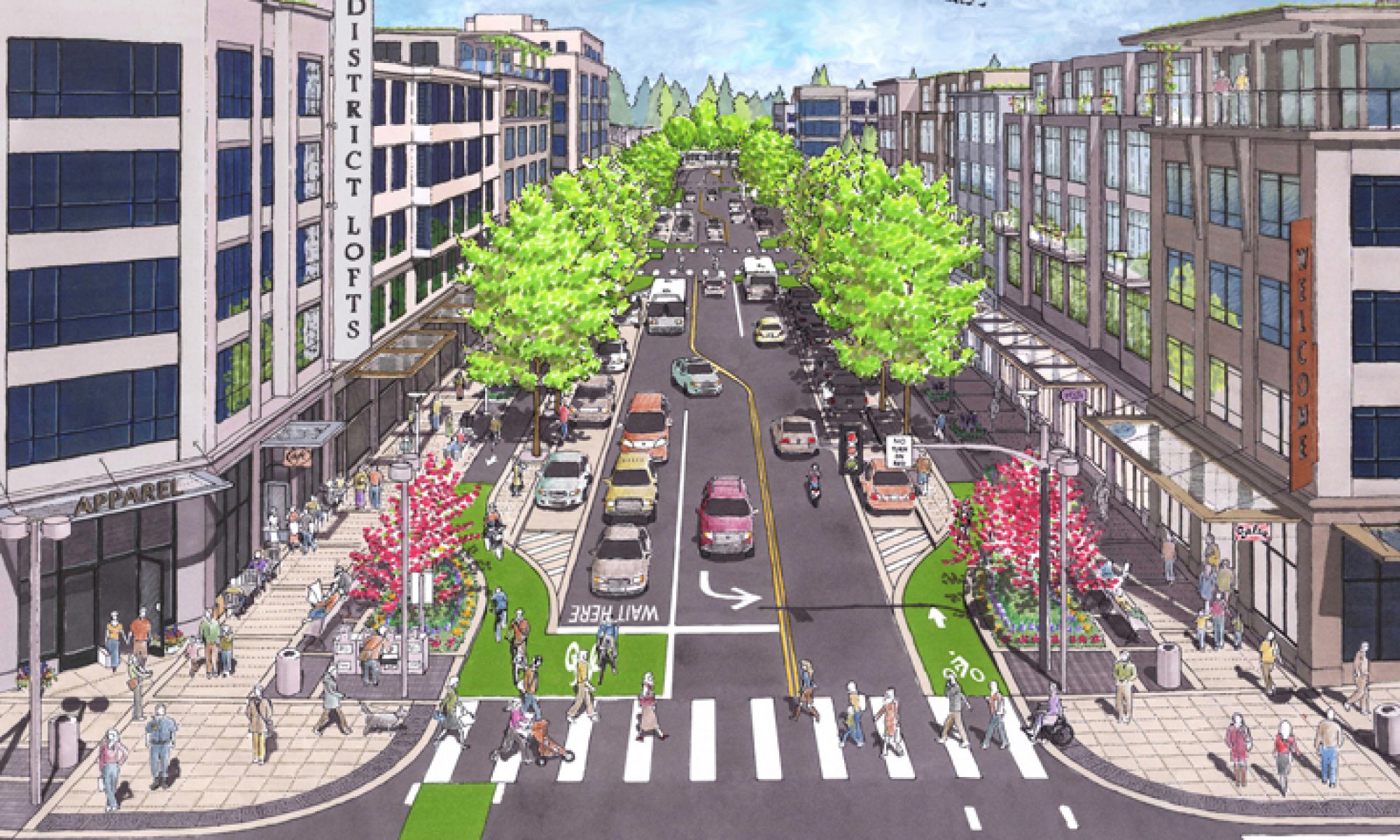
Dan Jacobson is in our corner! Thanks for sticking with this story and following it to the conclusion which was the resolution by city council to approve the NJDOT Main Street reconfiguration plan. Main Street as we know it (and pictured above) will be made safer for everyone-walkers, bicyclists and drivers. NJDOT funds will cover the cost of improved design and infrastructure with a road diet consisting of one northbound lane, one southbound lane, a left turning lane, bike lanes and parking. Work is to begin at the end of this summer.
Yes, yelling at female cyclists is sexist. Is infrastructure sexist too?

While it isn’t universal that women have experienced the extent of jerk male bike rider behavior (aka sexism) described in this article, most (really, most-the data shows it) women who love to ride bikes are afraid. They’re not necessarily afraid of being yelled at or run off the road. They just don’t feel safe. Only the bravest and toughest female bike riders attempt to ride on the roads in NJ due to lack of, or non-existent infrastructure for bicycling. That leaves almost exclusively men on the road. This creates a culture of bike riding as a non-female-friendly activity, preventing women from riding their bikes.
https://ggwash.org/view/63608/yes-yelling-at-women-cyclists-is-sexist
The APCSC table at the NJ Pride Festival was well-staffed by members of the group, and we all had great conversations about complete streets and our initiatives with the city. Thanks to those who stopped by to ask questions and learn about how infrastructure will make Asbury Park a world class destination and a wonderful place to live.


Sticky Streets-“The word “sticky” when applied to the urban design context has come to mean attractive and comfortable—the kind of place that makes people want to stay, and make return visits. Detroit is the latest city to experiment with the concept.”
AP obviously doesn’t need to build a beach on Main Street, but there are lots of other ways we can make our streets sticky!

We can be grateful that Asbury Park has resolved to calm the traffic on Main Street, thereby making crossing the street safer for everyone…and avoiding a possible legal action like the one facing Springfield and The city of Los Angeles, which recently agreed to pay $9.5 million dollars in a wrongful death lawsuit for a similar situation.
“I last visited your city in December of 2014, the night a mother and two children were struck on State Street crossing from the library to the parking lot. One of the children was killed. I am not aware of any traffic calming measures that have been taken since that tragedy, despite pleas and protests from some of your residents. The inaction speaks volumes.”
https://www.strongtowns.org/journal/2017/5/29/an-open-letter-to-the-city-of-springfield

Watch this entertaining and revealing video:
Streets are a vital part of livable, attractive communities. Everyone, regardless of age, ability, income, race, or ethnicity, ought to have safe, comfortable, and convenient access to community destinations and public places–whether walking, driving, bicycling, or taking public transportation. But too many of our streets are designed only for speeding cars or creeping traffic jams.

https://smartgrowthamerica.org/program/national-complete-streets-coalition/
Change Streets. Change the World.
https://globaldesigningcities.org/

“The criminalization of jaywalking may be in part justified if crosswalks were in fact safer, but this doesn’t seem to be the case. Crosswalks that aren’t supported by traffic lights or stop signs are no safer than unmarked zones. One study published in Transportation Research Board of the National Academies found that the risk of injury inside the painted lines was the same as it was outside of them. On roadways with multiple lanes and high-volume traffic the crosswalk proved the more precarious option. A safety study conducted by NYU Langone Medical Center was even more decisive in its findings: Of those injured, 44 percent had used a crosswalk with the traffic signal on their side, while 23 percent had been struck crossing mid-block. In what can only be attributed to dreadful luck, 6 percent had been injured while on the sidewalk.
To compound the issue, most crosswalk buttons are nonoperational. Only 9 percent of buttons in New York City, the Department of Transportation estimates, are responsive to user commands. The remaining 91 percent, which are set to fixed timers, serve as placebos for Type A personalities or germ-laden playthings for restive children. In car-centric cities like Dallas, the number of functioning buttons is even lower. Many of these buttons worked at one point but have been deactivated to improve efficiency and flow. Explanations of this sort are par for the course. Efficiency has been the mantra of the urban planning profession for the better part of 60 years. However, by prioritizing efficiency above all other ideals, such as equity and livability, we strip pedestrians of their personal agency and demote non-drivers to the status of second-class citizens.”
Read about it:

Although the debate continues among a few residents, safety will remain a primary issue. School children are now able to safely cross the street, and “…residents also stepped forward, saying they felt safer walking and biking around Lincoln these days. No serious injury crashes have been reported since the road diet began, according to the study, which noted that in four of the previous five years there was a serious injury crash along that same stretch of Lincoln.”
Businesses have mostly been positively affected as well.
“One restaurant owner said the road diet has hurt her and her husband’s business. But Michael Mulcahy, who owns the Garden Theater parking lot, credited it with boosting the local economy. A Willow Glen dentist who has his practice on the avenue also called it an “unqualified success.””
“Economic data compiled by city officials show that retail and office vacancy rates have fallen in the area, while sales tax receipts from local businesses in 2015 were higher than in each of the previous two years. Restaurants and other food-related businesses saw sales tax receipts jump by almost 8 percent from 2014.”