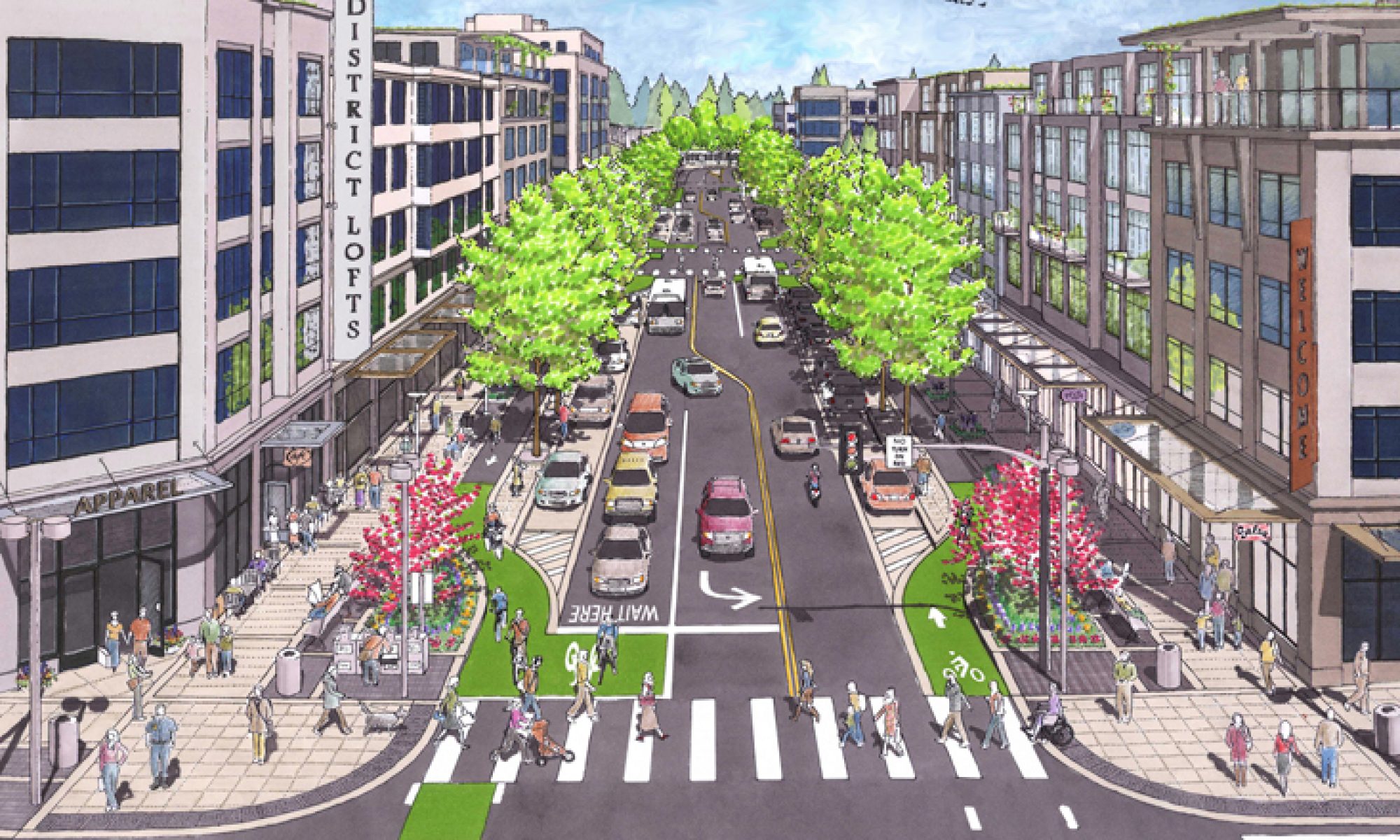
Bike-Sharing Is Flourishing in Washington. Can the City Handle It?

“…while the city embraces its innovative bicycling culture, longtime riders argue that the capital still lacks infrastructure to support it. “

“…critics worry most about beginner urban riders navigating the segmented nature of the city’s designated bicycle lanes: They begin and end seemingly at random, forcing cyclists to veer into four-lane roads stippled with potholes and urban grit. Buses and hurried automobile traffic push them into the right-most lane, where doors of parked cars can swing open unexpectedly, catapulting cyclists.”

https://www.nytimes.com/2017/10/01/us/politics/washington-bike-share.html?_r=0

Iceland-Photos, Video: 3D Crosswalk Slows Down Cars

The small fishing town of Ísafjörður in the Westfjords unveiled the first ever “3D crosswalk” in Iceland.

The crosswalk, which is painted to look like it is hovering over the street, is intended to slow down traffic and reduce driving speeds in the narrow residential streets of the old town of Ísafjörður.

The environmental commissioner of Ísafjörður, Ralf Trylla, had come across the idea while researching for novel ways to slow down traffic speed.

It only took a couple of weeks from Ralf getting the idea to all necessary permits from the Police and the Transport Authority being in place. In the meantime Gautur Ívar and Ralf practiced 3D painting.

Read more…

http://icelandmag.visir.is/article/photos-video-3d-crosswalk-isafjordur-helps-slow-down-speeding-motorists

This New Car-Free Neighborhood Redesigns Suburbia

A new development in Mannheim, Germany, is the ultimate walkable community.

https://www.fastcompany.com/3059264/this-new-car-free-neighborhood-redesigns-suburbia

“It’s possible that some people might own a car in a new neighborhood designed for Mannheim, Germany. But they won’t be able to drive up to their doors: The entire neighborhood is car-free, with parking hidden underground.

Instead of roads, the neighborhood will have sidewalks that connect with paths in a surrounding park. “Essentially the project recreates the park experience on a residential scale, and removing the road allows the park to permeate throughout the site unrestricted…”

A City That Works For Everyone: Reflections on the Necessity of an Intersectional Urbanism

“…intersectional urbanism is an urbanism that (1) recognizes the diversity of experiences in a city, (2) acknowledges the oppression experienced by the marginalized and (3) endeavours towards building a city that meets the needs of everyone who lives in it.”

https://robinmazumder.com/2017/09/24/a-city-that-works-for-everyone-reflections-on-the-necessity-of-an-intersectional-urbanism/amp/

The author lives with issues of marginalization.  He is a person of color and has a physical handicap.  He also believes that he has privilege, being male, saying that privilege has sheltered him from the reality of misogyny .

He says,

“I try to be cognizant of how these elements shape how I see the world and determine the positions I take.”

“As someone who lives with a progressive degenerative neuromuscular disease, I am constantly examining accessibility in cities and trying my best to advocate for universal design.

As a person of colour, I reflect on how racism influences my experience of the city.”

“…privilege (has) sheltered me from that reality. I wasn’t naive to the misogyny


Bike Friendly Community Nomination Survey

Survey open through September 30th.

Asbury Park City Transportation Manager Mike Manzella has submitted an application for Asbury Park to be recognized by the League of American Bicyclists as a “Bicycle Friendly Community.”

Part of that application process is a survey to nearby residents and visitors about riding a bike in Asbury Park:

https://www.surveymonkey.com/r/BFC_FA17_AsburyParkNJ

Please take a few minutes to provide some input about biking in Asbury Park.

image1.jpeg

Introducing Arts, Culture and Transportation: A Creative Placemaking Field Scan


Introducing Arts, Culture and Transportation: A Creative Placemaking Field Scan, a rigorous national examination of creative placemaking in the transportation planning process. Released today by Transportation for America in partnership with ArtPlace America, this new resource identifies ways that transportation professionals can integrate artists to deliver transportation projects more smoothly, improve safety, and build community support.

Read more…

https://smartgrowthamerica.org/introducing-arts-culture-transportation-creative-placemaking-field-scan/

The General Theory of Walkability


A great TED Talk by Jeff Speck

Jeff Speck is a city planner and urban designer who, through writing, lectures, and built work, advocates internationally for more walkable cities. As Director of Design at the National Endowment for the Arts from 2003 through 2007, he oversaw the Mayors’ Institute on City Design and created the Governors’ Institute on Community Design, a federal program that helps state governors fight suburban sprawl.

He is the co-author of Suburban Nation: The Rise of Sprawl and the Decline of the American Dream as well as The Smart Growth Manual. His recent book, Walkable City: How Downtown Can Save America, One Step at a Time – which the Christian Science Monitor called “timely and important, a delightful, insightful, irreverent work” – was the best-selling planning/design title of 2013 – 2015.