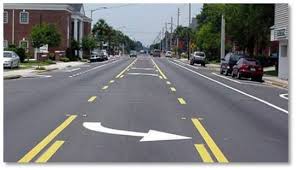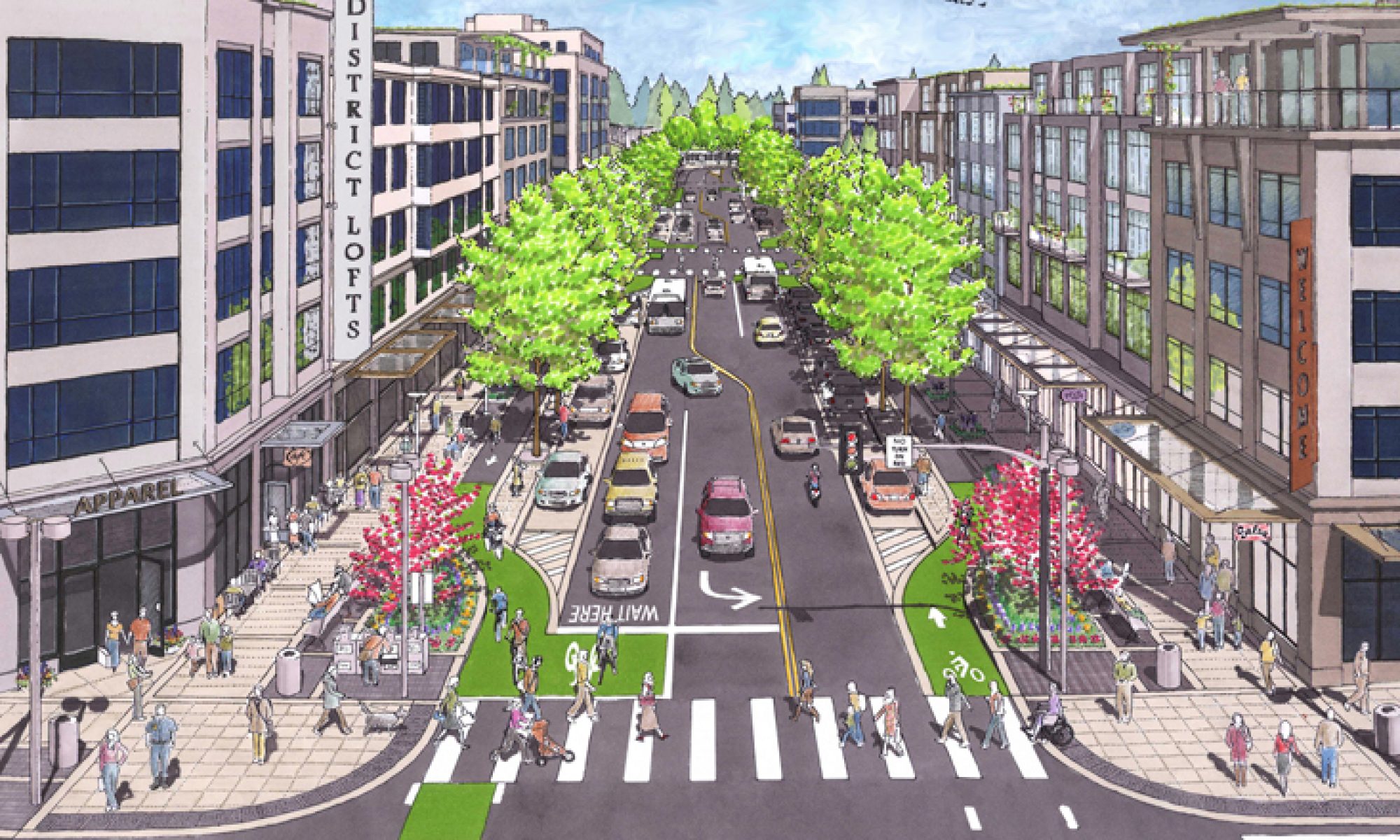
Kenny Sorensen, the talented and well-known musician has been advocating for safe infrastructure for bicycling for years. This is his letter to the editor of the Asbury Park Press. A road diet can be the solution. “While New Jersey traffic fatalities have declined slightly, pedestrian and bicycle deaths have sharply increased. This is a trend nationwide. More pedestrians and bicyclists are being killed and injured by cars than ever before.” #slowthecars Learn more…
Public streets not just for car owners: Sorensen
Ken Sorensen Jan. 11, 2019
Public streets should be for everyone, not just car owners. Our friends in Asbury Park Complete Streets have been successful in implementing a “road diet” on Main Street in Asbury Park. This current project converts four lanes of traffic to a three-lane configuration with a turning lane and bike lanes. It’s much safer for motorists and pedestrians. A road diet is a design tool that reverses six decades of road design focused solely on cars at the expense of pedestrians’ safety and general quality of life.
Every day we hear complaints about Jaywalkers. And almost every day we read articles about people walking dangerously, whether distracted, or walking against a signal, or crossing at unmarked intersections. We’ve covered this in several posts, like here, here, and here. Check out this article and click the links to learn more.
Research Explains Why Pedestrians ‘Break the Rules’
By Angie Schmitt
When pedestrians are hurt or injured, there’s a reflexive impulse in America to blame them, for jaywalking, or for being distracted.
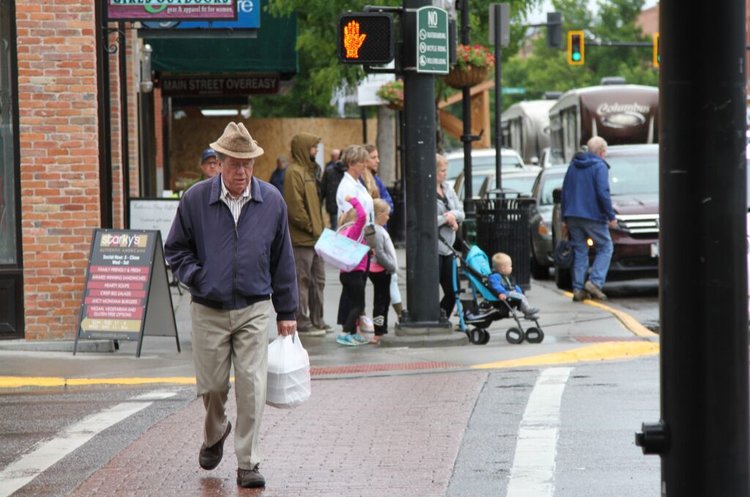
But Smith’s videos found pedestrians’ behavior is influenced a lot by the environment: They’re more likely engage in risky behavior — like walking or rolling in the street or crossing mid-block — when the pedestrian infrastructure is incomplete or lacking.
Jerry Foster, President, West Windsor Bicycle Pedestrian Alliance
Oppose Statewide Sidewalk Riding Ban!
Adults and children alike ride on the sidewalk because they do not feel safe riding in the roadway. Our state legislators should be focused on making roads safer for bike riders rather than forcing riders onto heavily trafficked, congested, unsafe roads. Our state has done little to pass a safe passing law that would require motorists to pass bike riders and pedestrians at a safe distance (a “three foot” or “four foot” law), and even less towards adopting a Vision Zero plan that would eliminate road deaths statewide. Further, the state has had a Complete Streets policy since 2009 yet very little has been done in terms of street infrastructure to accommodate all road users, including pedestrians and bike riders, on state roads. Over 140 municipalities and eight counties have passed these same Complete Streets policies, but again, very few are actually implemented. Yet the state legislature appears eager to pass a bill that will force bike riders into the streets by ending sidewalk riding statewide.
We oppose amendment to A1810, the proposed statewide ban on sidewalk bicycle riding. It is unnecessary and works against children, underserved and other utilitarian riders who are trying to get to work safely. The state needs to make substantial efforts to make roads safer for bike riders, and should not be banning sidewalk riding! The decision about sidewalk riding should be left to cities to determine which streets are safe for bicycle riding and where people may have to ride on sidewalks.
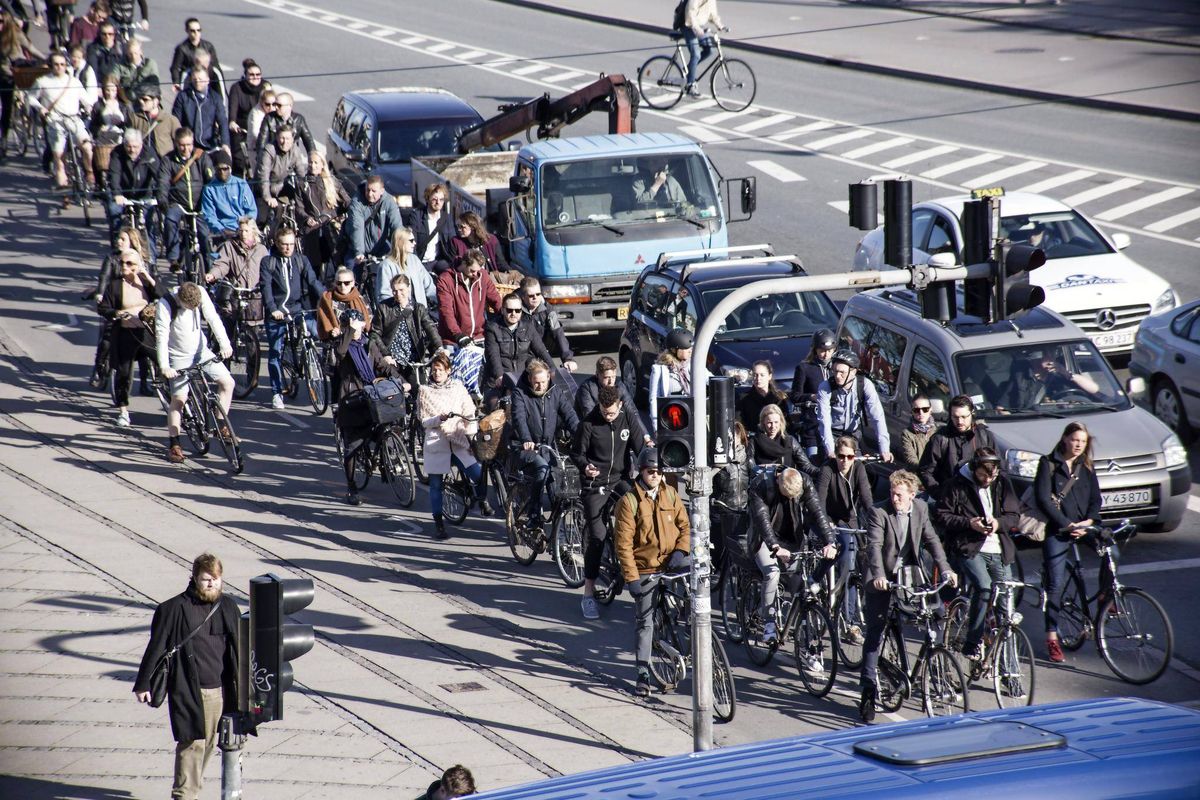
Like cities all over the US, Copenhagen once embraced car culture as a mark of economic advancement after the depression, and post WWII. By the mid-1960s streets were clogged with cars. More and more traffic fatalities occurred, and cars had a environmental impacts. Then came the oil crisis of 1973…and Copenhagen responded differently than the US. Instead of implementing the dangerous “right turn on red” to keep cars moving to save gas, Copenhagen made it less desirable to drive and easier and safer to ride bikes. While we’ve struggled more and more over the years with traffic congestion, crashes, and hard-to-find parking, Copenhageners protested, and have been getting more and more bike infrastructure ever since. Here’s how it was done.
James Thoem is a project manager with Copenhagenize, a consultancy that works with cities to create more bicycle-friendly streets. He is working on a project for the City of Detroit, creating its entire greater downtown bicycle strategy.
What Bicycle-Friendly Copenhagen Can Teach Us About Commuting
Matt Bubbers Copenhagen Special to the Globe and Mail
Copenhagen’s bicycle-friendly streets are often used as a model for other cities around the world.
What most tourists, and even many Copenhageners, don’t realize is that the city wasn’t always this urban-mobility utopia.
Cars were seen as “vigorous symbols that the Depression of the 1930s and the darkness of World War II had lifted,” according to a history by Lotte Ruby on Denmark’s official website.
As more families could afford to buy cars, the city demolished cycling infrastructure it had built in the first half of the 20th century to make room for roads and parking. By the mid-1960s, thanks to a postwar economic boom, the roads were clogged with cars. But then a few things happened to bring about a road revolution: a growing number of people were killed in traffic accidents, there was vigorous opposition and protests against new road projects that would have cut through some of the city’s most beautiful areas and pollution was becoming a problem. Then, the oil crisis hit Denmark hard in 1973, prompting a new policy focus on energy independence and conservation, including car-free Sundays.
If living longer (#1) isn’t a good enough reason to ride a bike, how about free parking… and 43 other reasons?
Drive Sharper, Live Longer, Look Sexier And 42 Other Reasons To Ride A Bicycle In 2019
Carlton Reed Press Gazette’s Transport Journalist of the Year, 2018
Ride more in 2019!
Cycling doesn’t just make you healthier, happier and more prosperous; study after laborious study shows that getting on your bike also helps make you a sharper, more thoughtful driver and it can even improve your sex life (bicyclists have buns of steel).
There are hundreds of benefits to bicycling but let’s stick to just 45. (I thought of that line while cycling – riding a bike gets your creative juices flowing, see #12.)
1. LIVE LONGER
A five-year study of 263,450 UK commuters, published in the British Medical Journal in 2017, found regular cycling cut the risk of death from any cause by 41%, and the incidence of cancer and heart disease by 45% and 46% respectively.
These amazing news clips from the 20s and 30s tell a story of how the automobile took over, but not without pushback from citizens and lawmakers. The US has a long way to go to become a nation that is willing to change the car culture, but it can happen. Even Copenhagen wasn’t always the bicycling capital of the world.
THEY SAW IT COMING: The Car Was Always The Cause of All the Problems in Our City
As we start the new year, let’s take a look back at how everyone knew the automobile was a menace, yet somehow let it take over anyway.
By Ben Verde
“The automobile has ruined our cities — choking our streets and making our communities less livable.
But Americans who care about cities saw it coming from the very first days of the Age of the Automobile. Residents wrote to their local newspapers, begging lawmakers to not capitulate to motorists or car makers as they sought to turn public streets into free parking lots. Reporters covered the rise of private ownership of cars as a scourge on our cities. Judges decried what too many people today think is normal: streets clogged by privately owned single-occupancy vehicles in the public right of way.”
Which kind of gentrifier are you? We have to admit if the shoe fits…
If you were been born in your city, chances are you’re not one. But pretty much anyone, particularly white, middle or upper income, who has moved into a city just as it’s beginning to be revived could be considered a gentrifier. Who wouldn’t want to live in a city where housing is affordable, as coffee shops and galleries are springing up? BUT:
“The systemic racism behind the depressed real estate values benefiting the gentrifier is one reason why gentrification is considered, as I often say, a four-letter word. Both middle-class residents who are resisting gentrification and those who are enjoying it will inevitably — in some way — reinforce these injustices.”
Four Types of Gentrifiers You See in Your Neighborhood
The benefits of a city designed for kids is that it becomes safe, healthy, and a desirable place to live for everyone. Traffic injuries and fatalities have dropped dramatically, and this city now has lowest crime rate in a decade
What Happens to Kid Culture When You Close the Streets to Cars
JAIME VELAZQUEZ
In the Spanish city Pontevedra, a family-friendly “pedestrianization” policy has helped increase the population of kids, despite the country’s low birth rates.
“By restricting traffic and eliminating physical barriers, the city council has redesigned Pontevedra from the sight line of a child. Doing so, Mosquera believes, helps the city address everybody’s needs, especially the disadvantaged. “Where there are children, there are healthy adults,” Mosquera said. The policy, which has been expanding for almost two decades now, has had many impacts on the community.”
“The crime rate has gone down, too, adding to the feeling that the city is safe for unattended kids. In 2010, Pontevedra reached its lowest crime rate in a decade with 34 offenses per 1,000 citizens, and last year it reached a new low of 27.”
Asbury Park Complete Streets Coalition wishes everyone a safe and healthy 2019. Enjoy this collection of articles about what’s happening to make streets safe for people in cities all over the US and the world.
APCSC supports Strong Towns and has also adopted #SLOWTHECARS. We couldn’t have said it better: Why Slow the Cars?
Strong Towns advocates for financial solvency and productive land use in American cities. Places that are built for people, using traditional development patterns, can help us achieve both of those goals. On the other hand, neighborhood streets with wide lanes, huge clearance zones and other dangerous design features cause thousands of pedestrian and car passenger deaths every year. Dangerous roads do not make productive use of our land or our lives. Furthermore, they depress investment in our cities by making our neighborhoods less pleasant places to be.
People are the indicator species of success. We know that pedestrian-friendly neighborhoods are more economically productive, healthier and safer. We need to build places where people want to be.
By now most residents of Asbury Park know of the term “road diet”. We have all experienced the bumps along the way as the work continues repairing and upgrading Main Street as we anticipate the final stage of striping the lanes. Many people are familiar with Asbury Park Complete Streets Coalition’s campaign to #SlowTheCars . For the new year, our initiative is to share and educate about the health, economic and cultural benefits of a safe Main Street, and traffic calming measures throughout the city, “Complete Streets” to make streets safe for everyone, especially the most vulnerable: people who ride bikes and walk.