Safe Routes to School Project

This is BIG.

Safe Routes to School Project

Making streets safe for the most vulnerable road users. #equityintransit #equitabletransportation #equitableaccess

Safe Routes to School Project

PROJECT BACKGROUND

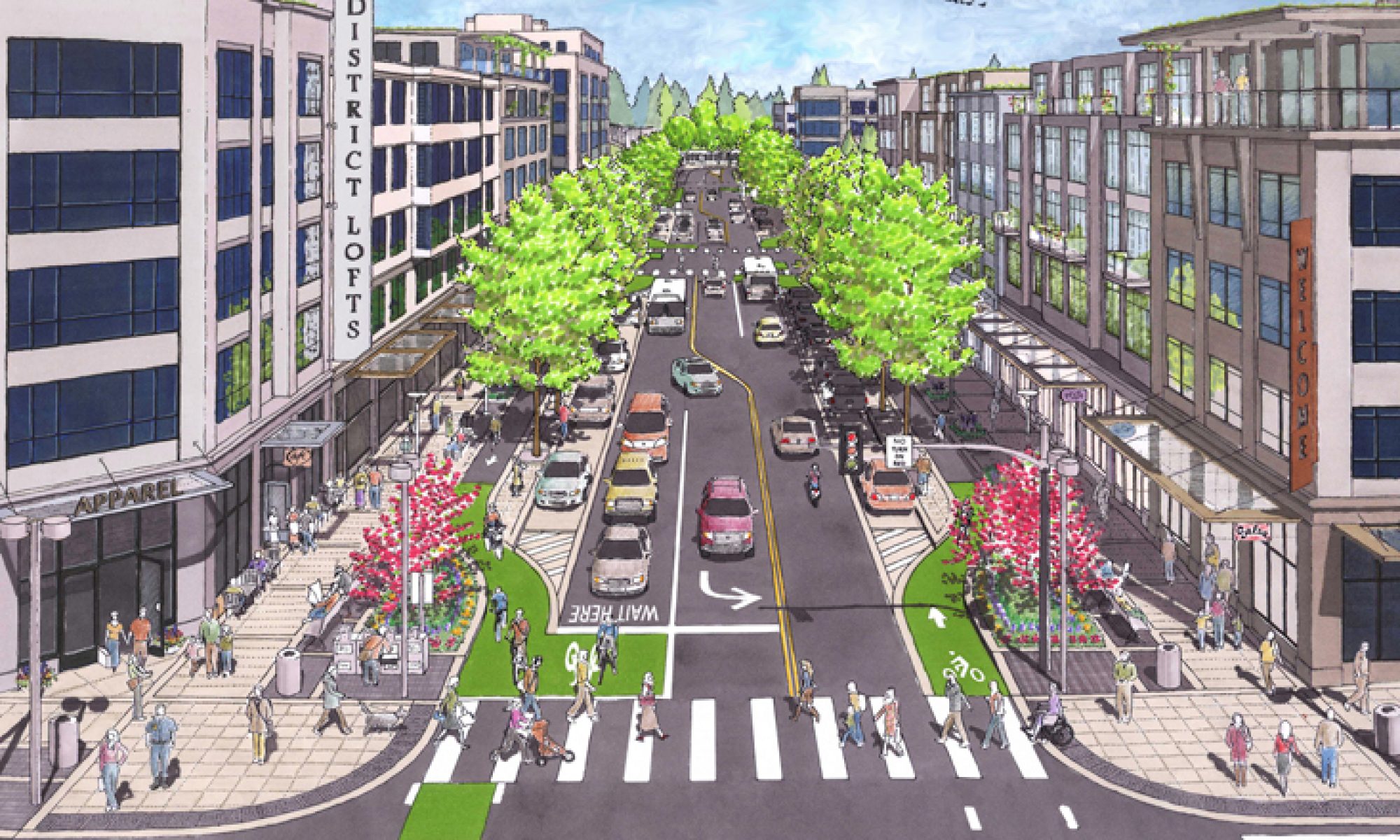
The purpose of this project is to support Safe Routes to School (SRTS) safety and access improvements by implementing traffic calming measures on Third Avenue and Fourth Avenue between Prospect Avenue and Comstock Street. The project Design and Construction cost is funded by federal funds administered through NJDOT Local Aid Transportation Alternatives (TA) Program and Design Assistance.

PROPOSED PROJECT LIMITS AND IMPROVEMENTS MAY INCLUDE:

  • Installing mini-roundabouts at the intersections of:
    1. Fourth Avenue & Prospect Avenue
    2. Fourth Avenue & Bridge Street
    3. Fourth Avenue & Pine Street
    4. Fourth Avenue & Comstock Street
    5. Third Avenue & Prospect Avenue
  • Installing Driver Feedback (Your Speed Is) signs at the intersections of:
    1. Fourth Avenue & Central Avenue
    2. Fourth Avenue & Jeffrey Street
    3. Third Avenue & Central Avenue
    4. Third Avenue & Bridge Street
  • Installation of a four-way stop at Third Avenue & Comstock Street
  • Removal of the Existing Traffic Signal at Third Avenue & Pine Street
  • Shared lane markings / bicycle lanes on Third Avenue (between Ridge Avenue and Memorial Drive)

ANTICIPATED PROJECT SCHEDULE:

Design Phase Completed: 2022

Construction: 2023

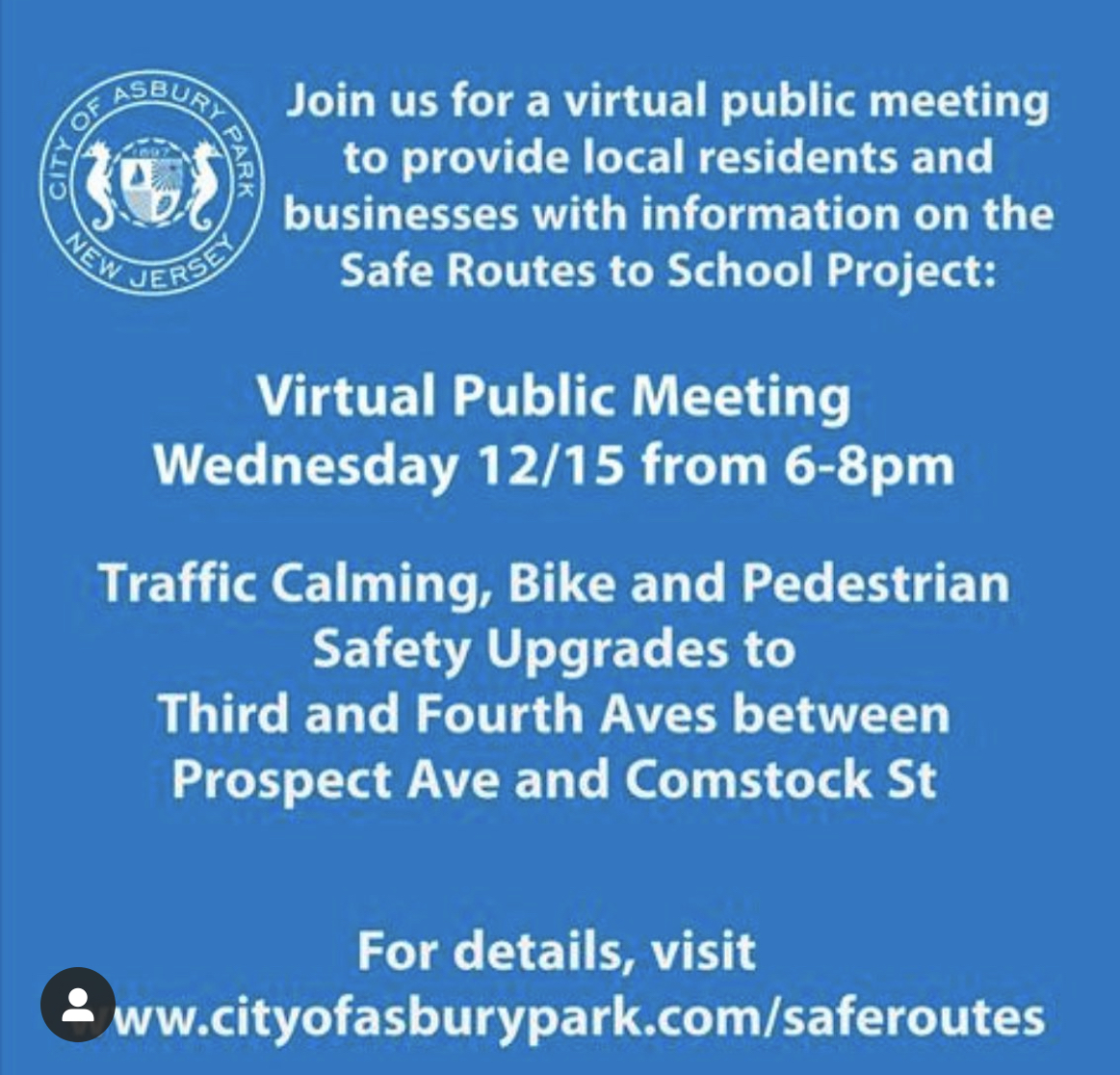
VIRTUAL PUBLIC MEETING INFORMATION FOR WEDNESDAY 12/15/21:

The City of Asbury Park will hold a Public Information Center (PIC) to provide local residents and businesses with information on the 2018 SRTS Asbury Park – Traffic Calming, Bike and Pedestrian Safety Upgrades, Third Ave & Fourth Ave between Prospect Avenue and Comstock Street project. You are encouraged to actively participate by providing comments at the meeting, by mail, or by email.

PARTICIPATION INFORMATION

Wednesday, December 15, 2021

From 6:00 PM – 8:00 PM

Brief Presentation at 6:05 PM and 7:05 PM

The purpose of the meeting is to provide an opportunity for input on the project. The Public Information Center will be held online:

Participate on a Computer / Smart Phone:

https://attendee.gotowebinar.com/register/5773006012162768396

– OR –

Participate by Telephone:

Call In Number: +1 (631) 992-3221

Access Code: 962-301-191

You will have an opportunity to review exhibits, ask questions and discuss any concerns. Property owners with rental units are advised that tenants are also invited and encouraged to participate.

PUBLIC COMMENT DUE BY 1/5/2022:

If you are unable to participate in the public meeting on 12/15/21 or want to provide comments after the meeting, please click here to provide comment by January 5, 2022.
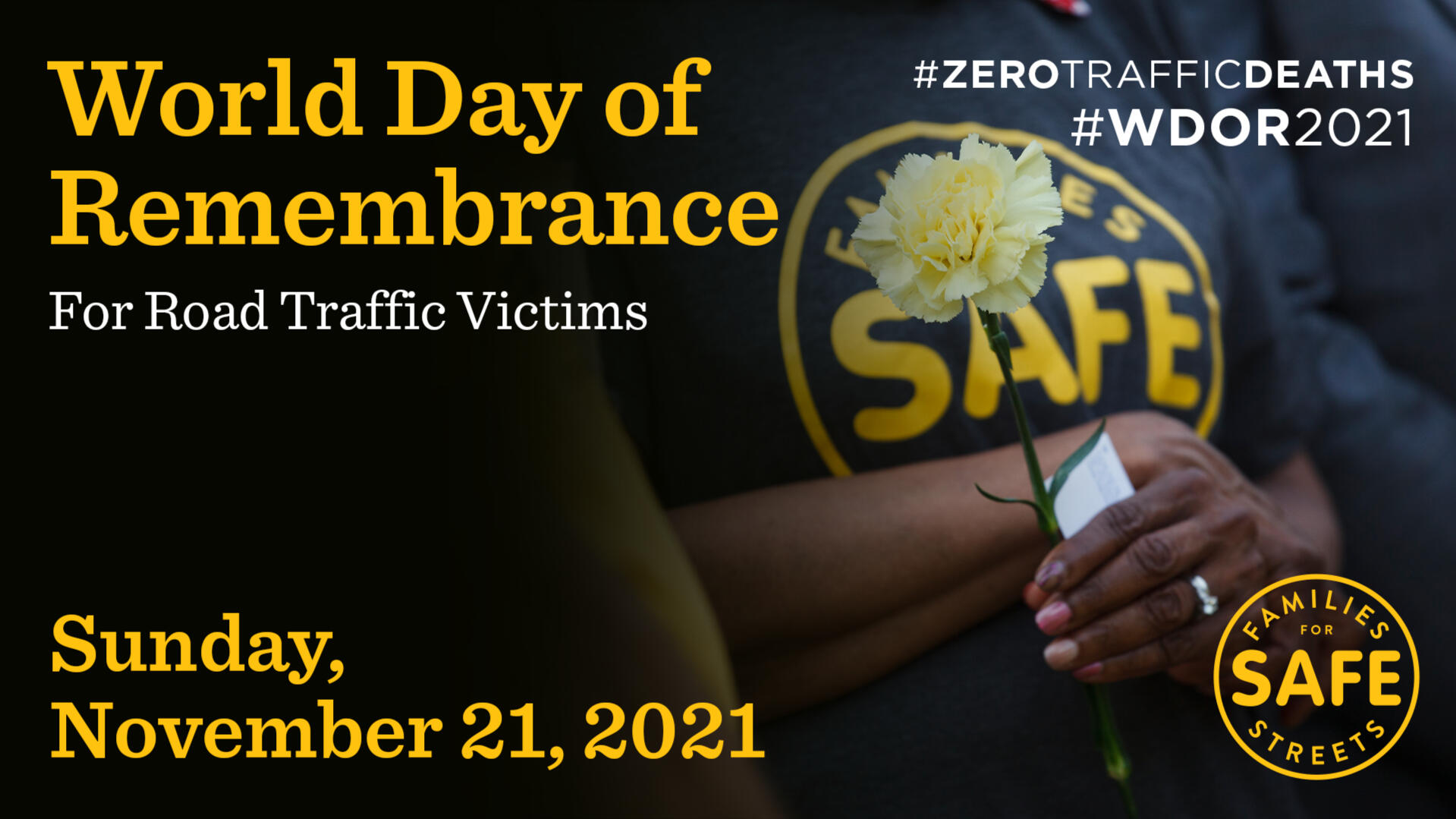
WORLD DAY OF REMEMBRANCE For Road Traffic Victims 11.21.21

#WODR2021 Sunday, November 21st, 2021

Please join Families for Safe Streets in commemorating World Day of Remembrance for Road Traffic Victims. Together, as those who have been personally impacted by crashes, we will join with the Vision Zero Network and other street safety organizations, community members, faith leaders, elected officials, and dignitaries from across the country and globe to REMEMBER, SUPPORT, and ACT.

Each year, 1.35 million people are killed around the world in traffic crashes. Over 100 Americans are killed every single day and millions more are injured each year.

Together we can amplify the heartbreaking cost of traffic crashes and the urgent need for change.

World Health Organization Key Facts On Road Traffic Deaths And Injuries

Critical Key Fact: Road traffic injuries are the leading cause of death for children and young adults aged 5-29 years.

Read more…

The Infrastructure Bill: A Dinosaur Of A Federal Transportation Program

For those applauding the passage of the Infrastructure Bill…

Step one for repairing a problem: Stop making it worse

  • The refrain “roads and bridges” – there is no provision to repair anything before building new and bigger roads adding to environmental disaster.
  • Money for transit, but billions to promote more driving will undermine it as long as we keep building new roads and prioritizing driving as an unalienable American right.
  • The US has a horrible history of  building highways bisecting and destroying already poor neighborhoods, yet the practice continues with Louisiana’s current $750 million plan to bulldoze a Black neighborhood in Shreveport.
  • Subsidizing oil and gas industries keeps fueling cars and the construction of new roads, continuing the destruction of the environment.
  • President Biden’s pledges to cut emissions, pointing at the transportation sector.  But “Beth Osborne [and T4America]… accused Congress of ‘doubling down on a dinosaur of a federal transportation program’ that she said has produced a dangerous, inequitable and unsustainable transportation network.” – Airline, automotive, oil, gas and all related industries like asphalt etc. are all responsible for the climate disaster.

“With the infrastructure deal completed, the Build Back Better budget reconciliation act is still awaiting action. That package does include some important provisions for improving access to transit, grants for reducing emissions, and more. But it’s tough to swallow knowing that the infrastructure deal is likely to make many of these same issues worse, something we wrote about last week:

“We are encouraged to know that Congress is taking seriously the need to address climate change, equity, and economic recovery. But the $40 billion included here unfortunately won’t be enough to redeem the $645 billion-plus infrastructure bill that will continue to make many of those same problems worse. As we’ve said throughout the second half of this year, the administration has a difficult task ahead to advance their stated goals of repair, safety, climate, equity, and access to jobs and services through these small improvements, while spending historic amounts on unchanged programs that have historically made those issues worse.”

Read more…

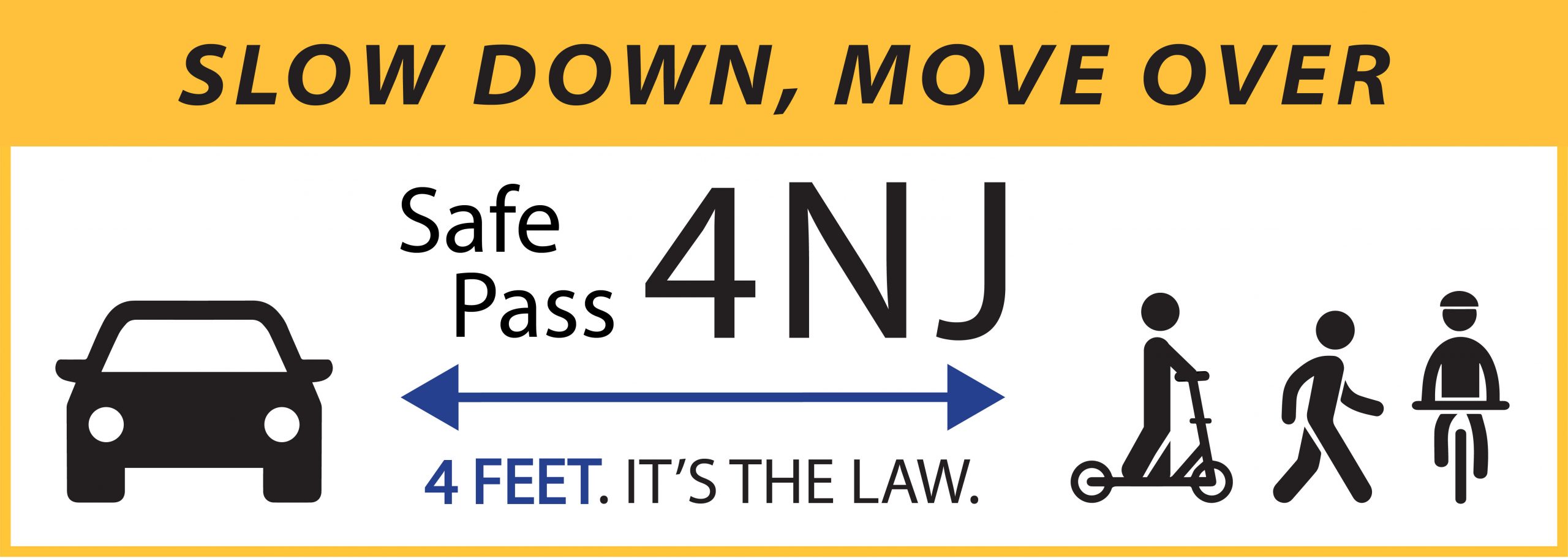
4′ PASSING LAW – SPREAD THE WORD

Help get the message out to everyone in New Jersey!

THE NEW, NJ SAFE PASSING BILL

Bipartisan 102-1 Vote Sends NJ Safe Passing Bill To Governor Where on August 5th the Bill Was Signed Into Law!

New Jersey joins 42 other states with safe passing laws designed to end the near misses, injuries and fatalities of the most vulnerable road users.

People riding bikes or scooters, and people walking deserve safe space.
Read about it:


Self-Driving Cars Will Save Us – Says The Auto Industry

OUR LOVE AFFAIR WITH CARS IS KILLING US

Car dependency is an addiction. It’s killing us and killing the planet. It’s a human health epidemic environmentally and physically.

We’ve been enslaved by cars since the titans of the auto industry figured out just like drug dealers that they could sell millions of vehicles with the promise of freedom, happiness, power, and personal identity. Suburbs were designed so that we have to drive everywhere, and a house with a one car garage led to the dream of a two-car garage, bigger and badder vehicles, and toxic car ads like this that appeal to many Americans

When the Surgeon General’s report came out in 1964, tobacco companies needed to figure out how to promote “safe” smoking, knowing that it was impossible. (They’re still trying with vaping.) The auto industry is doing the same thing, promoting vehicles with the promise that AI technology will bring about safe driving, knowing it’s impossible anywhere in the near future. The industry keeps looking for ways to convince us that car dependency can work, and that driving is a human need and a human right.

In the conclusion of this interview the Peter Norton, author of Autonorama. The Illusory Promise of High-Tech Driving,  says,

““How can we free ourselves from car dependency?” That doesn’t mean freeing ourselves from all cars all the time. It’s freeing ourselves from a world where if you don’t have a car you’re doomed, because you can’t get to work.

The accommodation of car dependency is the perpetuation of car dependency. That statement applies to high-tech car dependency every bit as much as it does to conventional car dependency.”

The Dangerous Promise of the Self-Driving Car

In his new book, historian Peter Norton punctures the claims of autonomous vehicle companies and warns that technology can’t cure the urban problems that cars created.

Bloomberg CityLab’s David Zipper recently spoke with the author about the allure of autonomy and the battle to break America’s car habit.

“If we could go back to the 1990s and hear Purdue Pharma talk about OxyContin solving everyone’s problems, we’d be in righteous wrath. We’ve fallen for it with opioids; we don’t have to fall for it with autonomous vehicles.”

In your book you also compare autonomous vehicle research to health research funded by tobacco companies in the 1950s. Are you suggesting that autonomous vehicle companies know that their products will damage society, but still insist on going forward?

“Yes, that’s exactly what I mean. Although to say that the autonomous vehicle companies “know it” might be a little unfair, because they really don’t care. They’re trying to get ahead in an intensely competitive environment, and the company that cares about reality is going to be the loser, because it will limit its deployment.”

Scooters Transform The City

Human sized vehicles — “you don’t need to put out an S.U.V.’s worth of carbon emissions just to go to work”.

The NYTimes has published a story today about e-scooters in NYC, a micro-mobility option that’s booming in cities all over the US. What is the point of the article?

There’s a continuing problem with journalism like this, implying that any form of personal transportation other than cars is a serious safety concern. The article enumerates 20 e-mobility fatalities in New York City without any context – how many were caused by drivers – and does not mention the record breaking number of traffic fatalities in 2021, a “crisis” of 124 deaths in NYC so far this year.

Asbury Park has seen a surge in e-scooter use since the LINK scooter launch in April, 2021. We hear complaints from non-users that they’re dangerous because people are breaking the rules (true), because streets are dangerous (true), or that there’s too much traffic (also true). All of those same complaints can be leveled at drivers who were involved in 40 thousand traffic fatalities last year, and the number is rising. Cities will be truly safe when we are able to reduce or eliminate car dependency. 

Even the caption under this photo in the article is a not-so-subtle indictment against micro-mobility, focusing on the exceptions rather than the majority of compliant micro-mobility users: “Electric unicycles are among the electric devices that are illegal.

Let’s focus on the positive:

“Electric bikes, scooters and other devices are in many cases made for urban life because they are affordable, better for the environment, take up little, if any, street space for parking and are just fun to use, said Sarah M. Kaufman, the associate director of the Rudin Center for Transportation Policy and Management at New York University.

“In cities, many people understand there is a right-size vehicle for getting around — and that’s human size — you don’t need to put out an S.U.V.’s worth of carbon emissions just to go to work,” she said.

Across the nation, cities have increasingly embraced electric bikes and scooters as a way to get more people out of cars and fill the gap in urban transportation systems for trips that are too far to walk but too close for the subway or bus, according to transportation officials and experts.”


Asbury Park Greenfest And Porchfest

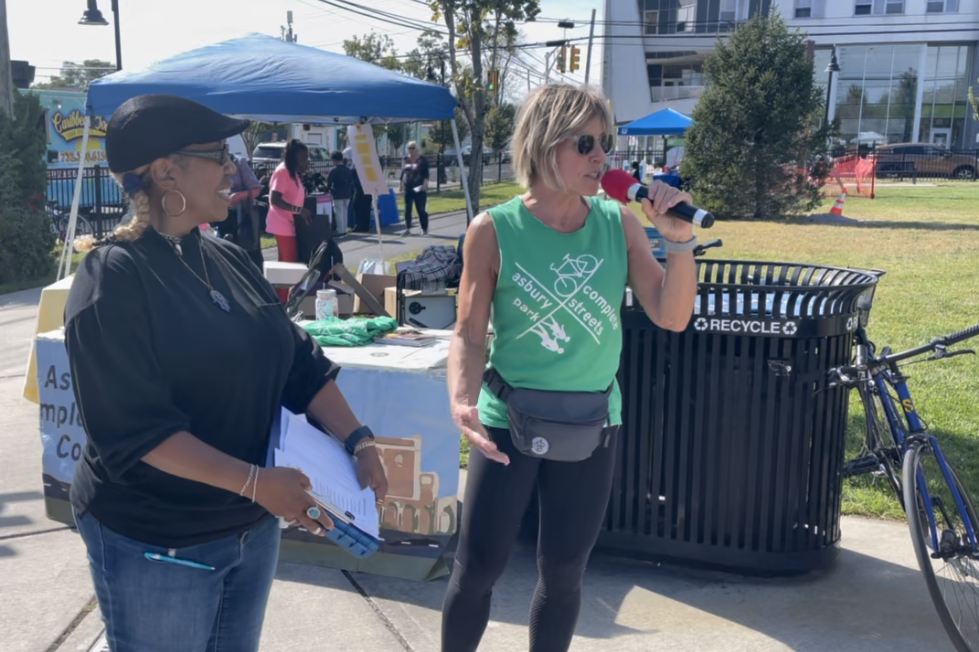
What an amazing day!

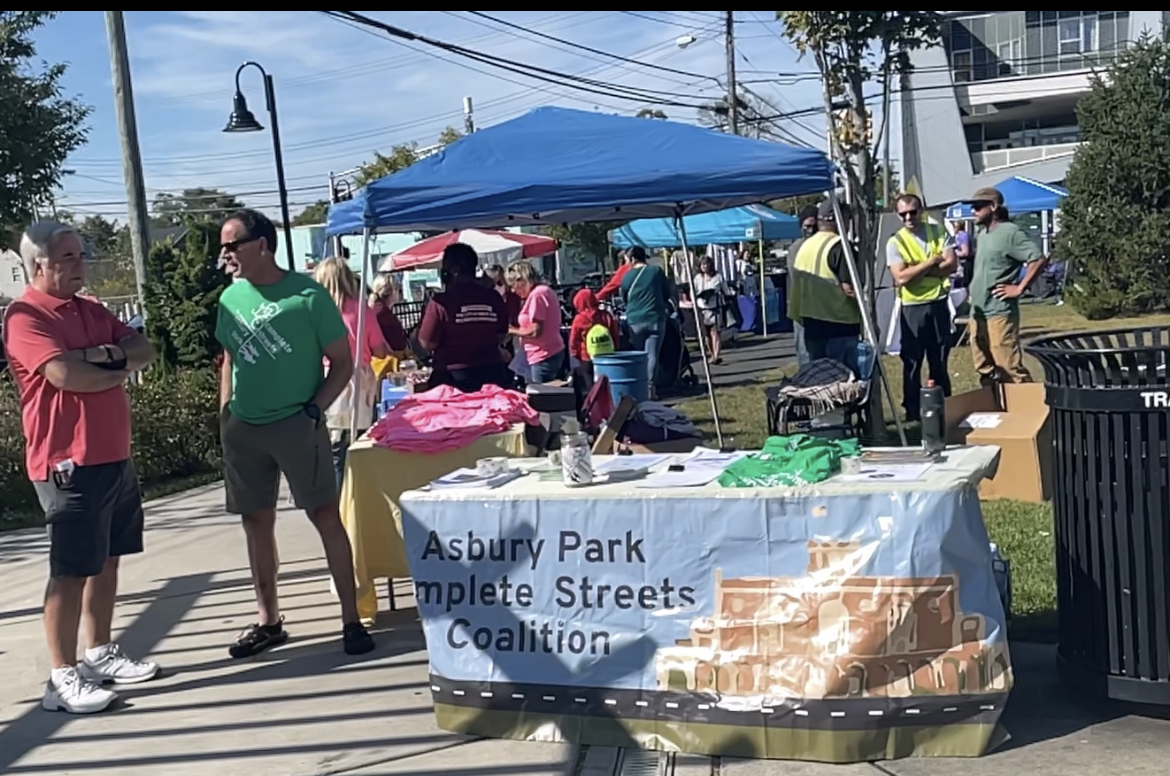
A great event yesterday at #asburyparkgreenfest  in Springwood Park simultaneously with  @asburyparkporchfest. 

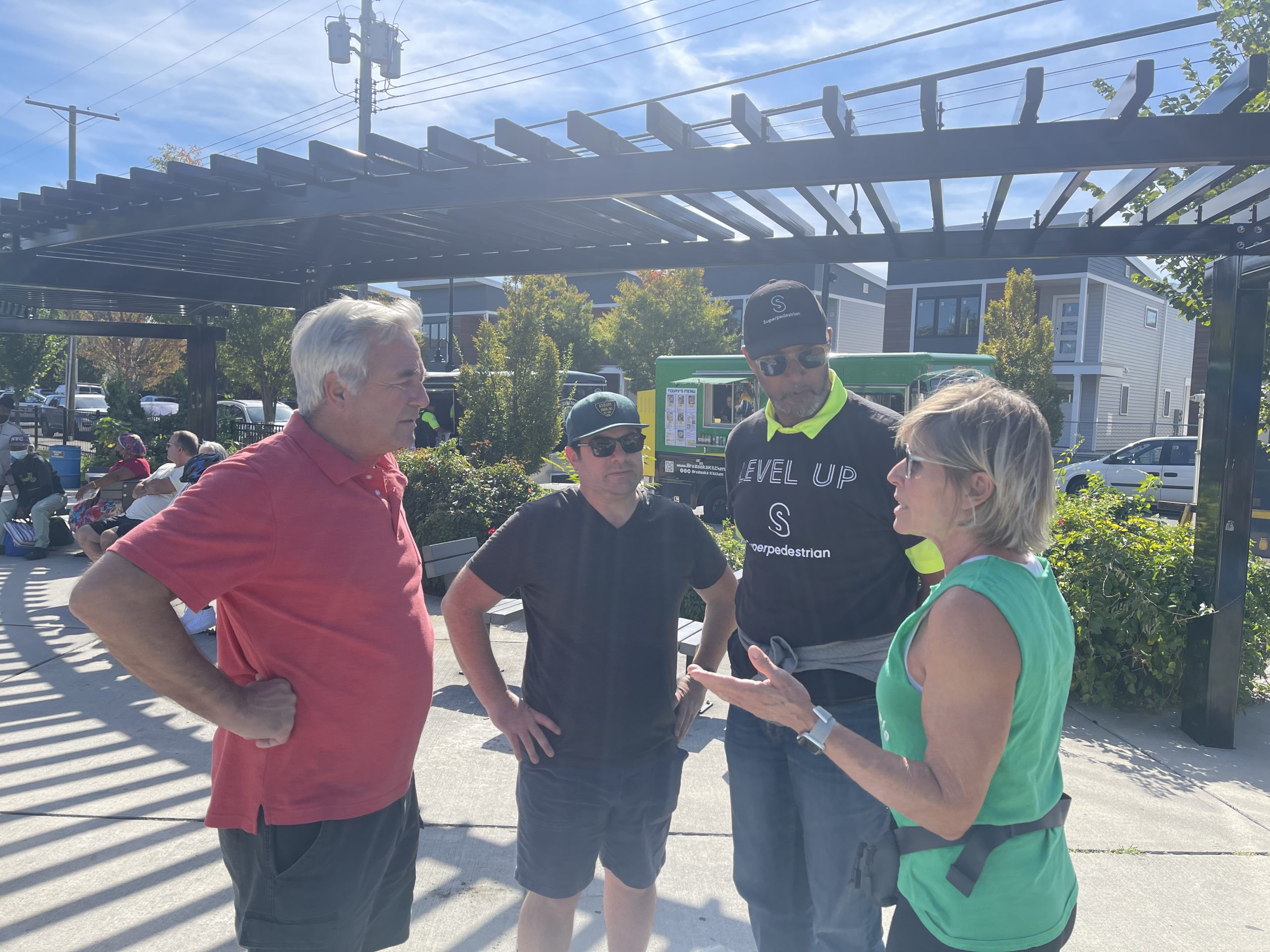
Spreading the word about safe, equitable access for everyone in Asbury Park, especially the most vulnerable. Great to be next to the Quality Of Life table, spend some time with our Mayor John Moor, and talk with the guys at @linkbysuperpedes .

The day kicked off with tunes from the awesome @bryanhansenband 

#asburyparkcompletestreetscoalition trian #safestreetsforall #equitableaccess

Check it out!

Apcsc Greenfest pano

GREAT NEWS FOR PEOPLE WALKING AND BIKING!

Asbury Park Complete Streets Coalition has advocated for this law along with NJ Bike & Walk Coalition, The Tri State Transportation Campaign, The Bicycle Coalition Of Greater Philadelphia, and TEAM4 the NJ Safe Passing Law.

Drivers must now move over when passing people walking and on bikes!

Updated Aug 06, 2021; Posted Aug 05, 2021

By Larry Higgs | NJ Advance Media for NJ.com

A long-sought goal of advocates finally happened Thursday when Gov. Phil Murphy signed the state’s first law requiring drivers to safely pass people on bikes, scooters and pedestrians who are using the roads.

Murphy signed the law Thursday, that allows New Jersey to catch up to 42 other states and other counties that have safe passing laws intended to reduce collisions between cars and other road users. The bill had been passed by a 34-to-1 vote of the state Senate on June 30.

Passage of the bill caps over 10 years of advocacy led by the NJ Bike and Walk Coalition, Bicycle Coalition of Greater Philadelphia, Tri-State Transportation Campaign and the grassroots TEAM4 the NJ Safe Passing Law, advocates said.


This is how it looks and feels to a person on a bike and for a driver.

Read more about it.

Debra Kagan, New Jersey Bike & Walk Coalition Executive Director: “We want to thank the Governor and legislators for passing this groundbreaking law, and the many advocates and volunteers who worked so hard for so many years to make this possible.”


NJ may soon become the 43rd state to enact a Safe Passing Law!

Safe Passing Bill and Safe Sharing One Step Closer for New Jersey Thanks to NJBWC and Advocacy Partners!

Tell Gov. Murphy To Sign The Safe Passing Law!

CALL @GovMurphy at 609-292-6000 or send an email at constituent.relations@nj.gov and tell him to sign the bill into law!

An advocacy story for the records, the campaign evolved from a simple 3-foot bill for bicyclists in 2009 to a move-over/4-foot bill for bike riders, pedestrians and other “vulnerable road users” in 2014. In 2021, the bill now addresses both the speed and distance at which a vehicle can pass other road users.
A package of bills — A5570, A5571, A5579, A5656 — approved by the Legislature and sent to Gov. Phil Murphy’s desk would require drivers to change into another lane or leave at least 4 feet between their vehicle and the person they’re passing.”
 
“A retired police officer told a state Senate committee Thursday why he believes a law is needed to tell drivers how to safely pass people riding bikes, scooters and skateboards in the street — he’s had more close calls riding a bike than in decades in law enforcement.”
 
If you encounter a paywall with NJ.com check out this article from Atlantic City:
 
“Motor vehicles have been made much safer for their drivers and passengers. But in the past decade, those motor vehicles and their drivers have killed substantially more people on foot and riding bicycles. Every year, the death toll rises higher.”

Cities Must Become Car-Free To Survive

The auto industry has co-opted our brains with snazzy advertising, unrealistic settings where drivers own the road, selling us cars with the idea that our very identity is tied to the vehicle we drive. In this car-dominated culture people defend their entitlement to drive even when the lives of vulnerable road users are at stake. Car production now outpaces population growth globally, spewing pollution, and destroying the environment and human health in general.

City streets are car sewers, but residents of cities are incensed about lack of parking, and whether bicycle riders should be permitted on sidewalks, boardwalks, or the street itself.  The small amount of space allowed for bikes (and other micro-mobility) has become the most hotly contested parts of urban infrastructure. One of the greatest successes in automotive brainwashing influence has been the antagonistic relationship of people walking against people riding bikes and scooters, taking the focus off the responsibility of drivers causing over 40 thousand deaths a year in the US alone.

We believe that in American cities, especially small cities like Asbury Park we can gradually reduce and eventually eliminate the need for personal vehicles by supporting alternative transportation options like micro-mobility (scooters, bikes, skateboards etc), and transit in the form of jitneys, pedicabs, and busses.

While we continue to build more infrastructure for people to get around without cars, we need to create more live-able spaces for people to safely gather, to play, to do business, and to move about the city.

#toomanycars #walkablecity #bikeablecity #placesforpeople

CITIES ‘MUST BECOME CAR-FREE TO SURVIVE’

JUNE 23, 2021

The researchers said future  planning must include a focus on reducing dependence on cars, promoting fewer and shorter trips and encouraging walking and cycling as primary modes of local transport. Public transport should be encouraged for longer journeys, the researchers argued, and cars should only be used for emergencies or special occasions.

Lead author Dr. Rafael Prieto Curiel commented: “The city of the future, with millions of people, cannot be constructed around cars and their expensive infrastructure. In a few decades, we will have cities with 40 or 50 million inhabitants, and these could resemble car parks with 40 or 50 million cars. The idea that we need cars comes from a very pollutant industry and very expensive marketing.”