Fun And Inspiring
Rolling Spoke Photoblog.
We can do this too!

Transportation Equity in Our City
Rolling Spoke Photoblog.
We can do this too!

Helen Pidd June 13 2018
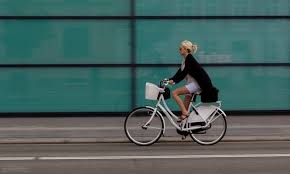
Roads designed by men are killing women – and stop millions from cycling
The main reason most women don’t cycle in the UK is because they think it is dangerous.
Read more and see video:
https://www.theguardian.com/commentisfree/2018/jun/13/safety-women-cycling-roads?CMP=share_btn_fb
The best ways to spend Father’s Day, whether you’re the dad looking for some bonding time, or if you re the offspring thinking about doing something meaningful with your dad… You guessed it! Take a walk or bike ride in a Monmouth County park! Read on for inspiration from the UK, and see below for bike and walking trails in Monmouth County.
Monmouth County Walking Trails
Read more…
Let’s keep the discussion going about slowing the cars.
New York City only used speed bumps to slow the cars on narrow city streets, and injuries to people walking or biking actually increased 6 percent. London added raised crosswalks, raised intersections, curb extensions, pedestrian refuges, traffic diverters, mini-roundabouts, and other traffic-calming measures.
In New York’s slow zones, speed humps are the only physical traffic calming measure. London uses a greater variety of traffic calming measures, installed more intensively.
Read more…
https://nyc.streetsblog.org/2018/06/13/londons-slow-zones-save-lives-and-new-yorks-dont-heres-why/
We’ve been publishing articles about traffic signaling (Like LBIs and LPIs) which has hopefully been enlightening for readers . This article explains signaling further, and with Barcelona as an example the subject is interesting, and even beautiful. Cities say that they want to prioritize walkers and bicyclists, but traffic engineers are still designing for cars…will Asbury Park develop as a city designed for all users and not just cars? We think so!
Read more…
Register for this 1 hour session and assess the status of Complete Streets in Asbury Park (or your city).
Wed, Jun 20, 2018 1:30 PM – 2:30 PM EDT
An informational webinar will be held Wednesday, June 20, from 1:30pm – 2:30pm to review how to assess the status of your complete streets efforts, the types of technical assistance available to assist you in moving forward, and how to apply to be part of the program.
https://register.gotowebinar.com/register/7174759064363667713
Concerned about speeding on city streets? Learn here about traffic calming. Asbury Park and Hoboken share some of the same challenges.
The purpose of the Traffic Calming Toolkit is to provide residents and community leaders with information about the City of Hoboken’s Traffic Calming Policy. The toolkit is designed to highlight common traffic calming measures and explain the protocol used in selecting the most appropriate measure for each instance.
Traffic Calming vs. Traffic Control
“Traffic control” is often confused with “traffic calming,” and it is important to understand that these two terms have very different roles for transportation planning and engineering. Unlike traffic calming, which emphasizes managing traffic speeds, traffic control primarily is concerned with managing traffic flow. Stop signs are a good example of a traffic control device that is often confused as a traffic calming measure. Stop signs are intended to assign the right-of-way among motorists, pedestrians, and cyclists at an intersection. Although many citizens believe that stop signs help reduce speeds on their street, numerous studies have shown that speeds are as high or higher at mid-block than those locations without stop signs. Also, the FHWA Manual on Uniform Traffic Control Devices (MUTCD) states that “Stop signs should not be used for speed control. For the purposes of this Traffic Calming Toolkit, traffic control devices will generally not be included except for the purposes of prioritizing pedestrian crossings at intersections where high volumes exist.
Read more…
Hoboken-Traffic-Calming-Toolkit
Mon 11 Jun 2018
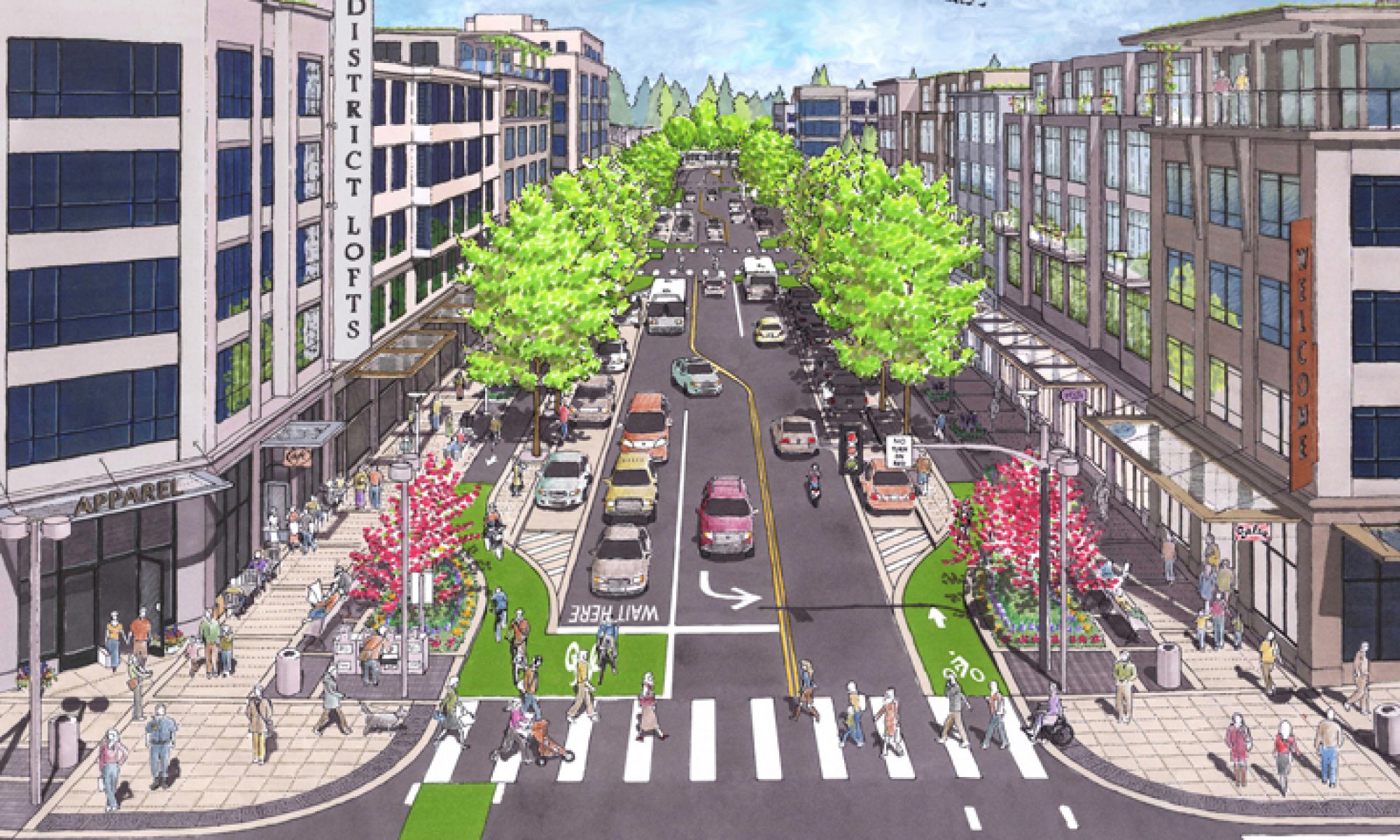
Danish-Canadian urban designer Mikael Colville-Andersen busts some common myths and shows how the bicycle has the potential to transform cities around the world
Read more…
Laying down a network of bike lanes all at once isn’t the way most cities do it, but it was a success in Calgary and here are some tips on how it can work elsewhere. Asbury Park?
Boldness Paid Off
“It might have been easier politically to build the network one lane at a time, as most cities do, but the uptake on a lane with few connections would have been slow. In this case, dropping down a well-thought out network gave cyclists and would-be cyclists a broader peek at what a cycle-track network can do, and, more importantly, gave them somewhere to go.”
Read more…
Who would have thought…Detroit state of the art for moving cars, bicycles, and people safely through intersections. Asbury Park could do this.
But in solving that very basic problem, the city has taken significant steps toward creating some of the smartest intersections in the country. It is experimenting with five “smart intersections” along a nearly two-mile stretch of Larned Street near the riverfront, including some downtown sites.”
Read more…