
North American cities rarely make the list of the world’s best biking cities. So what can we do better?

Asbury Park Complete Streets Coalition
Transportation Equity in Our City

“If we don’t have safe corridors to ride, people don’t ride,” she said. “The infrastructure for cars is really expensive, and as more people are on our streets, I think that providing safe pedestrian and bicycle alternatives — that takes a few cars out of the congestion.”
Read more…
https://usa.streetsblog.org/2017/12/01/ellensburg-wa-proves-no-town-is-too-small-for-top-notch-bikeways/

Leave it to a Brit to deliver a mathematical smackdown this courteously.
History may never record which anonymous bureaucrat was assigned to field the following question about London’s protected bike lane network (known there as “cycle superhighways”) submitted to the public agency Transport for London:
Prior to the introduction of cycle superhighway, certain claims were made by TfL on the impact on traffic on Upper Thames St. Congestion now seems to be worse than predicted. Please supply any data or reports on the prediction v. reality. If no analysis has been done, please let me know if it will be and if not, why not. Thank you.
It’s a legitimate concern, of course.
Read more…

Everyone has their opinion on what causes congestion, many of which are conflicting. The causes are complex, but 75% of congestion is caused simply by there being too great a demand for our limited street space. Or, without the jargon: too many motor vehicles and too few people in them.
To solve the problem, the report recommends that the mayor should prioritise the efficient use of our roads, saying that the “most space-efficient means of moving people – walking, cycling and public transport – should be prioritised over low-occupancy private transport.”
Alongside walking, cycling is the most healthy and sustainable of all transport modes and the most efficient way of getting lots of people around on our limited road space.
Read more…
https://www.theguardian.com/environment/bike-blog/2017/dec/01/bike-lanes-dont-clog-up-our-roads-they-keep-london-moving?CMP=share_btn_fb
 Transportation & Complete Streets
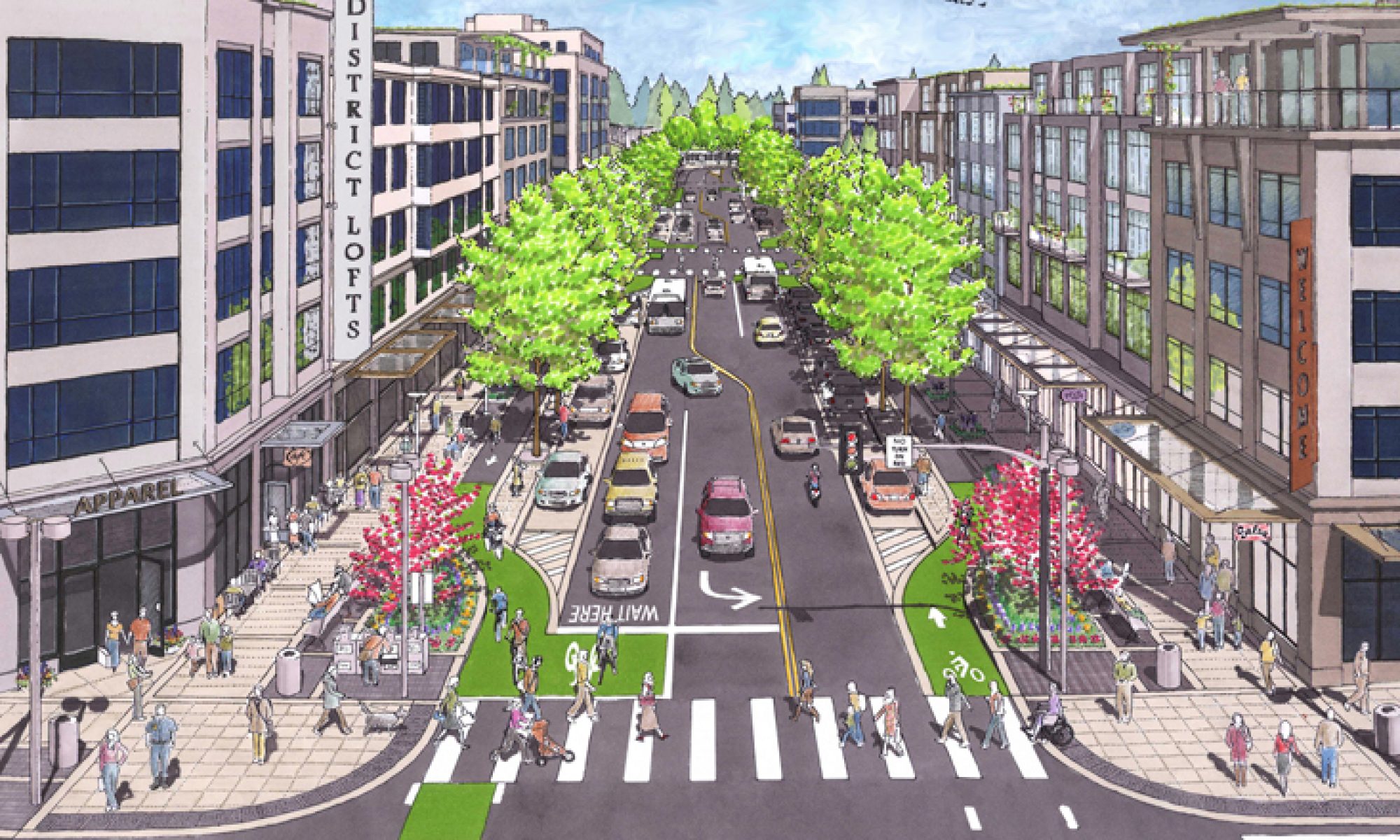
The West Side Choice Neighborhood Transformation Plan is being conducted by City Planner Michele Alonso and the AP Housing Authority through a grant from HUD. The plan has an entire element dedicated to improving connectivity, transportation and Complete Streets. Accepting input and comments about how to make the West Side a more equitable, livable place for residents going forward:
MINIMIZE PHYSICAL BARRIERS BETWEEN THE EAST SIDE OF THE CITY AND THE WEST SIDE, PARTICULARLY THE TRAIN TRACKS.
ENHANCE PUBLIC TRANSPORTATION OPTIONS.
IMPLEMENT COMPLETE STREETS ELEMENTS IN THE WEST SIDE.
See the document and add your thoughts. Click the upper right corner…
http://asburyparkchoice.com/transportation-complete-streets-new


Let the Senate Budget Committee know that now is the time to vote on making our roads safer for bike riders and pedestrians in New Jersey! Click here to send a message to the committee.
In a state that typically ranks near the top in bike rider and pedestrian road fatalities, education of new drivers is critical to safer roads. But our legislators continue to ignore the fact that almost a third of those killed on our roads in 2016 were either walking or riding a bicycle. Our legislators’ track record in the current legislative session for doing anything for vulnerable road users is abysmal. But here is a last chance for them!
|
The League of American Bicyclists supports this bill also.
Read their post here.
|
Amsterdam wasn’t always this way. We have plenty of work to do- with the prevailing love affair with cars in the US.
“Making a city where most trips are done on bikes requires utterly discarding conventional car-centric ways of thinking about transportation. Over the last 60 years, Amsterdam’s leaders, planners and designers have by trial and error created a template for a city where bikes are the dominant force in transportation planning and design. That template has five essential characteristics; skip or short-change any one of them and your city of bikes won’t work as well.”

In most cities, the network of bicycle tracks and lanes is far sparser than the overall street network for vehicular traffic. In Amsterdam, the street network map is the bike network map. Almost all streets in the city have excellent bike facilities of one type or another. What is extraordinary is that in Amsterdam you are more likely to need a specialized car map than a bike map, since many streets have limited or no car access.”

People unfamiliar with the idea of the bicycle as real transportation sometimes see Amsterdam—the famously bike-friendly Dutch capital—as a fantasyland that has very little to do with the grown-up transportation world of cars and trucks. In reality, a readjustment of perspective is needed, since Amsterdam has succeeded in creating a transportation system that is one of the most successful in the world. Transportation in Amsterdam is the epitome of sustainability. It is convenient, cheap, clean, quiet, efficient, and safe.
Read more…
A crosswalk does not necessarily make it safe to cross a street. This is not news or new science. But that hasn’t stopped developers and city councils to continue to target pedestrians with stricter enforcement, and to blame them in crashes.
“The MUTCD bases this provision on studies of crash data. Pedestrians crossing big highways, these studies report, have a greater chance of being hit by drivers at marked crosswalks than at similar unmarked ones.
There are several possible reasons for this.

“Most of the general public believes that marking those crosswalks makes them safer to use. But the Federal Highway Administration disagrees. Sometimes, at least.”
“The MUTCD bases this provision on studies of crash data. Pedestrians crossing big highways, these studies report, have a greater chance of being hit by drivers at marked crosswalks than at similar unmarked ones.”
Read more…
https://ggwash.org/view/30378/on-crosswalks-research-and-safety-campaigns-conflict

“The National Association of City Transportation Officials has highlighted the measure — called a “leading pedestrian interval” by traffic engineers and urban planners — as a best practice in its urban street design guide, saying that it is one of the ways that “effectively decrease crashes and save lives on our cities’ streets.”
Read more…
Enforcement is not the answer, which amounts to blaming the (potential) victim. The solution is with reduced motor vehicle speed, better infrastructure for bicycling and walking, and thereby reduced volume of automobiles and traffic.

“So, I’ve checked the statistics and, as far as I can discern, none of those pedestrians was killed because they were bumped into by another pedestrian checking their Twitter feed. No, instead, they were all killed because cars struck them. It’s as if the No. 1 cause of deaths on Ontario roadways are automobiles, especially those driven by distracted drivers.”
Janette Sadik-Kahn :
https://www.nytimes.com/2017/10/23/business/honolulu-walking-and-texting-fine.html?emc=eta1
Girl killed while crossing street Facetiming–WHILE WITHIN THE CROSSWALK. “Now we all tell our kids to look both ways when crossing the street, and not to look at phones. But everyone here is just so convinced that the kid is so totally at fault. Had she been daydreaming, had she been blind, had she been old with bad hearing and eyesight, it might not have even made the evening news. Instead, it just becomes part of the continuing campaign to shift the burden of responsibility from drivers to pedestrians.”
Read more…