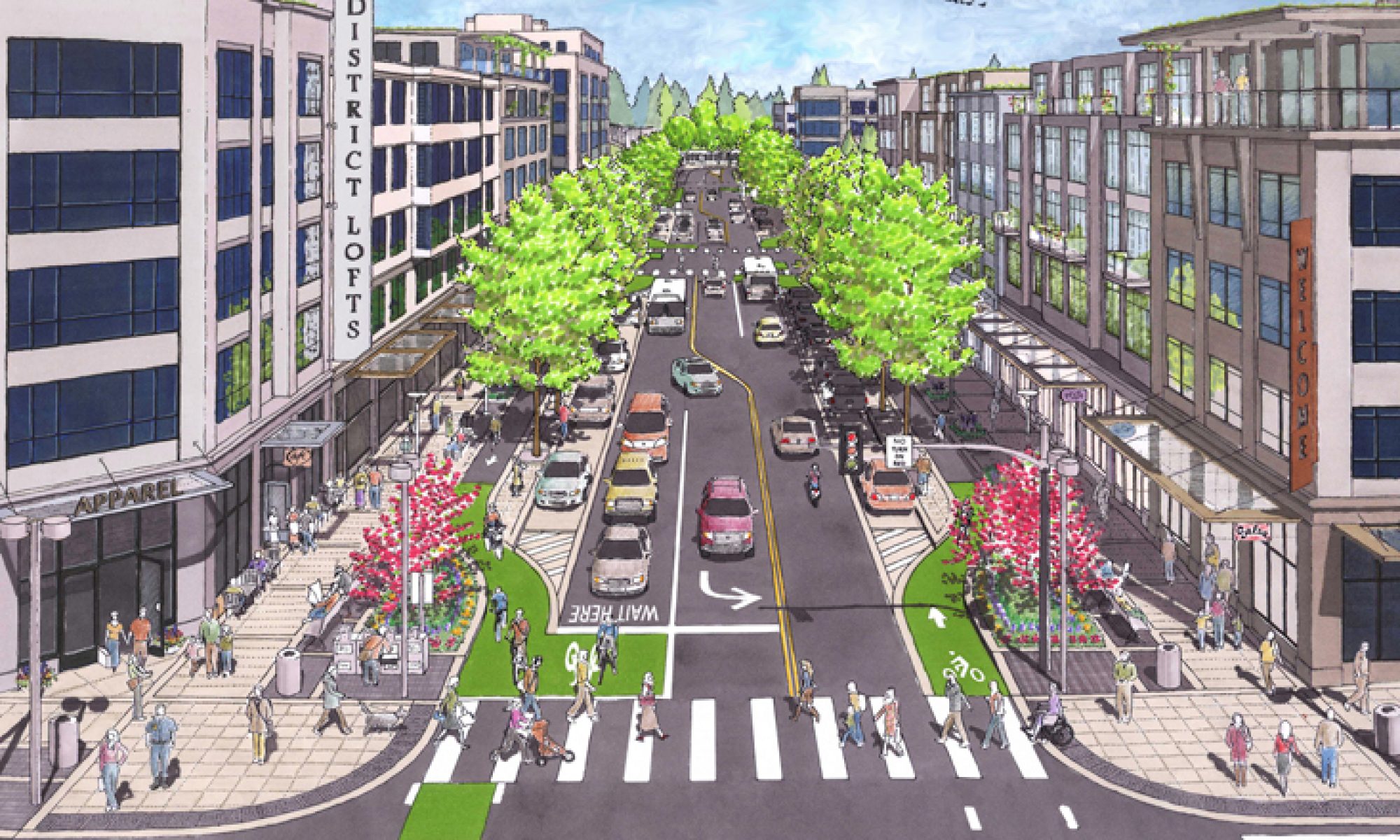
Complete Streets Webinar June 20th

Register for this 1 hour session and assess the status of Complete Streets in Asbury Park (or your city).

Complete Streets Technical Assistance Program Informational Webinar

Wed, Jun 20, 2018 1:30 PM – 2:30 PM EDT

An informational webinar will be held Wednesday, June 20, from 1:30pm – 2:30pm to review how to assess the status of your complete streets efforts, the types of technical assistance available to assist you in moving forward, and how to apply to be part of the program.

Sustainable Jersey, the Voorhees Transportation Center at Rutgers University, the North Jersey Transportation Planning Authority and Together North Jersey are pleased to announce the Complete Streets Technical Assistance Program. The program will support municipal government efforts to implement complete streets in nine municipalities. Selected participants will receive free direct technical assistance to complete a specific task related to advancing a complete streets initiative in their communities. This informational webinar will review the details of the program including the types of technical assistance available and online application process.
Register:

https://register.gotowebinar.com/register/7174759064363667713

Concerned About Speeding?

Concerned about speeding on city streets? Learn here about traffic calming.  Asbury Park and Hoboken share some of the same challenges.

Hoboken Traffic Calming Toolkit

The purpose of the Traffic Calming Toolkit is to provide residents and community leaders with information about the City of Hoboken’s Traffic Calming Policy. The toolkit is designed to highlight common traffic calming measures and explain the protocol used in selecting the most appropriate measure for each instance.

Traffic Calming vs. Traffic Control
“Traffic control” is often confused with “traffic calming,” and it is important to understand that these two terms have very different roles for transportation planning and engineering. Unlike traffic calming, which emphasizes managing traffic speeds, traffic control primarily is concerned with managing traffic flow. Stop signs are a good example of a traffic control device that is often confused as a traffic calming measure. Stop signs are intended to assign the right-of-way among motorists, pedestrians, and cyclists at an intersection. Although many citizens believe that stop signs help reduce speeds on their street, numerous studies have shown that speeds are as high or higher at mid-block than those locations without stop signs. Also, the FHWA Manual on Uniform Traffic Control Devices (MUTCD) states that “Stop signs should not be used for speed control. For the purposes of this Traffic Calming Toolkit, traffic control devices will generally not be included except for the purposes of prioritizing pedestrian crossings at intersections where high volumes exist.

 Read more…

Hoboken-Traffic-Calming-Toolkit


The Case For Urban Cycling

At the initial stages of redesign from car centric city to a people centric city-some residents will undoubtedly say, “we’re not “X”(name of city)”.  Copenhagen is a perfect example. Let’s use the models of cities that are doing it right and strive to imitate them.

Copenhagenize your city: the case for urban cycling in 12 graphs

Mon 11 Jun 2018

Danish-Canadian urban designer Mikael Colville-Andersen busts some common myths and shows how the bicycle has the potential to transform cities around the world

Read more…

https://www.theguardian.com/cities/gallery/2018/jun/11/copenhagenize-case-urban-cycling-graphs?CMP=share_btn_fb

Bike Lane Network Success Story

Laying down a network of bike lanes all at once isn’t the way most cities do it, but it was a success in Calgary and here are some tips on how it can work elsewhere.  Asbury Park?

The unlikely success of Calgary’s bike-lane network has these lessons for other cities

Boldness Paid Off

“It might have been easier politically to build the network one lane at a time, as most cities do, but the uptake on a lane with few connections would have been slow. In this case, dropping down a well-thought out network gave cyclists and would-be cyclists a broader peek at what a cycle-track network can do, and, more importantly, gave them somewhere to go.”

Read more…

http://shifter.info/the-unlikely-success-of-calgarys-bike-lane-network-has-these-lessons-for-other-cities/

Smart Intersections

Who would have thought…Detroit state of the art for moving cars, bicycles, and people safely through intersections. Asbury Park could do this.

BY  JUNE 11, 2018

These Smarter Stoplights Could Be Lifesavers

New traffic signals in Detroit are designed to help pedestrians, cyclists and ambulances get through intersections, while helping traffic planners test safety improvements quickly.

Miovision, a vendor working in partnership with Detroit, has touted the city’s newest signal exchange as “the world’s smartest intersection.” (Miovision)

But in solving that very basic problem, the city has taken significant steps toward creating some of the smartest intersections in the country. It is experimenting with five “smart intersections” along a nearly two-mile stretch of Larned Street near the riverfront, including some downtown sites.”

Read more…

http://www.governing.com/topics/transportation-infrastructure/gov-intersection-technology.html?utm_term=These%20Smarter%20Stoplights%20Could%20Be%20Lifesavers&utm_campaign=These%20Smarter%20Stoplights%20Could%20Be%20Lifesavers&utm_content=email&utm_source=Act-On+Software&utm_medium=email

Making A Plan For Bicyclists

We use examples of what cities are doing all over the world to let our readers know how Asbury Park is yes, unique, but also facing the exact same challenges.

Asbury Park’s Main Street NJ Rt 71 has long been a thoroughfare for cars to get someplace else.  Our initiative in reconfiguration is to make Main Street a destination that is accessible to people on bicycles and on foot.  With better signaling, bike lanes and crosswalks, plus a vigorous bike share and other options for transportation like jitneys and electric car share, we should be able to make streets safer, eliminate parking issues and do this!


Ghent – Changing the Whole Circulation Plan Overnight: a Strong Political Decision

April 12, 2018

“You can’t become a cycling city, if you don’t say something about cars. In order to increase the number of cyclists and develop a bicycle culture, it’s necessary to take some anti-car measures. If we get rid of the through traffic, you get fewer cars, more space for pedestrians and cyclists, and infrastructure gets an extra value” asserts Filip Watteeuw.
“A noticeable impact of this measure comes from some inhabitants who were quite reticent to this plan, but have already changed their routines by adopting new mobility habits. Generally speaking, 25% of Ghent inhabitants made a decision to change their mobility habits by purchasing an (e-)bike, subscribing to the local public transports or starting car-sharing.”


http://www.copenhagenize.com/2018/04/ghent-changing-whole-circulation-plan.html?m=1

Traffic Signals For Bicyclists

Learn about how cities can make riding a bicycle safer at intersections with lighting signals called Leading Bicycle Intervals, or “LBIs”, similar to the more familiar Leading Pedestrian Intervals, “LPIs”. 2 articles in one!

Addressing Bicycle-Vehicle Conflicts with Alternate Signal Control Strategies

Read more:

https://nitc.trec.pdx.edu/research/project/897

And read about leading bicycle intervals from NAACTO here:

Bicycle Signal Head Benefits

  • Separates bicycle movements from conflicting motor vehicle, streetcar, light rail, or pedestrian movements.
  • Provides priority to bicycle movements at intersections (e.g., a leading bicycle interval).
  • Accommodates of bicycle-only movements within signalized intersections (e.g., providing a phase for a contra-flow bike lane that otherwise would not have a phase). Through bicycle travel may also occur simultaneously with parallel auto movement if conflicting automobile turns are restricted.

Read more…

https://nacto.org/publication/urban-bikeway-design-guide/bicycle-signals/bicycle-signal-heads/

Cargo Bikes- The Solution To Deliveries in Cities

This could be a great idea for Asbury Park.  Cargo bikes are appearing to be the “old is new again” great way to get goods and services around in cities as cars have threatened to take over our streets, and city leaders strive to make streets safer for bicyclists and pedestrians.  Bike manufacturers are trying to keep up with the demand for cargo bikes, and building bikes are lighter and easier to pedal than old versions.  A seemingly not too difficult challenge is for cities to establish areas for delivery trucks to reload goods to the cargo bikes.

Pedal power: the rise and rise of cargo bikes in Germany

2 May 2018
Whether they’re hauling parcels or children, cargo bikes are becoming a familiar sight in German cities as the nippy, clean alternative to cars and delivery vans – and shaking up urban transport in the process.
Read more…

https://www.thelocal.de/20180502/pedal-power-germany-the-rise-of-cargo-bikes/amp?__twitter_impression=true

Tactical Urbanism=A Bit Naughty For A Purpose

Meet Happy Streets: Rotterdam’s cheeky activists for social mobility in the city


A cheerful squad of urban agitators are using Rotterdam to conduct quirky experiments in social mobility.

A fun approach

Happy Streets’ playful approach to tackling the problem is refreshing. Recent projects have included creating a temporary bike lane with painted yellow dots to demonstrate that there is room for cyclists, converting parking slots to astro-turfed picnic areas furnished with benches and deck chairs, and creating a pavement version of the game Twister. Such projects have encouraged residents and policy makers to take another look at the purposing of city spaces, and consider alternative, less car-centric models. Tactical urbanism, it seems, is spreading. In one part of town – quite independent of Happy Streets – local residents recently took matters into their own hands and painted their own pedestrian crossing to show that they needed one. ‘I thought that it was really nice that people are sometimes a bit disobedient, not because they want to make a mess, but because they just want to make the city a better place,’ says Wemmenhove. ‘We need to trust people a bit more that they also know what they’re doing.’

Read more …

https://www.dutchnews.nl/features/2018/03/meet-happy-streets-rotterdams-cheeky-activists-for-social-mobility-in-the-city/

#Slow The Cars

Drivers are conditioned to behave as though the roads belong to them.  They’re right. Roads and streets have been designed for cars, pushing aside other users and causing injury and death.  Cities now realize that speed kills, and they’re rethinking design and infrastructure, and especially slowing the cars. #slowthecars

Taming Speed for Safety: Portland Case Study

Fortunately, many leaders are stepping up to modernize and improve they way they manage speed, including upstream efforts to address the underlying systems, policies, and the built environment that influences speed.