Take Action! Support A National Complete Streets Bill

A NEW FEDERAL BILL TO MAKE OUR STREETS SAFER

A handful of leaders in the U.S. House and Senate introduced a bill that would finally require states and metro areas to design and build safer streets for everyone, but it will need strong and vocal support from across the country to become law.

Take Action For National Complete Streets

The Complete Streets Act of 2019would require states to set aside money for Complete Streets projects, create a statewide program to award the money (and provide technical support), and adopt design standards that support safer, complete streets. It was introduced today by Sen. Edward Markey (MA) and Rep. Steve Cohen (TN), and co-sponsored by Senators Blumenthal (CT) and Schatz (HI), and Reps. Espaillat (NY) and Gallego (AZ).


Complete Streets bill—tell your senators and representative to co-sponsor the Complete Streets Act of 2019.

Asbury Pod: Great Interview with Asbury Park Transportation Manager

Asbury Pod episode #3, Transportation, starting around 19:00 ’til around 1:02:00.  Asbury Park Transportation Manager, Mike Manzella, Deputy Mayor Amy Quinn, and Joe Walsh get down into issues like parking, scooters, how to make a walkable and bikeable city, transit, and the rising numbers of automobile/pedestrian and cyclist fatalities across the US.

Thanks for a great in-depth interview!

Listen:

https://www.stitcher.com/podcast/asbury-pod/e/62425309

Video: Amsterdam children fighting cars in 1972

Amsterdam wasn’t always bicycling heaven. Vehicles had been taking over city streets there just as they have been taking over streets in the US, but they did something about it…

This 1972 documentary video tells the story of a how the children in a neighborhood in Amsterdam fought for safe streets and a place to play with what we now call “tactical urbanism”.The area had become congested by vehicles. People, especially children were endangered. Does this 1972 neighborhood look like any American cities we are familiar with today?  Some US cities are taking steps to change from “car culture” , into cities for people of all ages , but not enough, and not fast enough. 40,000 people are killed in motor vehicle related crashes every year in the US!

The documentary video was discovered recently, and shortened to about 10 minutes with subtitles. Watch and share.

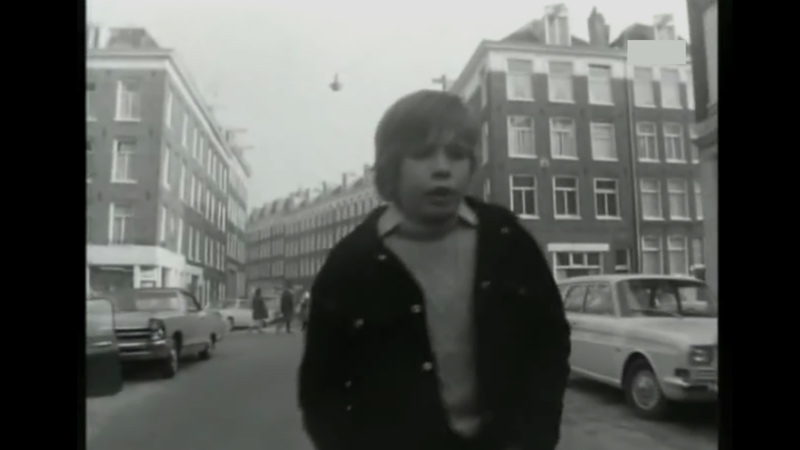
Image from the documentary from 1972. The streets are dominated by cars and there is not a tree in sight.

“This would be a perfect area for a trial with a maximum speed of 30km/h” (18mph) explains a traffic expert of the city of Amsterdam to a child in a film that was broadcast on Dutch national TV almost 42 years ago.

“The TV documentary was made for a progressive broadcasting corporation and shows the Amsterdam neighbourhood “De Pijp” which was about 100 years old at the time. The homes were run down and small. The streets were never built, nor fit for all the cars brought in by the 40,000 people living in the small area and its many visitors. This led to an overpopulated neighbourhood with a lot of dirt and filth and especially the children suffered. The documentary is one of a series and this particular episode looks at the situation from a child’s perspective.”

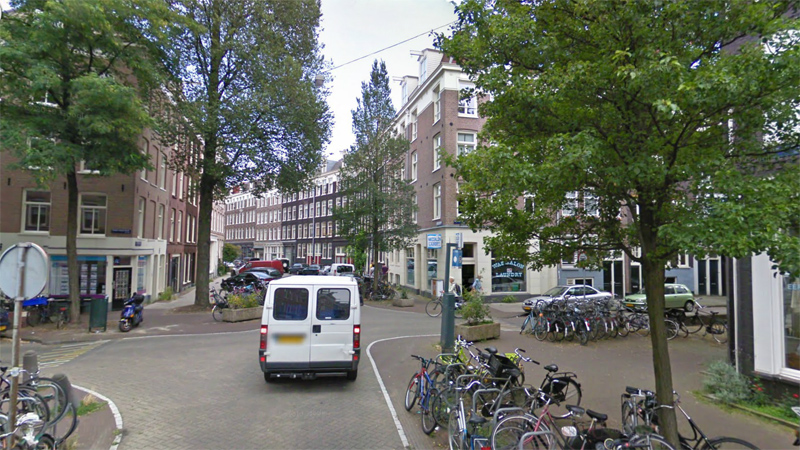
The same street as seen in Google Streetview is very different. The carriage way was narrowed. The homes renovated and the trees and bicycles make the area a lot friendlier.

More from:

Bicycle Dutch


And read about How Children Demanding Play Streets Changed Amsterdam
 

Red Lights and People on Bikes

This contentious issue is in the news everywhere. This important article by Doug Gordon is from 2014, and not much has changed. In many cities the dispute about bicyclists’ rights at intersections is degrading the relationship between law enforcement and people riding bikes (looking at you NYPD) and people driving vehicles. In most cities in the US there are #toomanycars, and people walking and on bikes are being killed. People on bikes at intersections are just safer when they can get away from cars and trucks. Until the rules change we need to apply common sense and focus on safety of the most vulnerable road users.

Here’s the the last, spot on comment to the article:

““It is like expecting badminton players to use the rules of squash.”

Worse. It’s like expecting badminton players to use the rules of squash because you forced them to play on a squash court which was obviously designed with no concessions to badminton. And if they don’t follow the rules it will upset the real squash players.

Or maybe it’s like the penguins turn up to the zoo to be told there’s no penguin enclosure – not enough room or money… – so they have to man up and get in with the lions for the duration, and because of that they have to get locked into little cages every night like the lions, just for consistency.””

Cyclists and Red Lights: Actually, It’s Complicated

MAY 23, 2014

I knew it was coming.

The minute I finished reading Joseph Stromberg’s piece on Vox, “Why cyclists should be able to roll through stop signs and ride through red lights,” I had a feeling that a response would be published by someone somewhere — Felix Salmon? Slate? — and that it would have a somewhat tsk-tsk-sounding headline. “No they shouldn’t” or something like that. I had been waiting to weigh in on the subject of cyclists and red lights myself, in fact, until such a piece was written, because I knew it would frame the discussion in a typically binary fashion and I was hoping to stake out a more nuanced position.

Well, the response I was waiting for was just published on Grist.org. In a piece headlined “Why bikers should live by the same laws as everyone else,” Ben Adler says that Vox.com and anyone advocating for Idaho stop laws, at least in cities, has it wrong.

I had a lot of problems with this piece, starting with the title. Should bikers live by the same laws as everyone else? What does that even mean? First of all, which laws? The laws applying to drivers or the laws applying to pedestrians? Because the laws that apply to each of those groups are very different. (Pedestrians, for example, can’t walk on interstate highways, while drivers, at least in theory, aren’t supposed to drive on sidewalks.) Cyclists, being a third thing somewhere between pedestrians and drivers — but obviously much closer to the pedestrian side of the spectrum — need their own laws. Which was essentially what Stromberg argued at Vox.

Read about it~

https://brooklynspoke.com/2014/05/23/cyclists-and-red-lights-actually-its-complicated/

People On Bikes Get Hit By Drivers A Lot (And Get Off)

When a bike rider is struck by a driver of a motor vehicle, the police report and news articles may represent that the person riding the bike is responsible for being injured or killed…we need to change car culture. Can the US do it?

How We Talk About Drivers Hitting Cyclists

Joe Lindsey May 6, 2019

What the media gets wrong, and why, says a lot about how our society views vulnerable road users


It’s hard to say whether tensions between drivers and cyclists are worse than ever, or if it just seems that way because of social media. News stories often play a key role in shaping public understanding of traffic safety. And when news stories victim-blame or fail to convey the larger context in which these crashes take place, they do deep injustice to the victims and the conversation about road safety in general.

Read the whole frustrating  story:

https://www.outsideonline.com/2392955/lets-talk-about-drivers-hitting-cyclists?utm_medium=social&utm_campaign=facebookpost&utm_source=facebook&fbclid=IwAR3_jLOeo7AFH-CyXrrSsRdV2g5hGsNsq5_eg9v4yqvkACxjWT5uhtUtsC8

Asbury Park Gets A Grant For Safer Streets

Residents on through streets who have been rightfully concerned about speeding will see traffic calming measures put in place to #slowthecars.  New bike lanes will be implemented so students can ride to school, and pedestrian safety will be improved with new signals. Thanks Safe Routes To Schools and Transportation Manager Mike Manzella. Asbury Park is building infrastructure to become a model city for biking and walking.

Asbury Park Grant For Pedestrian Safety Improvements

The funds will be used to make pedestrian safety improvements focused on three main areas of resident concern.

By Tom Davis, Patch National Staff | 

“We’re proud of our current Gold Level standing with the Safe Routes to School Program and thankful to EZ Ride for the significant support they’ve provided the city in reaching that goal,” said Transportation Director Michael Manzella. “We have been putting in the work to build and maintain our standing in the program in anticipation of applying for grants such as these and securing future funding.”

Read about it:

https://patch.com/new-jersey/asbury-park/asbury-park-grant-pedestrian-safety-improvements


The BEST Resource For Bike Safety

Summer is almost here. Asbury Park has been implementing some much-needed bike infrastructure. But the danger remains all too real for people riding bikes as long as there are cars on the roads. This great site offers real ways to NOT GET HIT BY A CAR.

This page shows you real ways you can get hit and real ways to avoid them. This is a far cry from normal bicycle safety guides, which usually tell you little more than to wear your helmet and to follow the law.  But consider this for a moment: Wearing a helmet will do absolutely nothing to prevent you from getting hit by a car.  Sure, helmets might help you if you get hit, but your #1 goal should be to avoid getting hit in the first place.  Plenty of cyclists are killed by cars even though they were wearing helmets.  Ironically, if they had ridden without helmets, yet followed the advice on this page, they might still be alive today.  Don’t fall for the myth that wearing a helmet is the first and last word in biking safety.  In truth, an ounce of prevention is worth a pound of cure.  It’s better to not get hit. That’s what real bicycle safety is about.

Learn How Not To Get Hit By A Car


A Pool Noodle As A Bike Safety Hack?

The bike noodle hack has been around for a long time. Yes, it’s clever. But the sad fact is that the onus for safety is on the bike rider, rather than on drivers of motor vehicles, who kill thousands of people waking and riding biked every year in the US, and on engineers and planners, who should be designing streets and roads that are safe for the most vulnerable users: people on bikes and walking.  Let’s talk about how  NOT TO GET HIT  by a car.

Why every cyclist needs a pool noodle

By Annalisa van den Bergh 

The hard truth is that bicycles are still largely seen as a nuisance on the road. We’re on the margins—literally. Cyclists are reminded of this every time we get skimmed by a car. According to the World Health Organization, over half of international traffic deaths involve vulnerable road users such as cyclists. And because Americans are among the least avid cyclists in the world, they’re among the most likely to get killed by a car.

Read the story:

https://qz.com/1620913/the-best-cycling-hack-is-a-pool-noodle/?fbclid=IwAR3ohKgA6PyS3jjvI8g5LPiyoRnDeyjyJxbjwCSyENmT_070cFw-8eYJAvg

Parking Problems Everywhere

The issues of parking in Australia are the same as those in the US. Comforting to know that we’re not alone struggling with this, and in every city with the same problem, it all comes down to #toomanycars. There’s tension between the auto industry desperately trying to keep cars on the roads, engineers who persist in designing roads for cars, and the oil and gas industries vs environmentalists who have been letting us know that emissions are killing the planet, and urban planners who realize that streets should be designed as places for people and that #slowthecars will save thousands of lives each year. Cities designed with alternative transportation options are more livable – healthier and safer.

OF ALL THE PROBLEMS OUR CITIES NEED TO FIX, LACK OF CAR PARKING ISN’T ONE OF THEM

“…cars dominate our cities, supported by decades of unbalanced planning decisions favouring space for cars over other land uses or forms of transport. “

Car parking is such a pervasive feature of our cities that we have become blind to how much space it takes up. 

“Finally, providing more housing options without rigidly attached parking spaces will encourage people who don’t actually need to drive to choose to drive less or switch to other forms of transport.”

Read more…

https://theconversation.com/of-all-the-problems-our-cities-need-to-fix-lack-of-car-parking-isnt-one-of-them-116179

Rx BIKES

Asbury Park has a successful bike share program. We hope that it’s going to be used even more in every neighborhood in the city as a viable option for alternative transportation. It may be possible that even more people can be encouraged to use bike share if it’s prescribed as a health benefit, and if the bike share cost is waived. In countries all over the world bikes are an important mode of transportation, and the health benefits in those countries are measurable. Doctors in NJ are prescribing gym memberships and wellness programs and fees are reduced or waived, so could doctors in our area begin to utilize bike share as a health prescription?


Take Two Bike Rides and Call Me in the Morning: Cycling as Doctor’s Orders

By Palko Karasz May 10, 2019

London’s bike-rental program has proved popular. Now, patients at two medical centers in Cardiff, Wales, will be offered six-month subscriptions to a bike-rental service, with free rides of up to 30 minutes.
LONDON — A new program in Wales will allow family doctors to offer patients an unusual prescription for better health: bicycles.

“…six-month subscriptions to a bike-rental service that allows them to make unlimited free rides of up to 30 minutes at a time, and officials hope to expand the program.

“For the first phase of the pilot, we want to make sure the scheme works as intended and is easy to use for patients and their health professionals…”

Read and ride:

https://www.nytimes.com/2019/05/10/world/europe/uk-prescription-bikes.html