



Asbury Park Complete Streets Coalition
Transportation Equity in Our City
It’s 50 years since the first bike lane in the US. Asbury Park has only 1 faded bike lane in the “door zone” on Grand Ave. We’re working on it–Some residents ride every day to work and daily transportation, others for recreation. Ride your bikes in AP and show city officials that bike riders are here to stay and deserve safe infrastructure.

Asbury Park is not different from Seattle and many cities in the US in fear that multi-modal streets will snarl traffic. In our car-centric culture we’ve become used to responding to more traffic volume with wider roads to carry more cars, which only creates more demand and on, and on. Check out the graphic demonstrating that a car-oriented, wider street does not allow more capacity.
“…it is impossible to remake city streets so they can carry more cars. Everything we do to meet demand creates even more demand.”
http://usa.streetsblog.org/2017/03/07/truck-crash-on-freeway-paralyzes-traffic-seattle-times-ditch-the-bike-lanes/
We advocate building spaces for people rather than for cars. Building housing for people rather than building parking spaces.
“…it begged the question that, perhaps, it’s time to re-examine parking requirement for new residential construction – that maybe blanket requirements are not the best options.
“We are certainly not advocating getting rid of parking everywhere,” said Hart. “We’re just trying to explain to these communities that parking requirements in these communities maybe shouldn’t be locked in to every development.”
Added Lee, “Three parking spaces could be a three-bedroom unit and that means more units in total, which is what everyone is scrambling to build as the housing demand increases in our areas…These are things people want and they are limited by potentially outdated zoning requirements based on data that isn’t reflecting the current trends.”
Great short video explaining parking minimums! (Happens to be Ottowa, Canada, but it’s the same in the US).
“Level of Service” criteria give engineers an incentive to minimize auto delay, often at the expense of pedestrian service (which isn’t measured). That’s how we get designs with 30 second delay for cars with 120 second delay for pedestrians.”
http://usa.streetsblog.org/2017/03/03/how-engineering-standards-for-cars-endanger-people-crossing-the-street/
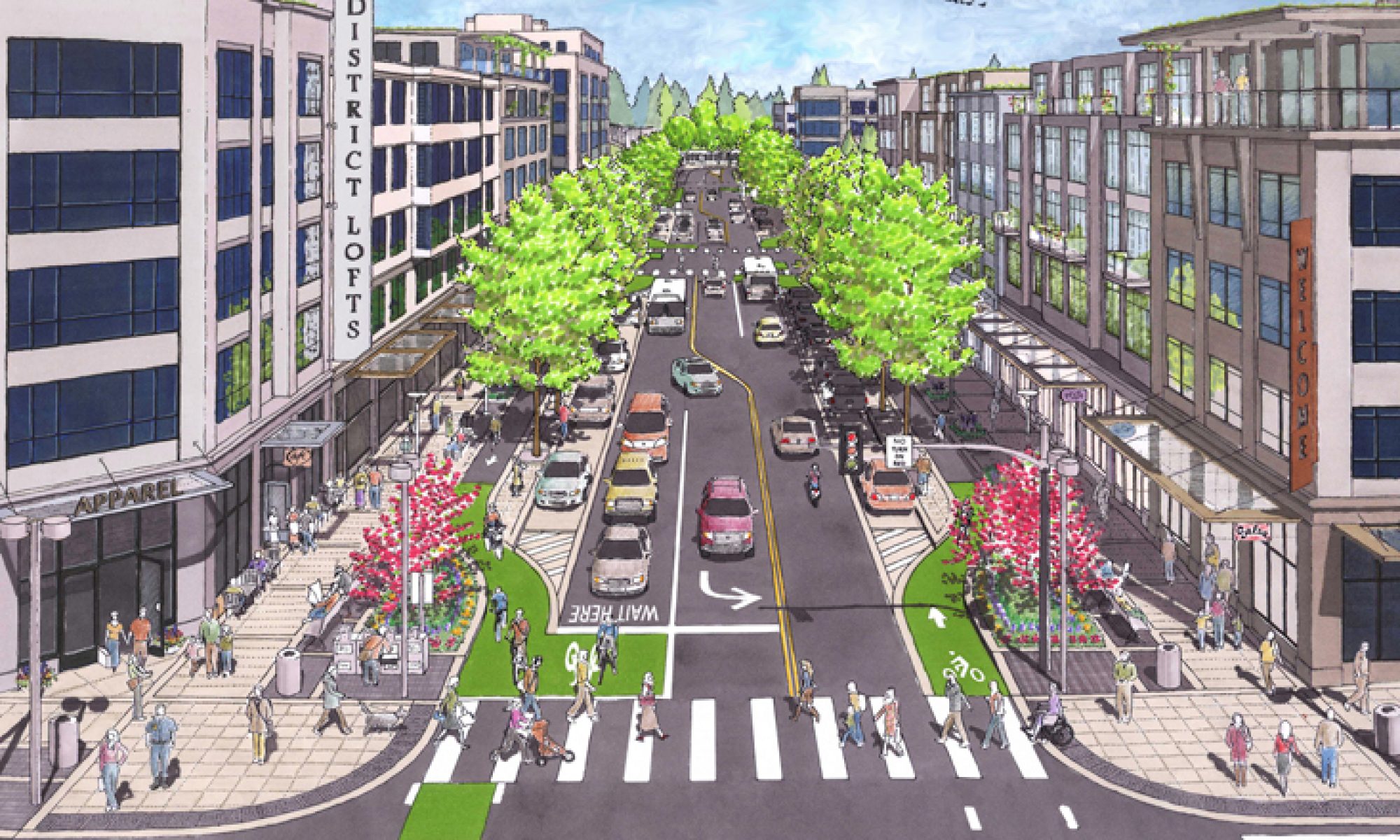
Think of city streets as places, not just a way to get through a city as fast as possible. City streets were designed for people–automobiles came much later, but now they dominate. Let’s change the focus back to people.
https://nextcity.org/daily/entry/how-a-vitality-fellow-captured-the-imagination-of-a-city

Asbury Park Complete Streets Coalition is not just about pavement. It’s about people.
“The most important tenet is that the process must be open and welcoming to all who want to participate. This is not to say that everyone will get what they want out of Placemaking. The point is that there will be an opportunity for people not just to share what they want, but also to listen to their neighbors’ ideas, and to be part of the process of shaping the public spaces that they share with those neighbors. The end result should be a space that’s flexible enough to make room for many different communities, and encourage connections between them.”

 Place Making
“Placemaking is not just a design endeavor. Or a business proposition. Or a public health pursuit. Or an equity concern. Or an avenue for culture and the arts. It’s all of these things, and more. It’s the basis for how we, as human beings, organize ourselves. It’s how we physically embody our values in the built environment. It’s how we make opportunity available to all. It’s how we build resilient local economies and legitimize the prospects for people of all stripes to build wealth over their lifetimes.
But in the context of our present regulatory and financial environments, that doesn’t necessarily happen naturally, requiring the need for municipal intervention to ease the pains of change. Two things in particular: enabling meaningful placemaking so that good places can be built faster to meet demand; and, as that process unfolds, protecting — via tax policy, affordable housing initiatives, and similar endeavors — the most vulnerable who are frequently the casualties of rapid change.”
Placemaking: Geek niche or the root of pretty much everything?
