The E-Bike Problem Continued. Oppose Bill S4834

Asbury Park Complete Streets Coalition strongly opposes legislation requiring licensing and registration of all e-bikes.

S4834 – Regulates ALL motorized bicycles. This means even low speed pedal assist bikes, which would be regulated along with high speed e-motos: Senator Nichols Scutari’s e-bike bill would also require a license to operate low-speed (class 1 and 2) e-bikes.

“E-bike” is a generic term that lumps together everything with two wheels and an electric motor and can include a variety of devices including electric bicycles, electric mopeds, scooters, electric dirt bikes and electric motorcycles. These are all different vehicle types and their differences need to be taken into account when developing appropriate laws and regulations to govern their safe use on public roads and trails. Let’s dig into electric bicycles and “e-motos” to understand how they are currently regulated and where the issues are actually arising.” People For Bikes: It’s An E-Moto Problem

E-bikes are a game changer for residents who cannot afford cars, many of whom are immigrants, elderly or have disabilities – nearly 25% of the population in the city lives at or near the “poverty line”, and many need to ride bikes as their main transportation.

Legislative focus on the dangers of e-bikes is a distraction from the 40k people a year who die in car crashes. Globally 1.5 million people are killed by cars (and many more by the effects of pollution, noise, tire rubber particles, and climate change they produce.)

This doesn’t account for those who are seriously injured, and the families affected by the trauma and devastating financial impact of a father, mother, or child killed, insurmountable hospital bills, maybe displaced from their homes.

The numbers of vulnerable road users are disproportionately people of color and poor people. In NJ there were 695 traffic deaths, and a significant rise in pedestrian deaths. For the current year (2025), as of early December, there were already 281 fatalities in 263 crashes, showing a continued high rate of road deaths.

Death by car is the leading cause of death for people aged 5 to 29, close to the number killed by guns in the U.S. in 2021, but the issue of systemic car fatalities barely registers in political debates when compared to debates over firearms. 

The sensationalized NYT article,The Shocking Crash That Led One County to Reckon With the Dangers of E-Bikes makes it seem like proof of the “e-bike menace”. The problem is inconsistent, unclear state-by-state regulation. And articles like this one that fail to acknowledge that car crashes account for vastly more vehicular deaths  – over forty thousand people a year in the US, both inside and outside of cars which has become normalized.  It’s not news.

In three of the 4 recent tragic NJ e-bike incidents, the e-bike riders were hit by the driver of a car, truck, or a vanand one was intentional – so e-bikes themselves were not to blame at all.

The title of the NYT article is a perfect example of vilifying e-bikes – but we never see details like this about a car crash death in the media. Deaths and near death of a person in a car crash isn’t “shocking” because it happens every day, and it’s been happening for a hundred years.

When automobiles were first introduced in the US on city streets and country roads, CARS were deemed a menace. So in the 1920s the titans of the auto industry literally met up and took action to make way for more cars everywhere by moving people off the streets with concepts like “jaywalking”, tearing down neighborhoods to build highways, building suburbs with no easy direct access to services or amenities without a car, making all other modes (example trolleys) obsolete, and even stigmatizing transit, like implying that buses are for poor people.

The myth of the American love affair with cars.

Peter Norton is the author of Fighting Traffic The Dawn of the Motor Age in the American City. Norton was shaken early in his career reading an article in a 1920s engineering magazine when cars were taking over city streets, “The obvious solution … lies only in a radical revision of our conception of what a city street is for.”

This deep dive Yale University Climate Connections article cites Peter Norton:  American society wasn’t always so car-centric. Our future doesn’t have to be, either.

We must reduce reliance on cars by offering transportation options, and if legislation makes it harder to accommodate e-bikes, this country will continue to be dominated by cars.

EVs won’t be the solution to car crashes and deaths.

Cars have taken over cities and towns to our peril.

We now have micro mobility options which we should be vigorously supporting, but the auto industry is threatened…it’s not going to be easy.

E-bikes must be classified clearly, and infrastructure must be built to accommodate pedal bikes, e-bikes and walking safely, enabling all modes outside of cars to access road space equitably. It’s a socialized approach to road use. High speed e-motos need separate designation, as well as regulation.

Let’s make sure they get the message clearly: E-bike users “scare” people. But cars kill people. Please email your opposition to S4834 here:

Senator Nicholas Scutari

Assemblyman James Kennedy

Assemblywoman Linda Carter

Here is the Transportation Committee’s statement following passage through Thursday’s committee meeting.
Here is the full bill which includes some amendments from the Transportation Committee:


TOMORROW! The e-bike bill S4834 is on the agenda of the Budget and Appropriations Committee for Monday, 12/8 at 1pm. 

Simple text: I oppose S4384. Increased regulatory burden of S4834 would discourage all e‑bike adoption, and conflict with NJDOT efforts to expand micro mobility, and to mitigate reliance on cars.

Here’s a previous thought piece on the subject on the APCSC website: The E-Bike Problem.

Onward~

Polli Schildge, Editor


The E-bike Problem

This article which was published yesterday in StreetsblogUSA is timely, in light of the recent PSA in Asbury Park about people riding bikes on the sidewalk.

In any city, people will opt to ride on the sidewalk if existing bicycling infrastructure doesn’t feel safe, and if streets are designed to be primarily devoted to driving. AP currently has scraps of unconnected bicycling infrastructure – door zone bike lanes between parked cars and traffic, and bike lanes squeezed between parked cars and the curb.

E-bikes on sidewalks are a particular concern.  Let’s focus on the solution. The city can boldly implement traffic calming measures to slow cars, offer more alternatives to driving, and build walking and biking infrastructure that welcomes all vulnerable users in a safe environment – which will also make the city safer for drivers too.

The article explains the distinction between e-bikes, and e-moto bikes.

Many cities are lumping together any bicycles with an electric motor, which leads to legislation against every type of e-bike.

Let’s dive in…

PART I: The E-Bike ‘Problem’ is an E-Moto Problem

PeopleForBikes separates fact from fiction to protect the future of e-bikes in America in this new series. PeopleForBikes’ primarily focuses on safety: product safety, safe places to ride, and safety education for cyclists and e-cyclists.

Who Is Responsible For The E-Moto Problem?

It’s the Wild West in the electric bike world because of rapidly evolving products and the patchwork of regulations.

“The E-moto problem is caused by E-moto manufacturers and sellers. The companies that make, import and sell e-motos are attempting to skirt legal and safety requirements for motor vehicles in order to sell their products.”

The intention of the manufacturers is to deceive the public into believing their e-moto is an electric bicycle or “e-bike”. Example: manufacturers are adding fake pedals to e-motos so they fly under the radar.

Three Class Model Law defines what is, and is not, an electric bicycle, or e-bike.

What’s Legal and What’s Not: Electric Bicycle vs. E-Moto
Feature Class 1 / 2 / 3 Electric Bicycle E-Moto
Operable Pedals Required Not required (often fake)
Motor Power ≤ 750W Often 1,000W–6,000W+
Top Speed ≤ 20–28 mph 30–65+ mph
Throttle Class 2 only (≤ 20 mph) Usually throttle-only
Licensing / Registration No Required (in most states)
Product Category Consumer product Motor vehicle
Street Legal for Minors? Yes, in many states, depending on age No, unless registered and licensed

It’s critically important for cities and towns to get behind legislation in favor of micro mobility, alternative equitable transportation, thereby reducing reliance on cars.

Let’s do this Asbury Park!

Polli Schildge, Editor


Sign to oppose the stupid e-bike bill

Please take 10 seconds to oppose this TERRIBLE BILL. And share!
New Jersey Bill S2292/A3359 would require registration and insurance for all low-speed e-bikes and e-scooters.
While other states are rolling out subsidies to make e-bikes more affordable, New Jersey is poised to do the opposite, making e-bikes harder to access and more expensive for working families.
Want a job and an e-bike? Apply to this new SF delivery program
Advocates are adamantly opposed to Senate President Nicolas Scutari’s bill, fearing it would undermine the goals of reducing car dependency and carbon emissions, and be an expensive and arduous impediment for those who rely on cheaper modes of transportation.
It’s really just a distraction from the REAL issue, which is TOO MANY CARS, traffic crashes and fatalities in New Jersey.  There is not enough reliable transit in the state, city by city, so this bill would effectively force people to rely MORE on driving, or be unable to access destinations at all.

These are the most affordable electric vehicles on the market and an increasingly popular for seniors and alternative to driving a car or delivery van.A New Jersey Senate committee on Thursday passed what even supporters call a flawed bill that would require micro-mobility users to carry a type of liability insurance that doesn’t even exist yet.

There is no requirement for insurance for class 1, 2, or 3 e-bikes, with max speed under 28mph. Over 28mph generally does require insurance. This bill would require insurance for all e-bikes and scooters, including low speed.
Drivers of motor vehicles kill over 40,000 people every year, and it’s worse with the proliferation of large SUVs and bigger and bigger trucks.
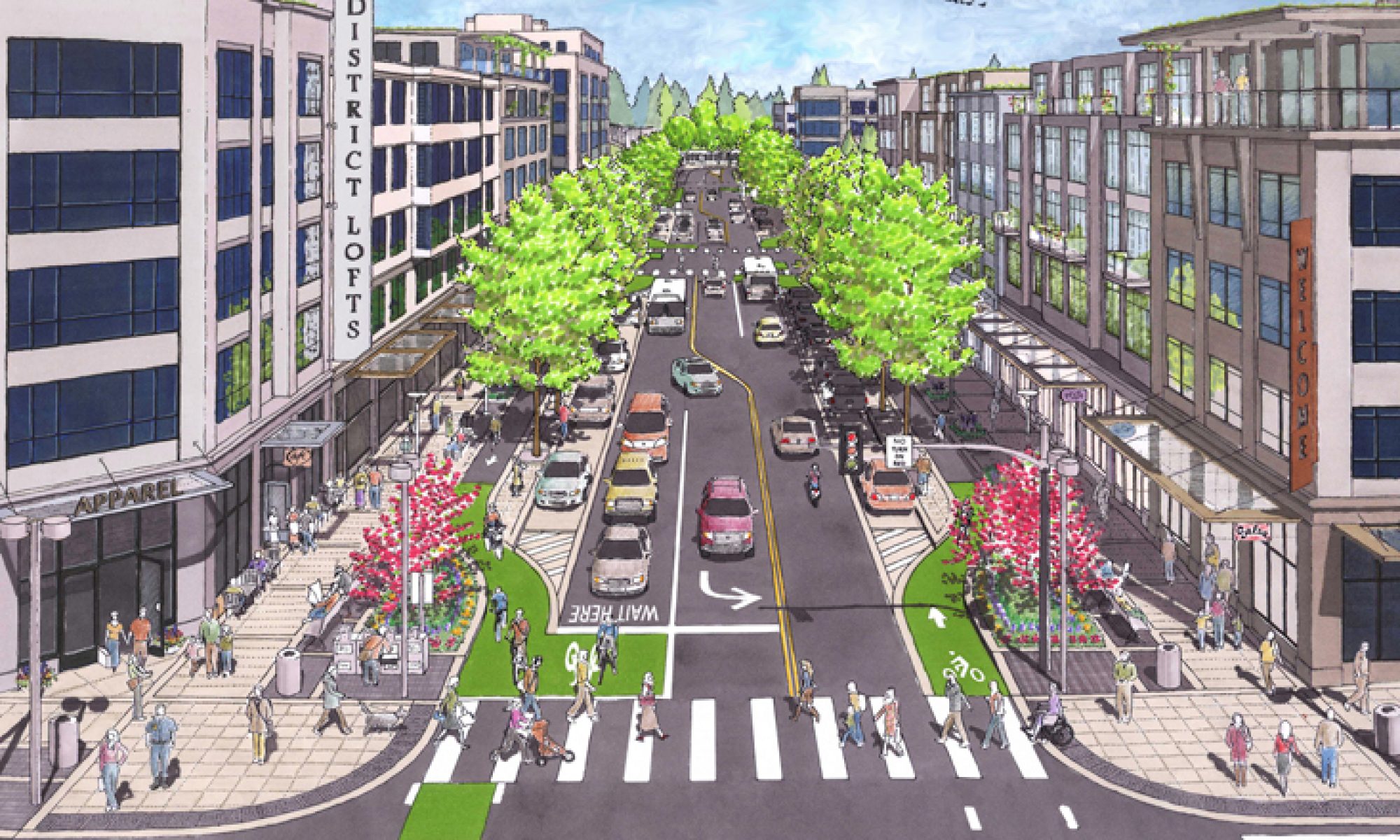
Imagine car-free streets with bikes of all kinds, and infrastructure to support all types of bike riding. More micro mobility would make our roads safer for everyone – far more so than with the number of cars on streets everywhere.

Onward.

Polli Schildge, Editor

Subsidize Bikes. Save The World.

Wouldn’t it be excellent if e-bikes (and bikes in general) were given tax incentives like those for cars like a Prius or Tesla? Subsidies for bikes? They take up less space and use less resources.

We don’t have time for generational change – the Netherlands is way ahead of us. ” Our car culture is a problem. They clog up our cities, they kill people through injury and air pollution, and they make us miserable and stressed. If we want to reduce our emissions and make our cities safe, healthy and fun places to live, then we have to change.”

“Supporting the uptake of e-bikes and cycleways is a way to start addressing this culture. And it’s hard to think of a more fun way to do it.”

Bikes are the new cars

“Four months ago we took what felt like a huge leap of faith and bought an e-cargo bike. The combination of three things tipped us over the edge: feeling the need to do something to reduce our carbon footprint, a fortuitous contract payment, and the excellent incentive of having no functioning car for the foreseeable future after someone drove into the back of it while it was parked.

It changed our lives. We were initially unsure how much we would use it; we use it all the time. In the four months we’ve owned it we’ve ridden it 1000km around town, averaging around 50km a week. Like most people in New Zealand, the majority of our trips are actually pretty short, within a 5-7km radius of our house: things like school runs, weekend shopping (yes, it fits groceries for a family of five), and taking our three kids to the pool, library, sports – you name it. ”

Want to know more:

https://thespinoff.co.nz/society/20-10-2019/bikes-are-the-new-cars/?fbclid=IwAR1Cg0pu2N7L_Cq2iINh5n-WpazOJWY5GOHnh8GFBPfdw2O7Lph5ZOzwX58

Video: WNYC, Gothamist, The Green Space Panel On Biking

Watch (or listen) to this show if you’re a bicyclist – or have interest in safety for everyone on our streets. Panelists dig deep into issues that concern everyone in any city in the US:  bike and pedestrian infrastructure, car culture, law, e-bikes, police enforcement and more…NYC Police Chief even gets some heat.

We the Commuters: Biking NYC

Originally Aired: Thursday, July 11, 2019

Up for discussion: Biking (and bicyclists’ safety), Citi Bike, delivery guys and more. Throughout the night there will also be bike-curious trivia, where we’ll put your bike-related knowledge to the test for some super sweet swag. 

WNYC and Gothamist reporters Shumita BasuJake OffenhartzStephen Nessen and Chris Robbins host the evening with guests State Senator Zellnor MyrieChief Terence Monahan from the NYPDCiti Bike‘s Caroline Samponaro; bike lawyer Adam WhiteJing Wang, the filmmaker behind the documentary “A Winter With Delivery Workers“; and Shabazz Stuart, an urban transportation advocate and CEO of Oonee. 

Watch:

https://www.thegreenespace.org/watch/we-the-commuters-live/

Multi Modal Transportation Options!

Great news! Multi modal transportation options will enable more people to get around the city without cars!

ASBURY PARK TRANSPORTATION ADVANCEMENTS

E SCOOTERS & BIKES PROPOSED ON HEELS OF BIKE/WALKING MASTER PLAN ADOPTION


By Michelle Gladden

Plans to make Asbury Park a more walk and bike friendly community advanced this month with the adoption of a master plan by the Asbury Park Planning Board and a proposal for adding e-scooters and e-bikes to the city’s existing bike share fleet.

Transportation Director Michael Manzella said benefits include reducing traffic congestion and parking demand, encouraging the use of public transportation, and reduction of vehicle emissions and air pollution.

Read more…

http://asburyparksun.com/asbury-park-transportation-advancements/