VOTE For Playground Improvements: Sunset Lake Park
Asbury Park Residents!
Voting for Participatory Budget Proposals is open!
The meeting last night was positive and exciting. It was wonderful to see all of the ways in which residents envision places and spaces for people.
I am voting for 8A. Playground Improvements: Sunset Lake Park, which was presented at the meeting under the title “Play and Connection in Sunset Park: A Vibrant Active Community Space”, and I hope you will too!
Vote right here online, or get a paper ballot at City Hall, or at Second Life Bikes at 21 Main St.
This proposal offers EVERYONE in Asbury Park a place to play, relax, and socialize. Our parks have been underutilized for too long, especially beautiful Sunset Lake Park. This proposal envisions a creative area at the western end of Sunset Park along Main Street, centrally located, and where many residents walk with children.
Parks are the city’s backyard, and should be the favorite destination for recreation, and socialization.
The cost of this proposal would be $50,000 – $75,000, depending on the equipment and the scope of the project.
Take a look at the Powerpoint: Participatory Budget Presentation: 8A: PLAYGROUND IMPROVEMENTS TO SUNSET PARK.
Watch the presentations, especially the proposal for 8A. Playground Improvements: Sunset Lake Park at 39:10

I hope you’ll vote for the proposal 8A. Playground Improvements: Sunset Lake Park here.
Please share the Participatory Budget Presentation: 8A: PLAYGROUND IMPROVEMENTS TO SUNSET PARK proposal, and encourage friends and neighbors to vote for 8A. Playground Improvements: Sunset Lake Park here.
“Play and Connection in Sunset Park: A Vibrant Active Community Space”
This proposal represents the submissions from numerous residents for an active community play space for all ages in Sunset Park, identifying the need for a range of equipment and seating options that cater to various ages, interests and abilities.
While there has been an historic desire to keep large swaths of Sunset Park entirely passive, there is enough space at the west end of the park along Main Street to accommodate active play space. This would be easily accessible to families from all corners of the city, especially to visitors and the many families who live, and walk to school and businesses in that area.
A majority of residents live in residences without yards, or have houses with limited outside space. Sunset Park (and all parks in the city) should be our shared backyard – a place where we can all relax, play, exercise, and connect.
An all-age active space including equipment for: climbing, stretching, swinging, bouncing, pushing, pulling, and comfortable seating:
- Fitness equipment 13+: A section with outdoor fitness equipment for adults and teenagers. This could include pull-up bars, push-pull, balance, and other equipment that promotes cardio and muscular endurance, strength and agility. There would be signage indicating how to use the equipment safely
- Play equipment: A playground area with swings, slides, climbing structures, and other equipment that caters to children and adults of all ages. The playground would have a soft surface to prevent injuries.
- There would be benches and tables for conversation, games and picnics, and for parents or caregivers to relax while their children play.
In summary, an active community play space for all ages would be designed to encourage physical activity, socialization, and fun for everyone in the community – people of all ages and abilities.
Examples of playgrounds all over the world:
Chicago, Ill.
Please vote for 8A. Playground Improvements: Sunset Lake Park here.
Onward!
Polli Schildge, Editor
Child Mobility = Mobility For Everyone

Needless to say, the show couldn’t be set in the United States.
Parents who have allowed young kids independence to play alone have been arrested, or at the very least are labeled terrible parents. This paranoia about kids’ safety in general, and especially on our streets says a lot about our culture.
Only 10% of American kids walk to school, compared with over 80% of kids in Japan. Kids start walking to school in Japan at a very early age, because they CAN. Roads and street networks are designed for kids to walk. Drivers in Japan are taught to yield to pedestrians. Speed limits are low. Neighborhoods have small blocks with lots of intersections. And there is little or no street parking in neighborhoods.
Oppose The NJ Helmet Law
APCSC stands with other advocacy groups in NJ in opposition to the proposed NJ helmet law.
Feel free to copy and paste any part of this article and contact your state legislators.
No state currently has helmet laws for adults.
Road design must change to PREVENT crashes involving people who bicycle, walk, run, scooter, skateboard, push strollers, as well as people who drive cars.
Please see: Safety in numbers: More walkers and bicyclists, safer walking and bicycling. A helmet law will worsen safety by discouraging bicycling, making it appear to be an inherently dangerous activity – dangerous of course because of drivers. A helmet law will mean the end of bike share programs.
Inequitable NJ law already exists requiring a bell and bike lights, and 3 out of 4 people ticketed for bell or light infractions are people of color.
Racial profiling of the Black and Latino community,
By Stefani Cox And Charles Brown: “For many, bicycling felt like an activity that simply makes one too vulnerable to be worth it.”
Helmets are of dubious efficacy – they are not tested in real-world scenarios. Please see: Bicycle Helmet Safety Institute. “A styrofoam hat is no match for a box truck or speeding Dodge Charger,” said Doug Gordon of Brooklyn Spoke.
Says Chris Bruntlett
… it is hard to overstate how our unnatural obsession with head protection is stifling the growth of our bicycle culture. It achieves little, except deterring the most casual cyclists, who also happen to be the slowest and safest ones on the road.
Bad driver behavior is a problem, but…
It has never worked to continually remind drivers to stop texting, obey traffic signals, and slow down. It’s impossible to change human behavior with signs, PSAs, even with laws. Automobile ads promote driver entitlement, and manufacturers are building distractions right into the dashboard. Larger and larger SUVs and trucks are killing more people, and cars that can exceed 100mph, and roads that invite speeding are all ongoing problems.
Jesse Singer’s book There Are No Accidents makes it clear that the system is responsible, not the individual. A helmet law will not keep bike riders safe from crashes, which kill 45,000 people a year in the US, and the number is rising. Crashes are not accidents, “preordained and unavoidable”.

So…
WHY DOESN’T EVERYBODY WEAR A HELMET?
Yale student How Sen writes, “If you do choose to wear a helmet when biking, don’t stop there: Learn how to properly and safely interact with vehicles. Share the road. Know your rights. Learn to take the lane and feel comfortable about it. Not only do motorists treat you differently when you’re wearing a helmet, studies show that helmets may be giving you a false sense of safety.”
“Statistics show that cyclists’ fear of head trauma is irrational if we compare it to some other risks. Head injuries aren’t just dangerous when you’re biking—head injuries are dangerous when you’re doing pretty much anything else.”
Only safe road design will mitigate traffic violence.
Everyone outside of a car is a vulnerable road user, and we cannot and should not depend on helmets, bells, and lights – or even drivers – to keep us safe. Only safe road design will mitigate traffic violence for everyone, including drivers themselves.
Onward~
Polli Schildge – Editor
The Big Lie: Cars = Freedom
Since the 1920s automobile manufacturers have been touting the wonders of car travel.
The goal of the industry was to create this pervasive myth to sell more cars.
Through the 1940s, 50s and 60s owning a vehicle was aspirational, possible for the well-to-do, mostly white American consumer. Racism was structurally built in. Robert Moses leveled minority neighborhoods to build highways to make way for cars.
Sara Seo in Policing the Open Road: How Cars Transformed American Freedom, ” reveals how the rise of the automobile led us to accept – and expect – pervasive police power. As her book makes clear, “this radical transformation in the nature and meaning of American freedom has had far-reaching political and legal consequences.”
I wrote in this blog in 2020: Change Policing Of Our Cities, Starting With Traffic Enforcement
The NYTimes article below reveals the continuing racism built into car ownership and policing.
Onward.
Once You See the Truth About Cars, You Can’t Unsee It
NYTimes December 15th, 2022
Andrew Ross and
Andrew Ross and Julie Livingston are New York University professors, members of NYU’s Prison Education Program Research Lab and authors of the book “Cars and Jails: Freedom Dreams, Debt, and Carcerality.
”Today, officers make more than 50,000 traffic stops a day. “Driving while Black” has become a major route to incarceration — or much worse.
When Daunte Wright was killed by a police officer in April 2021, he had been pulled over for an expired registration tag on his car’s license plate. He joined the long list of Black drivers whose violent and premature deaths at the hands of police were set in motion by a minor traffic infraction — Sandra Bland (failure to use a turn signal), Maurice Gordon (alleged speeding), Samuel DuBose (missing front license plate), and Philando Castile and Walter Scott (broken taillights) among them. Despite widespread criticism of the flimsy pretexts used to justify traffic stops, and the increasing availability of cellphone or police body cam videos, the most recent data shows that the number of deaths from police-driver interactions is almost as high as it has been over the past five years.”
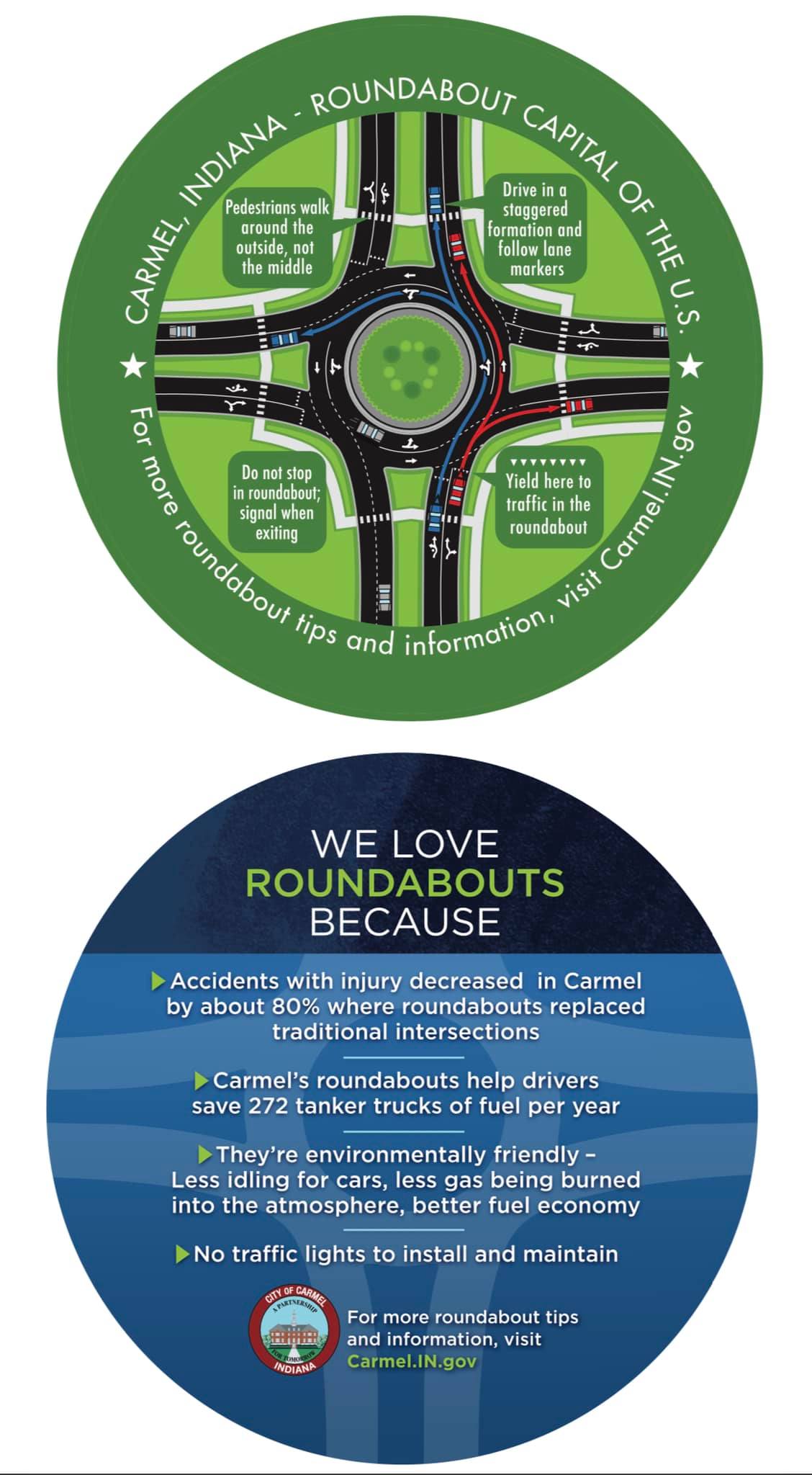
Traffic Calming: Everything You Need to Know About Roundabouts
Asbury Park is the recipient of funds to implement traffic calming methods on 3rd and 4th Avenues.
Some residents have been vocal about their objections to mini roundabouts, citing loss of parking. This is NOT true – the parking they fear losing is not legal within 25′ of the corner. Yellow daylighting paint now clearly indicates required parking distance away from the corners at the intersections.
APCSC is happy to discuss the best ways to help prevent speeding, which can include other treatments like raised crosswalks, and speed humps.
Stop signs and signals are not traffic calming methods
Don’t rely on enforcement to stop speeding
Take a look at the information below. As always, please feel free to reach out about proven ways to #slowthecars.
Onward~
Polli Schildge
APCSC Editor
Learn about roundabouts, including how to travel through them as a pedestrian, cyclist or driver.
PUBLIC OPINION
How Do You Feel About Roundabouts?
After driving roundabouts, the number of people who favor them more than doubles. A survey on drivers’ views of roundabouts before and after construction conducted by the Insurance Institute for Highway Safety (IIHS) illustrates public opinion. Before construction, the number of drivers in favor of roundabouts was only 31 percent, and those strongly opposed was 41 percent. After driving them, this shifted to 63 percent in favor and only 15 percent strongly opposed.
Studies have shown that roundabouts are safer than traditional stop sign or traffic signal controlled intersections.
Roundabouts reduced injury crashes by 75 percent at intersections where stop signs or traffic signals were previously used for traffic control, according to a study by the Insurance Institute for Highway Safety (IIHS). Studies by the IIHS and Federal Highway Administration (FHWA) have shown that roundabouts typically achieve:
- A 37 percent reduction in overall collisions
- A 75 percent reduction in injury collisions
- A 90 percent reduction in fatality collisions
- A 40 percent reduction in pedestrian collisions
National Association of City Transportation Officials Guide To Mini Roundabouts

Mini roundabouts and neighborhood traffic circles1 lower speeds at minor intersection crossings and are an ideal treatment for uncontrolled intersections.
Mini roundabouts may be installed using simple markings or raised islands, but are best applied in conjunction with plantings that beautify the street and the surrounding neighborhood. Careful attention should be paid to the available lane width and turning radius used with traffic circles.

A Study of the Traffic Safety at Roundabouts in Minnesota
Roundabouts have become an increasingly popular intersection type by traffic engineers, communities, and transportation officials. The purpose of this report is to examine the safety performance of roundabouts by comparing the before construction crash rates and the after construction crash rates and traffic volume data. Overall, roundabouts are performing well when looking at the crash reduction record. Roundabouts in Minnesota have had over an 80% reduction in fatal and serious injury crashes
Minnesota has ~200 roundabouts, and like any other skeptical traffic engineering team, they’ve been documenting the results.
Carmel, Indiana has 138 roundabouts, the most of any city in the US. Roundabouts move traffic more efficiently and reduce the number of fatalities and serious-injury accidents. They work because of their safety record, their compatibility with the environment, their aesthetics and their ability to make it easier for pedestrians and bicyclists to navigate.
What Kind Of City Do We Want To Live In?
The reasons people choose/use different transport modes are complex, often sensitive and controversial – how about parking??
As advocates for active transport, and safe streets our messaging doesn’t have to be about bikes or cycling, skooting, or even walking.
We can focus our discussion on the type of city in which we all want to live.
If we want to enable more people to engage in active transport, micromobility and transit we cannot afford to have a war with the same people whose hearts and minds we’re trying to win.
Driving a private car has become completely normalized and often unquestioned as the primary choice of transport. But as more and more people are beginning to question it, we can encourage curiosity and interest, not put them in a position of defensiveness.
People who drive exclusively often have never experienced the joy, and health benefits of riding a bike or walking instead of driving.
Other people have no choice and ride bikes or walk because they don’t own cars.
So we must encourage our city leaders of the worthiness of designing road environments and public spaces for purposes and functions for everyone.
It’s about enabling movement of people and goods in various different modes of transport, including motor vehicles. It’s also about creating places where people can linger.
Local councils across the country are working toward implementing a framework to make more liveable cities.
Asbury Park can do it too.
Read the full article in StreetsBlog USA.
TIME SENSITIVE TONIGHT! SPEED CAMERAS SAVE LIVES
Asbury Park Complete Streets Coalition Supporters!
This is of the UTMOST IMPORTANCE.
I JUST RECEIVED THIS INFO:
Asbury Park Complete Streets Coalition To Host In-Person Candidates’ Forum Oct. 10th
The Asbury Park Complete Streets Coalition (APCSC) will host a live candidates’ forum
October 10th, 2022, at 7 pm, at Blackbird Community Commons, located at 131 Atkins Avenue, Asbury Park, 07712.
The forum venue has a capacity of 100 people.
Please submit questions by email to apcompletestreets@gmail.com.
Questions may also be submitted at the event.
The event will be moderated by the League of Women Voters as well as Asbury Park reporter for The Coaster, Carol Gorga Williams; District 3 Representative, Dan Harris; and President of West Side Citizens United, Nina Summerlin.
The candidates are:
For Mayor:
John Moor
Sonja Mack
Felicia Simmons
For City Council:
Jesse Kendle
Angela Ahbez-Anderson
Asbury Park Complete Streets Coalition is dedicated to its mission of transportation equity in Asbury Park including equitable access and safety for all users of Asbury Park streets.
The League of Women Voters, a nonpartisan political organization, encourages informed and active participation in government, works to increase understanding of major public policy issues, and influences public policy through education and advocacy.
Film At The Asbury Park Library: THE STREET PROJECT
Asbury Park Complete Streets Coalition is excited to share this award winning documentary, The Street Project.
There will be a Q & A, and a drawing for a bike from Second Life Bikes, gifts from Asbury Park Cyclery, Ada’s Gojo, Cryolete, Galley Pizza, Booskerdoo and more!
Digging deep into the root causes of traffic violence, the filmmakers engage a diverse array of experts including street historian Peter Norton, city planner Jeff Speck, and urban design expert Mikael Colville-Andersen. These expert interviews are interwoven with the stories of real people working to make their communities safer.
Asbury Park Complete Streets Coalition is dedicated to its mission of transportation equity in Asbury Park including equitable access and safety for all users of Asbury Park streets.
Contact APCSC: apcompletestredets@gmail.com