WHAT?? Legal For Bike Riders To Run Traffic Lights?

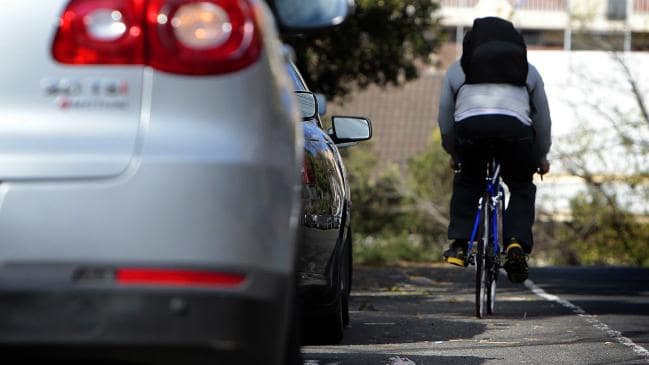
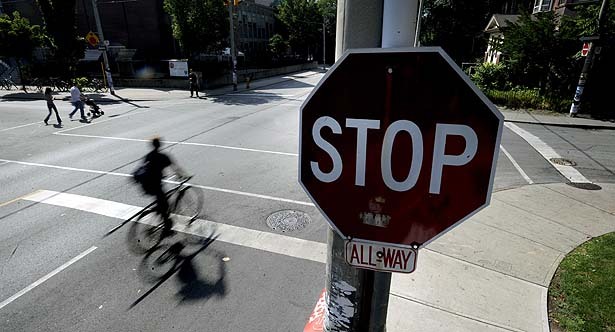
We constantly hear and read complaints from drivers: “Bike riders don’t obey the law!”  “Bike riders think they are entitled to run stop signs!” You might be surprised to learn that it’s legal—and the reasoning will help you understand how we can build our places better for everyone.  Important takeaway: Bike riders are not cars. They are people.

It’s Legal to Run Lights… and Other Things You Might Not Know About Cycling
 by Aubrey Byron

Here are 2 items in the list:

5. No, most cyclists don’t want to be “treated like cars.” They want to be treated like humans.

Another of the most common misconceptions I hear from drivers is, “If cyclists want to be treated like cars, then why do they [insert transgression here]?!?!” To which I usually respond, “Well, first of all, they don’t.”

Bicycles are not cars. They don’t move like cars, take up the same amount of space as cars, or operate at the same speed as cars. It doesn’t make sense to pretend otherwise, and consequently, it doesn’t make sense to apply all auto-oriented traffic laws to cyclists. As described earlier, while laws like the Idaho Stop may seem counterintuitive, they can actually decrease collisions. So can installing bicycle-specific lights, such as those in Paris.

Most cyclists I know, myself included, have no wish to “be treated like cars.” We want to be treated like people. We mostly would like to operate and occupy space on the road without our lives being threatened.

6. Cyclists don’t commit more infractions than cars, and seeing a cyclist break the law isn’t a reason they “shouldn’t be on the roads.”

This one is admittedly more anecdotal. But everything from my personal conversations with friends and family about cycling, to the conversation on my local radio shows, to every comment I’ve ever read on an article about cycling—hones in on this one thing. It always comes back to that one time you saw a cyclist running a light, running a stop sign, not wearing a helmet, or committing some other unforgivable sin on the street that only seems unforgivable when a cyclist does it. I’ve literally had this conversation on the patio of a coffee shop while watching seven cars roll the stop sign outside within a matter of minutes.

Motorists commit traffic infractions and do it often. I have never heard this used in a conversation about the viability of cars on the road. So the question becomes: why is this so often used in the conversation about the viability of bikes? I don’t have control over other cyclists on the road. Some of them break laws or don’t signal correctly. Sometimes drivers assume cyclists have broken laws when actually they haven’t, as explained above. Both scenarios should be irrelevant to the conversation about creating better bike infrastructure.

Read the article:

APP: iStar Agrees to Meet With Asbury Park To Redesign Waterfront

APCSC advocates for equitable access for everyone throughout the city of Asbury Park. We are confident that the city of Asbury Park and iStar will be diligent supporting “a planning process that supports a “community-based” vision for the redesign which he said should include a long term solution for the Bradley Cove development site.”

DAN RADEL | ASBURY PARK PRESS  11/21/2018

ASBURY PARK – iStar has agreed to meet with city officials to “begin the redesign process” of controversial infrastructure improvements under way at the north end beachfront.

Brian Cheripka, iStar’s senior vice president of land and development, said in a letter to the city that the city’s master waterfront developer is “willing to come back to the table to discuss the project.”

Mayor John Moor said the letter is a step in the right direction between the city and iStar and that “middle ground” can be reached on the project when the two sit down at the scheduled Nov. 30 meeting.

Much of the public criticism of the project was generated by a group called Save Asbury’s Waterfront.  The group advocates for “appropriate development” of the Asbury Park beachfront. 

iStar to meet with Asbury Park after north end boardwalk plan slammed

APSUN: ISTAR OPEN TO REVISE NORTH ASBURY BEACHFRONT PLAN

Asbury Park’s boardwalk is a thoroughfare through the city north to south. It must be (and feel) safe and accessible for everyone, from the residents of the senior tower to the children from every neighborhood in the city. We’re confident that iStar realizes that they are partnering with the city for the long term, and will foster a good relationship going forward by being engaging and transparent throughout the development of the waterfront.

An excerpt from a letter to iStar from Save Asbury’s Waterfront:

Like iStar, Save Asbury’s Waterfront (SAW) supports a planning process that will provide a community-based vision for the redesign of the public improvements at the north end boardwalk area, Fisherman’s parking lot and Bradley Cove.   Specifically,  SAW seeks to foster and encourage appropriate development along Asbury Park’s waterfront that will:
 

1. Maximize social inclusion and provide access for all residents and visitors

2. Recognize current coastal development guidelines and practices

3. Be sensitive to biodiversity, wildlife habitats, pollution and other environmental concerns

4. Be transparent during all phases of planning and implementation

CHERIPKA SAYS LONG-TERM VISION INCLUDES SOLUTION TO BRADLEY COVE SITE

Read about it:

http://asburyparksun.com/istar-open-to-revise-north-asbury-beachfront-infrastructure-plan/


VisionZero Day Of Action: Attention to Preventable Traffic Deaths

On Sunday, November 18th  communities across U.S., and around the globe organized for World Day of Remembrance for Road Traffic Victims.

Asbury Park has thankfully not had traffic deaths that other larger cities have had. Let’s not wait until a tragedy happens to implement traffic calming measures all over the city, and #slowthecars.

 |  BY VERONICA VANTERPOOL

Every day 100 people will die in U.S. in preventable crashes. How is our community doing? Yesterday Sunday, November 18th was World Day of Remembrance for Road Traffic Victims to honor those who lost lives. We join VisionZero Network and urge action for

Read more…

https://visionzeronetwork.org/sunday-nov-18-2018-day-of-action-calls-attention-to-preventable-traffic-deaths-worldwide/

What is Tactical Urbanism? An International Movement

“Cities around the world are using flexible and short-term projects to advance long-term goals related to street safety, public space, and more.”

APCSC and other Complete Streets advocates believe that streets are for people. We know that even with best intentions cities sometimes miss opportunities, or are financially challenged to effect changes away from car-centric streets.  We can get creative to make streets into places for people: for health, for social well-being, for the environment, and for economic benefit.

Tactical Urbanism is all about action. Also known as DIY Urbanism, Planning-by-Doing, Urban Acupuncture, or Urban Prototyping, this approach refers to a city, organizational, and/or citizen-led approach to neighborhood building using short-term, low-cost, and scalable interventions to catalyze long-term change.

Learn about it:

http://tacticalurbanismguide.com/

The #MeToo Movement And Street Infrastructure

This article is about Seattle, but we can substitute: Asbury Park is working to “advance its most prominent public asset — our streets — toward a bold vision for inclusivity across gender, race, ability and class by making it safe, efficient, and intuitive for all modes of transportation to access…” every part of the city. Walking and biking offer a barometer — and a proving ground — for women’s belonging in public space.”

It’s time Seattle planners listen to women who walk and bike

by Claire Martini November 12, 2018

Siblings Aly and John Gagnon ride LimeBike using bikes near Pioneer Square in Seattle, Washington on Tuesday, August 8, 2017.
(Matt M. McKnight/Crosscut)

The #MeToo movement enables women to speak out about injustices faced behind closed doors. But injustice can also hide in plain sight, stemming from something as basic as the way streets are built.

Safety is paramount. While planners focus on delivering miles of bike lanes and sidewalks, women’s calculus is more complex: “Women and girls have to account for threats and realities of gender-based violence in public—on public transportation, in schools, in workplaces, in parks, on streets,” writes urbanist Tiffany Lam. Women, trans, femme, non-binary cyclists and particularly people of color experience racial and gender discrimination while biking (according to a study in Portland),while shouldering concerns about parenting, appearance, personal safety and harassment. Recognizing that “human infrastructure” supports would-be cyclists, many communities organize rides, skill workshops and education programs; we need leaders in access and mobility at every level of our city, from living rooms and classrooms to City Hall.

Read more…

https://crosscut.com/2018/11/its-time-seattle-planners-listen-women-who-walk-and-bike

It’s About A Better City

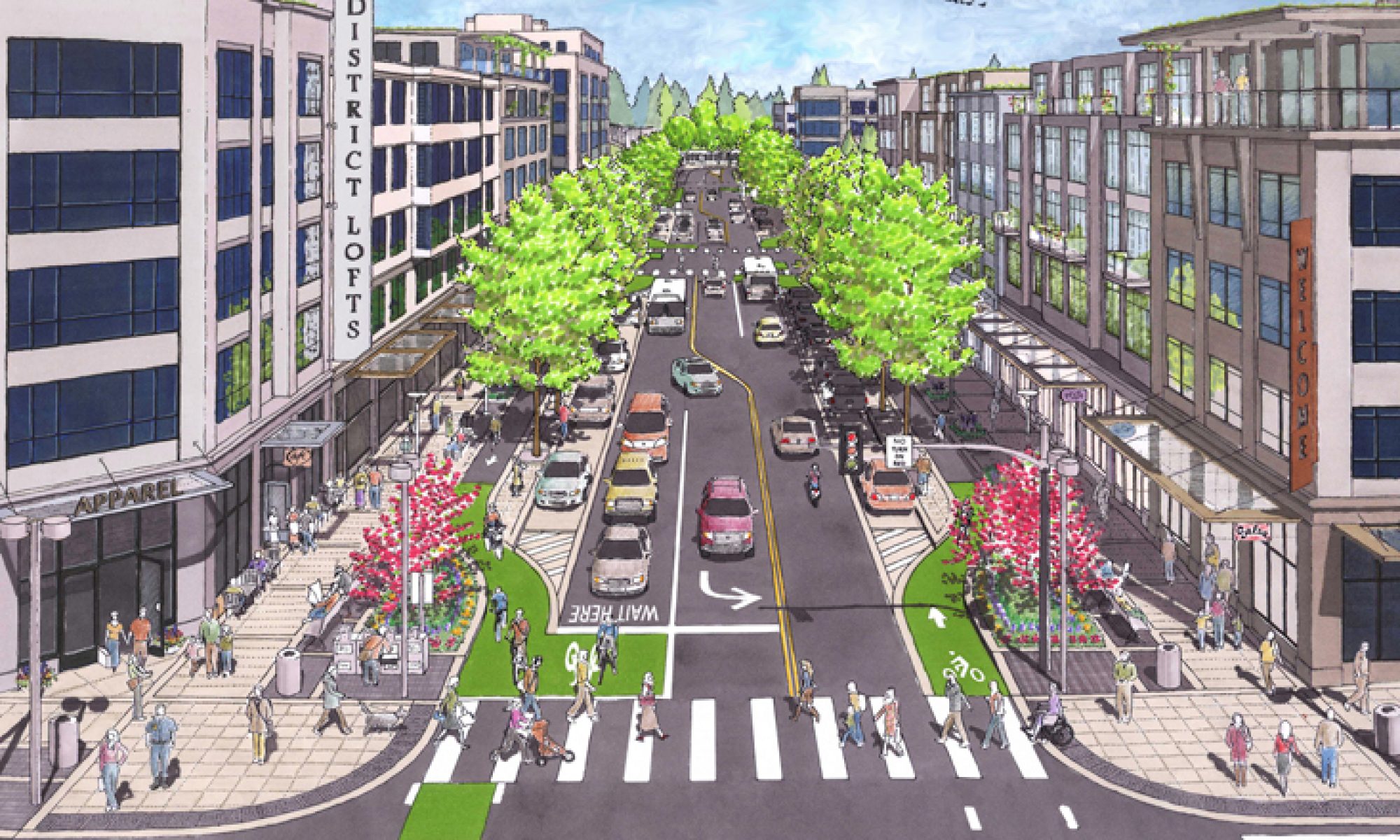
It’s about a better city, not about riding bikes or walking, or certainly not a “war on cars”.  Many people (or most) who ride bikes and walk also drive a vehicle.  We’re all in this together. Asbury Park is finalizing  the Asbury Park Bike and Walk Master Plan which will create a network for safe walking and bicycling .

“…a few separated routes through a large, still car-dominated city and region don’t create a viable choice in how to get around for people aged 8-80. For people of both genders and all ages to choose a mode of movement a system or network is needed – complete, connected, efficient, predictable, and safe in both perception and reality.”

It’s Not About The Bike Or Car —It’s About Better Cities

“I don’t consider myself a ‘cyclist.’ Calling myself that would seem as odd as calling myself a walker, a transit-rider, or a driver. I’m someone who loves living in cities, who has studied how cities work all of my adult life. Really, I’m a citizen.”

Read more…

http://spacing.ca/vancouver/2012/10/08/its-not-about-the-bike-or-car-its-about-better-cities/


Think Bicycles Don’t Belong On The Road?

This is a familiar characterization of many people who don’t think bikes belong on the street.  This person is a driver who believes that roads were designed for cars and should stay that way. “Bicyclists break traffic law!”  “Cyclists don’t pay taxes!” “People on bikes act entitled and run stop signs and disobey traffic signals!”  Some of these drivers are aggressive, and even try to frighten people on bikes, intimidating them by buzzing, yelling, honking or even throwing things at them.  As your writer I can attest that all of this happens to me frequently. I’m close to being injured or killed by a driver almost every time I commute the 12 miles to and again from my work place.

It can change, with better infrastructure, and more people on bikes.

Chris Cox used to despise cyclists, believing they should get off the roads. Then something changed

Not long ago, Chris Cox used to think bikes shouldn’t be allowed on the road and loathed cyclists. Then, something changed.

Chris Cox  November 14, 2018

Cyclists shouldn’t be allowed on the road, I used to think.

They don’t pay registration. Those two-wheeled toys weren’t designed to share the bitumen with “real” transport vehicles like cars, trucks and motorbikes.

It was a perspective that came so naturally to me.

It was my instant reflex response when a colleague told me how he and his mates were terrorised by a motorist on their weekend ride. The driver had tailgated, revved the engine, leant on the horn and finished it off with a drenching with some kind of liquid.

Yet, despite what was a clear example of deliberate and dangerous intimidation by a couple of boofheads in a car, my first reaction was to blame the victim.

Read more…

https://www.news.com.au/technology/innovation/motoring/on-the-road/chris-cox-used-to-despise-cyclists-believing-they-should-get-off-the-roads-then-something-changed/news-story/3ebd9f4ef4dfb9554dd86eaaa9b7f731

It’s Not All About Fire Truck Response Times

APCSC has found that Asbury Park’s Fire Department is coming on board with Complete Streets principles (the concept of the Road Diet is still somewhat a sticking point), but there are still holdouts (and also in our Police Department) clinging to the thinking that it’s all about response times, rather than accepting that faster road speeds lead to increasingly high numbers of traffic related injuries and deaths. It’s about #slowthecars and right-sized emergency vehicles.

Rule 51: Expand the Fire Chief’s Mandate

Rewrite the fire chief’s mandate to optimize public safety, not response times. Replace the 20-foot clear and minimum curb radii with more precise measures. Do not add or keep unwarranted signals in the name of preemption. Size new fire trucks to the community and not vice versa.

Perhaps the most ironic day in the life of every city planner is the one on which she discovers that her greatest opponent in making her city’s streets safer is the fire chief. How this bizarre circumstance has come to occur in city after city across the United States is a veritable morality play on the topics of siloed thinking, the confusion of ends and means, and Murphy’s Law. It goes something like this:

Walkable City Rules, the upcoming book from Jeff Speck. Image: Island Press
“Walkable City Rules” (Island Press)

A faster response time is good, but not at the expense of life safety.

The fire chief’s job performance is typically judged on response time. The fire department’s budget is often based on the number of calls that fire trucks respond to. These two facts conspire to replace a fire chief’s natural mandate, optimizing the life safety of the community, with a much narrower focus: sending out lots of trucks, and getting them to their destinations quickly.

Get the book:

Walkable City Rules by Jeff Speck


Read more…

https://usa.streetsblog.org/2018/11/12/for-a-more-walkable-city-enlist-the-fire-chief/