Asbury Park Complete Streets Coalition, APCSC Supports Asbury Park Affordable Housing Coalition, APAHC.
FOR OUR NEIGHBORS AND FRIENDS, THIS LETTER NEEDS NO EMBELLISHMENT.
READ AND SHARE
Vote YES on April 20th.
Thank you Bill Mackolin for this beautifully written letter.
Asbury Park has an important decision to make on April 20. It will be asked to decide which rent control Ordinance will govern rent transactions for most of the City’s residents. A yes vote will support governance by Ordinance proposed by the Asbury Park Affordable Housing Coalition (Coalition). A no vote will mean that the Ordinance recently adopted by the City Council (Council) will govern. There are big differences between the Ordinances.
This is my comparison of the two Ordinances.
BACKGROUND
Both Ordinances originated from a lingering expressed, but unmet need for tenant rent relief. Coalition, frustrated with progress in discussions with Council petitioned an Ordinance to Council which was defeated. Council then prepared and adopted its own Ordinance on Rent Control. By operation of law the defeated Ordinance now goes before the public for approval on April 20. If approved, Coalition’s Ordinance becomes law. If defeated Council’s Ordinance governs in full effect June 1.
CAVEATS
Council claims their Ordinance is based on a “study” of the issue as it pertains to our city. To date I have not seen nor heard any evidence to indicate that a comprehensive, research based, examination of need and policy response pertinent to Asbury Park has been conducted. Consultants were employed and summarized the policy for the public at a Council meeting.
To the best of my knowledge no council member is a tenant.
Current research clearly indicates that rent control policies can and do regulate the rate of rent increase.
NEED AND PURPOSE OF THE ORDINANCES
The “Whereas” technically known as a Recital in both Ordinances introduce us to the rationale for each Ordinance. Both Ordinances note the City’s extraordinary large percentage of resident who are tenants( more than eight out of ten). Both note the large percentage of renters whose income is at comparatively low , many with income at or below the statistical poverty line. Both take account of the rapid rise of rent expense. Both rely on readily available Information and commonly accepted understandings of these data in stating their rationales for an Ordinance. Coalition’s overriding expressed rationale or expressed purpose is to provide rent relief to tenants. That rationale informs their Recitals. It is their sole reason for petitioning, first to the Council and then to the electorate. Not so in Council’s Ordinance. Council’s Recitals state that residents have a choice among competing Ordinances and allege problems in Coalition’s Ordinance. Council indicates their Ordinance corrects these problems by providing ” flexibility” to home owners and providing “less cumbersome implementation” in their Ordinance. Of significance, in the first paragraph of their Ordinance entitled “Purpose”, Council clearly and unequivocally seeks a balancing of the needs for tenant relief from” housing cost burdens” against the need for” landlords to achieve a reasonable rate of return”.
Council’s Ordinance makes assumptions that are in error. The purpose initiating the Ordinances was to regulate rising rent increases that threaten the stability of a tenant’s home security. A need that was voiced again at a recent Council meeting. Neither Council’s Recitals nor their Ordinance express this purpose as primary and overarching.
Landlord “flexibility” is not defined but a reasonable interpretation would be to provide him with more choice in his pursuit of a” reasonable return”. “Less cumbersome implementation” sounds like a worthwhile objective but it ,too, is in error. The statement appears to be a criticism of the frequent inclusion of standards in policy application in Coalition’s Ordinance. In making this a purpose Council overlooks that “Rent Control” is a new policy for both landlords and tenants. For examples tenants have new rights and landlords are governed by new rules beyond market conditions. There are bound to be disputes particularly its first periods of application. Standards provide the clarification necessary to resolve disputes.
The balancing of needs that Council sees as a purpose creates a “straw man”. Their reference to balance fails to recognize that the power and influence wielded by landlords in a free economy dwarfs that of tenants. Creating a balance is all but impossible. Coalition’s Ordinance in its provisions recognizes landlord’s right to pursue “a reasonable” return. However, their Ordinance governs closely that right through provisions that require him to be “efficient” in his stewardship.
PROTECTION OF RENTERS
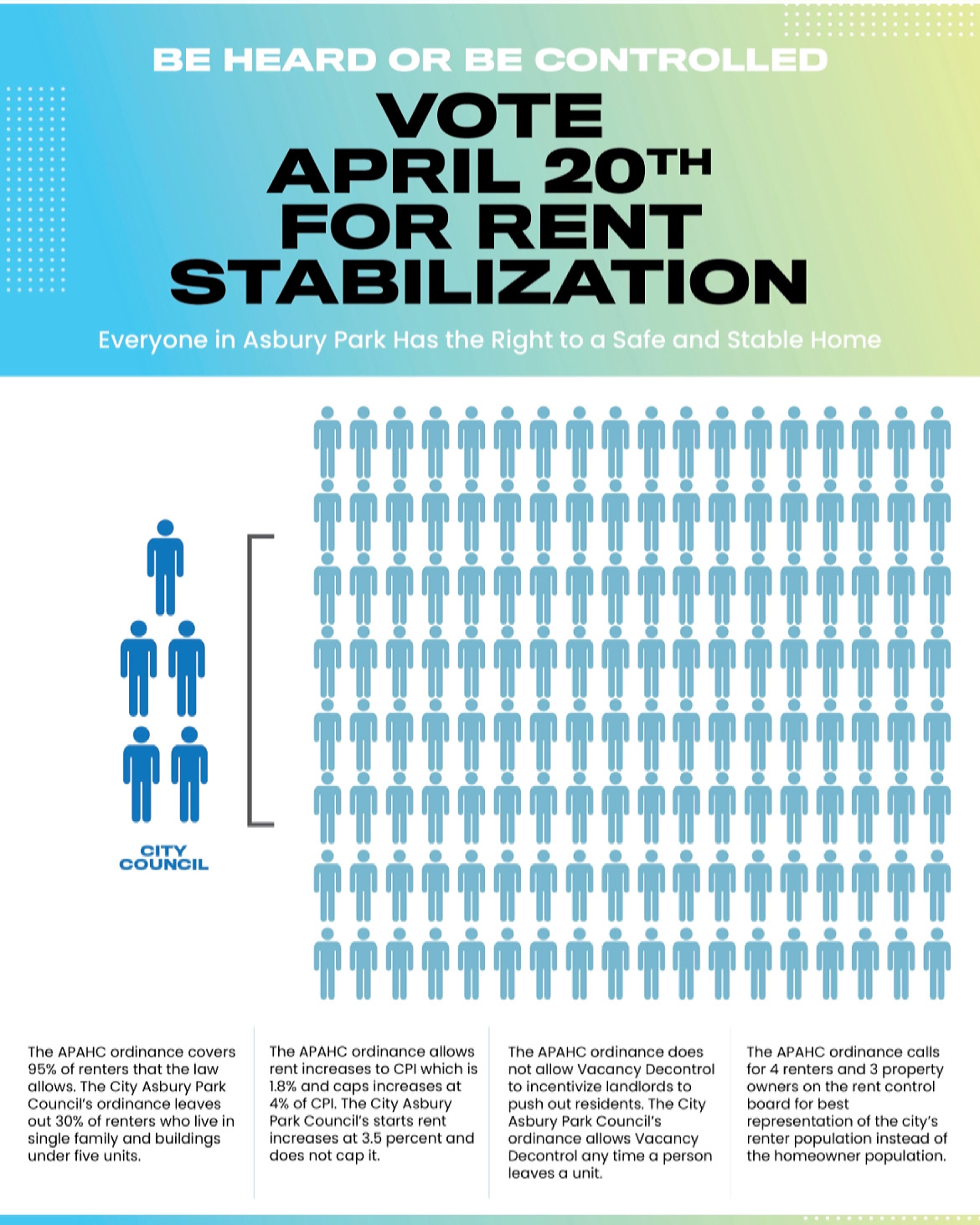
Application of Council’s Ordinance to the renter population is very different from that of the Coalition’s legislation. Council’s Ordinance excludes buildings with four or fewer rental units. Using tax records as a basis that exemption excludes at least 1500 units. The Coalition estimates that Council’s legislation omits approximately thirty percent of City rental units. Coalition’s Ordinance does exclude owner occupied dwellings with two or fewer rental units.
The Council has not responded thus far to inquiries regarding the exclusion of so many renters.
RENT INCREASE
In those transactions in which renters remain in the same unit rent increases are regulated in a somewhat similar method in both Ordinances. Both make use of the Consumer Price Index(CPI), a standard economic measure of the costs of goods and services and a frequently used measure in rent control. Again, there are important differences particularly with vacancies. The Coalition’s Ordinance limits annual rent increase to the corresponding increase in the CPI or four per cent whichever is lower. For example if the CPI increases one percent the rent increase is one percent. If the increase in CPI is five percent the increase is limited to four percent. The Coalition’s Ordinance permits its Rent Stabilization Board (Board) to increases where a landlord has shown that an increase is necessary for a fair return (defined) or as the result of certain additional (defined) landlord expenses. It also creates a system that informs tenants of increase and permits them to participate before a decision is made.
The Council’s Ordinance limits annual increases to the increase in the CPI or three and one-half percent. whichever is higher. For example, if the increase in CPI is one percent, rents can increase three and one-half per cent. If the increase in CPI is five per cent, rent can increase five per cent.
Tax appeals resulting in rent expense are divided evenly between tenant(s) and landlord after expense deduction as opposed to Coalition’s Ordinance wherein eighty per cent of the return is paid to the tenant(s) after expense deductions by landlord. Council’s Ordinance grants landlords a right to appeal rent increase granted in order to receive a fair return (defined).
The biggest difference occurs when a renter leaves or is evicted from a unit and a vacancy occurs. Under Council’s Ordinance landlords are not limited in the rent they may charge a subsequent renter. There are no exceptions for a rent increase due to a vacancy in Coalition’s Ordinance. The exception created in Council’s Ordinance is very troublesome because it can incentivize some landlords to create vacancies for increased profit and, in general, it drives rent costs higher.
BOARDS OF ADMINISTRATION
Both Ordinances include a governing Board. In Coalition’s Ordinance it is called “Rent Leveling and Stabilization Board” (Board) and in Council’s Ordinance it is called “Rent Leveling Board” (Board). Their duties are generally similar and both have a strong hand in the administration of their respective Ordinance. Each Board has an executive officer who is responsible for implementing Board decisions within their policy’s frameworks. There is a significant difference in Board membership. Coalition’s Ordinance provides for seven members, three landlords and four tenants. each appointed by the Mayor and approved by the Council. It further provides that for a decision to be made there must be at least as many tenant representatives voting as there are landlord representatives.
Council’s Ordinance provides for a seven member Board appointed by the Council with not fewer than two tenants and two landlords, the balance of members appointed by the Council. Council’s Ordinance leaves to considerable chance that tenants will ever represent a majority point of view on a powerful Board making critical decisions about their housing.
SUMMARY AND CONCLUSION
If Rent Control as policy is judged on its ability to promote stability for residents in rent controlled units, research has found it successful. Relying on locally pertinent data both Ordinances herein identify a need to provide rent relief to residents who are overwhelmingly tenants, not property owners or landlords. The Recitals or introductions to each Ordinance express very different rationales and purposes.
Coalitions Ordinance is driven primarily by a need to provide relief to tenants amid significantly increasing rent expense.
Council’s Ordinance expresses the purpose of providing relief to tenants but adds others. In its criticism of the competing Ordinance, Council’s Recitals include the purposes of adding “flexibility” to home owners and “less cumbersome implementation” to their Ordinance.
Of special note is their additional purpose of balancing renter’s need for relief against that of the landlord for a “reasonable return”. In Council’s Ordinance neither the inclusion of “flexibility” making it easier for landlords to achieve a” reasonable return” nor the “balancing “of renter’s needs for relief against landlord’s needs as purposes takes account of the enormous advantage in power and influence that landlords have over tenants in any so described “balancing” of needs.
Indeed the term “balancing” as used seems fanciful because in a free economy it is probably impossible to achieve. Arguably, property owners also now have a notable advantage in financial “flexibility” over most renters. Their purpose of “less cumbersome implementation” no doubt is a criticism of the Coalition’s frequent use of standards to guide implementation of Ordinance provisions. Council fails to appreciate the need for standards in the application of a policy including new rights of participation for tenants and new responsibilities for landlords governed heretofore primarily by market conditions. Fewer standards will very likely lead to more complications and delay in resolution of disputes.
Collectively these purposes drive Council’s Ordinance.
Coalition’s Ordinance protects many more tenants than does Council’s legislation. The difference thus far is without explanation by Council. While facially similar to Coalition’s provisions governing rent increase through the application of the CPI, Council’s Ordinance by it’s exception for “vacancies” leaves rent increases without limit.
Each Ordinance provides for a Board authorized to administer its stated policies. Board membership is set forth for in each Ordinance. Coalition’s Ordinance establishes a Board membership that favors tenant’s needs and guarantees tenants at least equal representation with landlords in all Board decisions. Council’s Ordinance does neither.
If you believe tenant’s need for rent relief and a stabilized rental market is important now and in the near term you should vote YES to Coalition’s Ordinance in the referendum on April 20. If you believe that same need is not that important you should vote NO.
Respectfully,
William D. Mackolin
Asbury Park