Bikes Can Be Better Than Cars For People With Disabilities

A BICYCLE IS A “ROLLING WALKING STICK”.

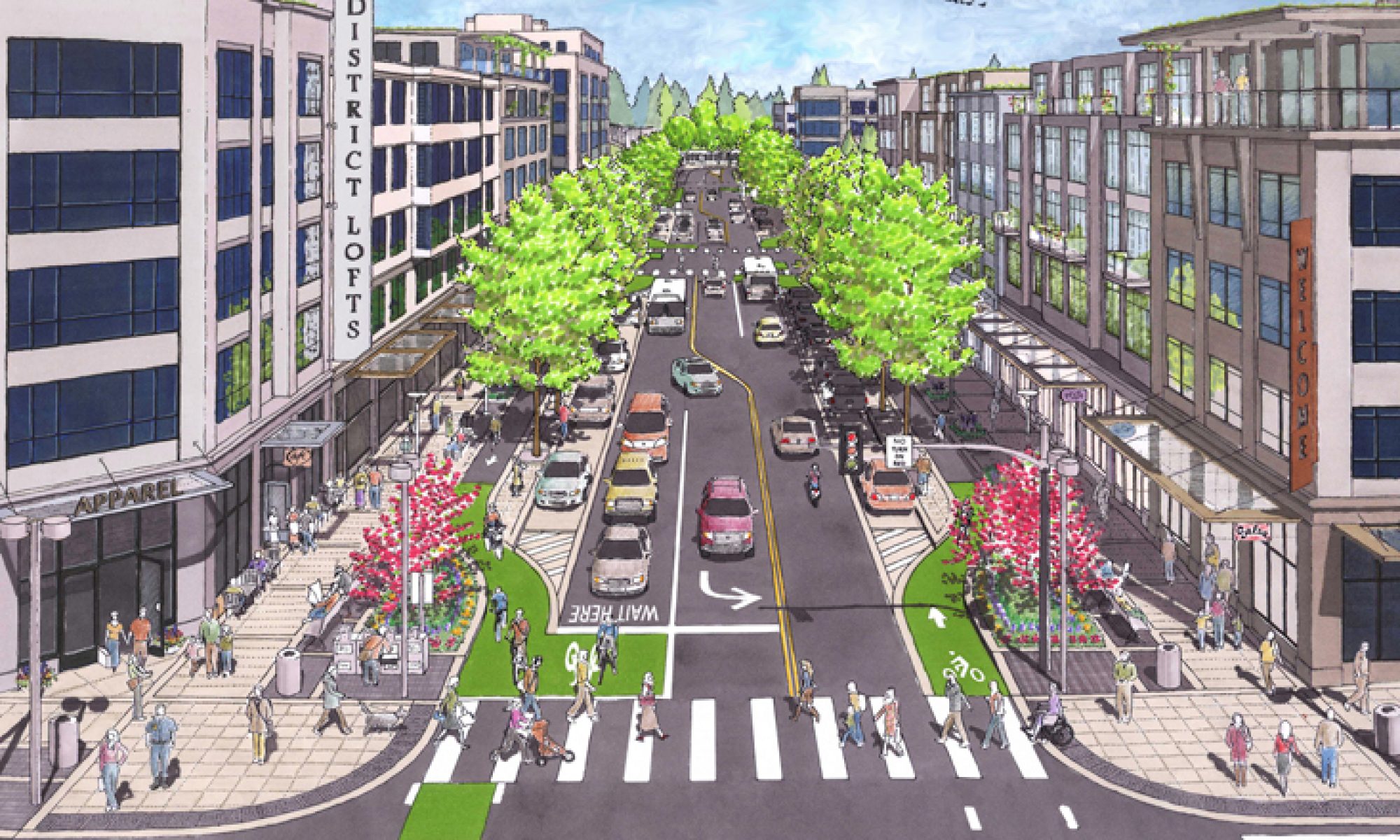
Automobile advocates sometimes assert that people with disabilities need to drive as an argument to negate the need for bike lanes and other infrastructure for bicycling.  But for many people with strength or mobility issues, whether elderly, disabled, or dealing with injuries, riding a bike is easier than walking, and can be safer (and healthier) than driving a car, provided that the city has established the infrastructure to keep people safe on bikes.  A bicycle is a “rolling walking stick”.

Laura Laker Jan. 2, 2018

‘A rolling walking stick’: why do so many disabled people cycle in Cambridge?

Riding a bike may be easier than walking for two-thirds of disabled cyclists, but they often remain invisible to society. Many don’t realise that more than a quarter of disabled commutes in this university city are made by bike.

“In the context of an ageing global population, mobility experts are increasingly seeing cycling as a way to help people with disabilities move around cities independently. A bike can act as a “rolling walking stick”; yet looking at its owner you wouldn’t know they had a disability: around 40% of disabled cyclists simply use a regular two-wheeled bike.

For two out of three disabled cyclists, riding a bike is easier than walking, easing joint strain, aiding balance and relieving breathing difficulties. According to recent research by Transport for London, 78% of disabled people are able to cycle, while 15% sometimes use a bike to get around.”

Great read-


Could You Bike Everywhere?

This guy, who is not a “cyclist” noticed some things when he rode a bike for transportation for a few weeks. Granted it was warm weather, and Idaho is a state where there is good infrastructure for riding bikes. But think about it. Could you commute by bike? Note that many people with disabilities, and elderly can ride bikes even if they can’t walk very far.

I biked everywhere for 3 weeks — and it made me realise 10 critical things about my town, time management, and life itself

NBC Video: We’re Shackled By The Automotive Industry. And It’s Legal.

Watch the first 2 minutes…the automotive industry owns us. It’s literally written into law.  Keep watching…Can we get free from cars?

Public policy worships the automobile — and we pay the price

In America, driving often isn’t a choice but a necessity. Gregory Shill, a law professor at the University of Iowa, joined THINK to discuss how the law subsidizes driving at everyone’s expense.

Watch:

https://www.nbcnews.com/think/video/public-policy-worships-the-automobile-and-we-pay-the-price-71086149892

Drivers Are Responsible On Halloween

APCSC would like to see driving restricted, or at the very least speeds strictly enforced on days like July 4th and Halloween. People walking, and especially kids walking are unpredictable and vulnerable when costumes, candy or fireworks are involved. Cars have no place in these events. Light sticks and flashlights are great, but the responsibility for injuries and deaths falls upon drivers of motor vehicles.

“Using National Highway Traffic Safety Administration data, the researchers compared pedestrian deaths on Halloween nights with deaths on two evenings the week before and the week after. They found car-pedestrian accidents kill four more people on average on Halloween than on other days.”

HALLOWEEN CAN BE DEADLY FOR PEDESTRIANS – AND KIDS ARE MOST AT RISK

Trick-or-treaters beware: Halloween can be deadly for pedestrians and children face the greatest danger. New research found a 43 percent higher risk of pedestrian deaths on Halloween night than on other nights near that date.

Read: https://www.cbsnews.com/news/halloween-can-be-deadly-for-pedestrians/


Why Do Scooter Riders Ride on Sidewalks?

Since the 1920s we’ve been conditioned to believe that roads are designed for cars (they weren’t). Traffic congestion and vehicular fatalities, plus the effects on health and climate has shown city leaders all over the world the need to modify/eliminate the use of motor vehicles, and build better infrastructure for bikes, walking and other modes of transit.

Enter scooters. We know that there’s a need for alternatives to driving, and scooter share is being introduced successfully as legitimate micro-mobility.  Although the rules in most cities require them to be ridden on the street, why are scooter riders on sidewalks?

Would you let your 10-year-old ride a bike or a scooter on a street with vehicular traffic moving at 25mph, 35mph, 45mph?  We need to design streets that are are safe for an 8-year-old to an 80-year-old. Let’s use that standard. Painted bike lanes are a start, but paint doesn’t protect.  Until we have protected bike/scooter lanes everywhere (and we will!) we need to continue to work on reducing/eliminating the need to drive in our city by providing as many alternative transportation options as possible #toomanycars, and meanwhile seriously slow vehicle speeds! #slowthecars.

Most scooter riders using the sidewalk are afraid of cars, new survey shows

“As Salt Lake City officials threaten to crack down on dockless e-scooter companies that don’t do enough to reduce the number of users riding on sidewalks, new data suggests solutions to the problem go beyond education efforts.

A survey conducted by Lime, one of four e-scooter companies currently operating within the city, found that the primary reason users say they’re not on the streets isn’t because they don’t know the rules but because they fear for their safety riding next to fast-moving cars.”

https://www.sltrib.com/news/politics/2019/10/15/most-scooter-riders-using/

One Thing We Can Do: Drive Less

Climate Action Doesn’t Have To Be Difficult.

Greta Thunberg is a climate change activist and a model for all of us, but we don’t all need to sail across the ocean in a solar powered racing yacht to make a difference.

One Thing We Can All Do Is Drive 10% Less. This “would be roughly 110 million metric tons of carbon dioxide, or the same as taking about 28 coal-fired power plants offline for a year.”

“Over one-third of all car trips are less than two miles, so walking, biking or taking public transport…” As a 1.4 mile square city, we can do this in Asbury Park!

By Tik Root and Aug. 28, 2019

“We’re not talking about getting rid of your car, just using it a little bit less. It turns out that even driving just 10 percent less — if everyone did it — would have a big impact on greenhouse gas emissions.

That’s because Americans drive trillions of miles every year, helping to make transportation the biggest contributor to United States greenhouse gas emissions.

In 2017, light-duty vehicles in the United States (including cars, S.U.V.s, pickups and most of the vehicles used for everyday life) produced 1,098 million metric tons of carbon dioxide equivalents. That’s about one-fifth of the country’s total emissions footprint.”

Read more…

https://www.nytimes.com/2019/08/28/climate/one-thing-we-can-do-drive-less.html

SUVs Are Killing Us

The auto industry is scared. Manufacturers are ceasing production of small and mid-sized cars because people aren’t buying them.  The reasons are varied, but many consumers cite climate and environmental concerns, traffic congestion, and parking, plus more options in mass transit and other modes of mobility.  This is true in the US, as well as Germany, and the UK. The truth is the big push in selling big vehicles is all about money. The industry feels the pinch of lower “product profitability” from cars, and the margins are much higher for SUVs, crossovers and trucks.  So the spin in advertising is that larger vehicles are preferable for safety reasons (oh yeah, and they’re so tough, and cool, and rugged – you get the picture)… but it’s a LIE.

Drivers in families with children have been brainwashed into the belief that they’re safer if they’re in a bigger vehicle, but “studies show they lull drivers into a false sense of security, encouraging them to take greater risks. Their height makes them twice as likely to roll in crashes and twice as likely to kill pedestrians…”

The question as to whether to ban large vehicles from cities is being batted about on social media – the debate is centered on tradespeople who “need” them. That’s another story.

‘A deadly problem’: should we ban SUVs from our cities?

https://www.theguardian.com/cities/2019/oct/07/a-deadly-problem-should-we-ban-suvs-from-our-cities


The US Was Once A World Leader In Bike Lanes – Can We do It Again?

Read the surprising history (and see amazing photos!) about when the US was a world leader in bike lanes.  In the years before cars took over bike super-highways, cycle paths, and sidepaths enabled people to reach destinations in Rochester, Chicago, Minneapolis, New York (in particular, Coney Island), New Jersey, and Los Angeles.

Now cities all over the US like Asbury Park, are acknowledging the need to reduce/eliminate the use of automobiles, and rebuilding infrastructure for bikes and other micro-mobility.

In 1900, Los Angeles had a bike highway — and the US was a world leader in bike lanes

Los Angeles’ partially-completed California Cycleway, in 1900.
 (Pasadena Museum of History)

“The success of the Coney Island Cycle Path spurred cyclists in Upstate New York to push for local governments to build similar bike-specific routes that would run alongside roads, funded by tolls.

The idea was that by building these relatively smooth, sometimes paved paths — often called “sidepaths” — next to rutted country roads, cyclists would demonstrate the benefits of road investment to teamsters and farmers, who’d then support the campaign for paved roads in general.

These routes were distinct from sidewalks and were intended specifically to segregate bikes from horse and carriage traffic with a few feet of grass or other buffer. More than anything, they resemble today’s protected bike lanes, which are set off from roads with bollards, parked cars, or other physical barriers.”

Read about it!

https://www.vox.com/2015/6/30/8861327/bike-lanes-history


NYTimes Opinion: Cars Are Death Machines

Is it the cars themselves that are killing machines, or is it the drivers/owners of the cars, and the culture the industry has created – which Americans are devoted to – contributing the most to deaths of so many people? 40,000 motor vehicle deaths last year, and more pedestrians and bicyclists than ever.  “Here’s the thing: Statistics clearly don’t seem to persuade anyone of the magnitude of this problem. Not policy makers or automakers, technologists or drivers.”

Cars Are Death Machines.
Self-Driving Tech
Won’t Change That.

https://www.nytimes.com/interactive/2019/10/04/opinion/self-driving-cars-safety.html

Fuel Efficient And Electric Cars Are Not Enough

We must stop using fossil fuels to power electric cars, and we must all make a huge effort to drive less. Vehicle Miles Traveled (VMT) are a significant contributor to greenhouse gasses.  The problem with switching to electric cars is: “If Americans drive their electric cars anywhere near as much as they do with their current gas-guzzlers, it would cancel out the carbon reduction brought on by electrification.”

We can’t meet our climate goals with EVs and improved efficiency alone

“…electric vehicles are only as clean as the fuels used to power the grid. Electric vehicles will be charged by fossil fuels until renewables are slowly added to the electric grid. In Hawaii, the data showed that increased emissions from EV charging would have to be offset by further reductions in VMT.”

Read about it:

http://t4america.org/wp-content/uploads/2019/09/T4A-Climate-3-EVs-are-not-enough.pdf